Showing posts with label Trailer. Show all posts

Sunday, August 9, 2026

The Magdalene Deception - A Review, Excerpt, & Giveaway

 Review


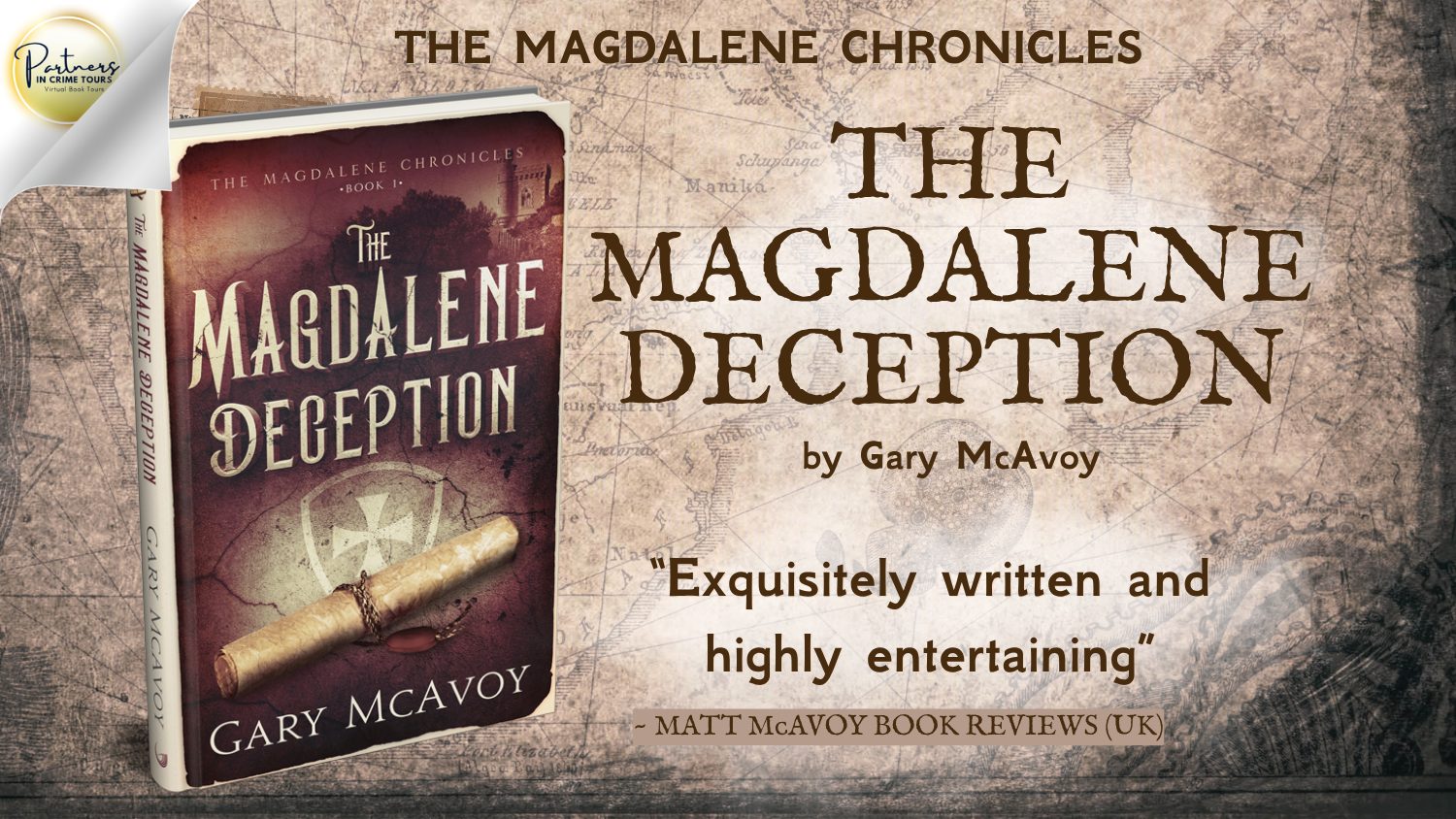
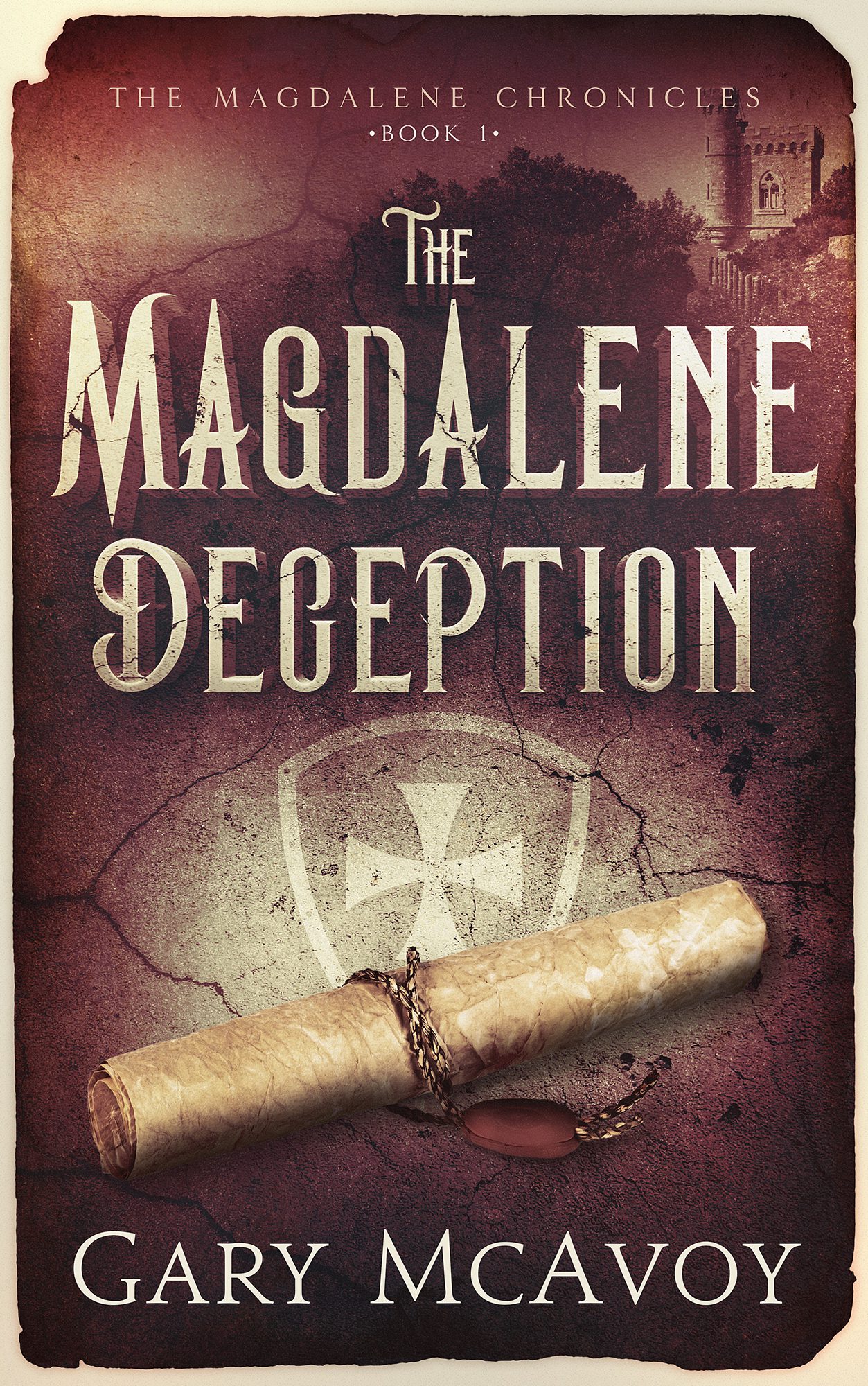
THE MAGDALENE DECEPTION by Gary McAvoy
The First Book of The Magdalene Chronicles 
 
Father Michael Dominic is excited to start his new job working in the Vatican’s legendary Secret Archives. An accidental discovery soon leads the Jesuit on a search for answers. His new Swiss Guard friend introduces Michael to his cousin, Hana Sinclair, an investigative reporter. Hana is working on a story about Jewish gold stole by the Nazis and since her research aligns with Michael's the two team up. Their adventures lead them to a papyrus written by Mary Magdalene whose truth could upset the entire Catholic Church. Unbeknownst to the pair, a cardinal with unholy aspirations wants them stopped. Will the truth be revealed? Will they keep the secret? Or will they be stopped before they can make that decision.
 
Fascinating. That word sums up THE MAGDALENE DECEPTION for me. I absolutely love learning new things and having been raised Roman Catholic I enjoy learning its true history. This book, though fictional, is alive with true historical facts, making the story that much more enthralling. I appreciate that the author adds a section at the end of the novel explaining what's factual, what's not, as well as what's a mixture. There's a lot of research here, not only done by the author, but practiced by his characters as well. 
 
I really enjoyed the first book of the Magdalene Chronicles. The characters are appealing and I enjoyed seeing all of the connections. One of my favorite characters is Brother Calvino Mendoza who unknowingly sets the adventure in motion. I appreciate that the book's unflinching look at the Church's history while also enjoying the modern day thrills.
 
A compelling thriller featuring Vatican intrigue, fascists, and religious history THE MAGDALENE DECEPTION is an engrossing novel that successfully combines history, research, technology, and excitement in a fun read.
 
************************************************************************* 

The Magdalene Deception by Gary McAvoy Banner

THE MAGDALENE DECEPTION

by Gary McAvoy

August 3-28, 2026 Virtual Book Tour

Synopsis:
THE MAGDALENE DECEPTION by Gary McAvoy

THE MAGDALENE CHRONICLES

A forbidden secret...
The Church’s fate in the balance…
Will a pair of amateur sleuths expose a truth that could upend the Christian world?

Jesus’ resurrection is a cornerstone of Christian faith. But when a clue surfaces that hints at an alternate account, the ramifications stand to change Christianity forever.

Jesuit priest Michael Dominic’s assignment to the Vatican’s legendary Secret Archives results in his discovery of a hidden papyrus: the unpublished writings of Mary Magdalene — a lost record buried in Rome’s deepest recesses. The forgotten relic’s heretical revelation threatens the Vatican’s very legitimacy, and pits Michael against ruthless and powerful enemies.

Desperate, he reaches out to Hana Sinclair, an investigative reporter with a record of tackling contentious subjects. Together they defy the Church elite, and embark on a search through the shadows of history to unearth the truth. As the pressure builds to silence the pair, will the Vatican resort to the unthinkable in order to safeguard its wealth and power?

Based on historical facts, this international thriller takes readers on a white-knuckle race through the holy sites of Europe. Get your copy of this award-winning tale and discover why Gary McAvoy’s devoted fans say, “I didn’t want this book to end!”

Praise for The Magdalene Deception:

"A great thriller that weaves numerous storylines together effectively. Recommended to those who love a good thriller with historical implications, as well as the reader who enjoys Vatican and Catholic politics… McAvoy creates a wonderful story that never stops building throughout… [He] captures the secrecy and deep-rooted history of the Vatican and its politics throughout this piece, with a strong story and plot that moves in many directions. McAvoy pulls the reader in and keeps them guessing, while also refusing to place a damper on the action. Juggling modern and ancient Church issues, McAvoy does not lose his reader at any point, as his writing is so clear that the attentive reader will likely want more."
~ MATT PECHEY, REEDSY DISCOVERY.

"Exquisitely written and highly entertaining, The Magdalene Deception is an investigative mystery in a very similar vein to The DaVinci Code…The real quality to this book is the author himself – the writing is superb. There is an outstanding attention to detail in McAvoy, and the setpieces he weaves are vivid, colourful and authentic; this author treats his audience as intelligent and attentive, and this is always hugely beneficial to any writer. As well as being an evidently well-educated historian, McAvoy also knows his stuff in terms of modern-day information networking and the technology in present day use alongside ancient practices and customs…"
~ MATT McAVOY BOOK REVIEWS (UK)

The Magdalene Deception Trailer:

Book Details:

Genre: Vatican Historical Thrillers
Published by: Literati Editions
Publication Date: July 1, 2020
Number of Pages: 368
ISBN: 9780990837664 (ISBN10: 0990837661)
Series: The Magdalene Chronicles, #1
Book Links: Amazon | KindleUnlimited | Barnes & Noble | BookShop.org | Goodreads | BookBub

Read an excerpt from The Magdalene Deception:

Prologue

Southern France – March 1244

The relentless siege of the last surviving Cathar fortress, perched strategically on the majestic peak of Montségur in the French Pyrenees, entered its tenth month.

The massive army of crusaders dispatched from Rome, thirty thousand strong, were garbed in distinctive white tunics, their mantles emblazoned with the scarlet Latin cross. Knights commanders led hordes of common foot soldiers, some seeking personal salvation, others simply out for adventure and the promise of plunder. They had already devastated most of the Languedoc region of southern France in the years preceding. Tens of thousands of men, women, and children had been slain, regardless of age, sex or religious belief. Entire villages were burned, rich crops destroyed, and the fertile land which yielded them was poisoned in a cruel, single-minded quest to root out and extinguish a small and peaceful, yet influential mystic order known as the Cathars.

The defeat of the impregnable Montségur remained the ultimate prize for the Church’s troops. Rumors of a vast treasure had reached the ears of every soldier, stirring up the passion with which these feared European mercenaries carried out their holy mission. As was the customary practice during a crusade, whatever pillage remained after the plundering—spolia opima, the richest spoils for supreme achievement—could be claimed by the victor. That temptation, bonded by the personal assurance of the pope that all sins would be forgiven and their paths to heaven assured, was enough to seduce anyone, nobleman or peasant, to take up cudgel, pike, or arrow in the name of God.

In 1209, Pope Innocent III had ordered a Holy Crusade to crush the spirit and, if necessary, the life of each and every dissident in the Languedoc region bordering France and Spain.

This independent principality had distinguished itself by fostering an artistic and intellectual populace well beyond that of most northern European societies at the time. The people of the Languedoc practiced a religious tolerance that encouraged spiritual and secular diversity. Schools teaching Greek, Hebrew and Arabic languages and the customs which accompanied them flourished, as did those espousing the Kabbalah, an occult form of Judaism that dated from the second century.

Most settlers in the Languedoc viewed Christianity with the utmost repugnance; at the very least its practices were perceived as being more materialistic than godly in nature. The irreligious of the region passed over Christianity in large part due to the scandalous corruption exhibited by its local priests and bishops who, unable to influence the heathens within their provinces, came to prefer the rewards of commerce and land ownership over the tending of a meager flock.

Consequently, the authorities in Rome felt compelled to deal with this unforgivable heresy once and for all, in towns such as Toulouse and Albi within the Languedoc area.

Consigning his troops to their commanders, Pope Innocent III invoked a special benediction to all, lauding the divinity of their mission. Asked how they might distinguish their Christian brethren from the heretics, the crusaders were simply told, “Kill them all. God will spare His own.”

And so the Albigensian Crusade began.

The new moon cast no light over Montségur as night fell on the first day of March 1244, obscuring not only the hastened activities of its occupants, but the lingering threat conspiring outside its walls. A dense alpine fog had settled over the mountain, and the castle that straddled its inaccessible peak had withstood nearly a year of unceasing battle.

Weakened by the tenacity of their predators and yielding to the hopelessness of their situation, Raymond de Péreille, Lord of Château du Montségur and leader of the remaining four hundred defenders, commanded his troops to lay down their arms, and descended the mountain to negotiate terms of their capitulation.

Though offered lenient conditions in return for their surrender, de Péreille requested a fourteen-day truce, ostensibly to consider the terms, and handed over hostages as an assurance of good faith. Knowing there was no alternative for their captives—nearly half of whom were priest-knights, or parfaits, sworn to do God’s work—the commanders of the pope’s regiment agreed to the truce.

Over the next two weeks, reprieved from the constant threat of attack they had been enduring for months, the inhabitants of Montségur resolved to fulfill their own destiny before relinquishing their fortress—and their lives—to the Inquisition.

On the last day of the truce, as if guided collectively by a single will on a predestined course, the surviving members of the last Cathar settlement made special preparations for their departure.

Four of the strongest and most loyal of the parfaits were led by Bishop Bertrand Marty, the senior abbé of the fortress, as they descended deep within the mountain down a long, stepped passageway carved into alternating layers of earth and limestone. The end of the passage appeared to be just that, as if the original tunnelers had simply stopped work and retreated without finishing the job. But, while the others held torches, Abbé Marty withdrew a large rusted key-like wedge from beneath his cassock, and thrust it into a hidden cavity near the low ceiling.

The abbé manipulated the key for a few moments. A muffled sound of grating metal from beyond the stone wall echoed through the tunnel, and the seemingly impenetrable granite slid inward slightly, revealing a door.

Aided by the parfaits, the door swung open into a small dank chamber filled with an enormous cache of riches—gold and silver in varied forms, gilded chalices and bejeweled crosses, an abundance of gems and precious stones, overflowing bags of coins from many lands.

And, in a far corner removed from the bulk of the treasure itself, stood a wide granite pedestal on which rested an ornately carved wooden reliquary, crafted to hold the most holy of relics, next to which sat a large book wrapped in brown sackcloth.

Standing before the legendary treasure of the Cathars—glittering and hypnotic in the dim torchlight—would prove seductive for most men. But the Albigensians held little regard for earthly goods, other than as a useful political means to achieve their spiritual destiny. Ignoring the abundant wealth spread before them, the abbé fetched the sackcloth while the other four parfaits hoisted the ancient reliquary to their shoulders, then they left the room and solemnly proceeded back up the granite stairway. In the thousand-year history of the Cathars, these would be the last of the order ever to see the treasure.

But the most sacred relic of the Christian world would never, they vowed, fall into the unholy hands of the Inquisition.

Emerging from the stone passage, Abbé Marty led the parfaits and their venerable cargo through the hundreds of waiting Cathars who had assembled outside, forming a candlelit gauntlet leading to the sanctuary. All were dressed in traditional black tunics, all wearing shoulder-length hair covered by round taqiyah caps as was the custom of the sect.

Once inside, the parfaits lowered the reliquary onto the stone altar. The abbé removed the ancient book from the sackcloth and began the sacred Consolamentum, a ritual of consecration, while the four appointed guardians prepared themselves for their special mission.

Armed with short blades and truncheons, the parfaits carefully secured the reliquary in the safety of a rope sling, then fastened taut harnesses around themselves.

“Go with God, my sons,” Abbé Marty intoned as he gave them his blessing, “and in His name ensure this sacred reliquary be protected for generations to come.”

The four men climbed over the precipice and, assisted by their brothers gripping the ropes tied to their harnesses, gently and silently rappelled hundreds of meters down the escarpment. Sympathizers waiting at the base of the mountain assisted the parfaits in liberating their holy treasure, guiding them away from the danger of other troops and hiding them and the reliquary deep in one of many nearby caves.

Throughout the night, those remaining at Montségur celebrated their brotherhood, their holy calling, and their last hours alive. Descending the mountain the next morning, in a state of pure spiritual release from the material world, Abbé Marty led the last of the Cathars as they willingly marched into the blazing pyres awaiting them, martyrs to their cause.

The holy reliquary of the Cathars has never since been found.

Chapter 1

Present Day

Rounding the northern wall of the Colosseum with a measured stride, a tall young man with longish black hair glanced at the Tag Heuer chronometer strapped to his left wrist. Noting the elapsed time of his eighth mile, he wiped away the sweat that was now stinging his eyes.

Damn this Roman heat. Not even sunrise, and it’s already a scorcher.

Approaching the wide crosswalks flanking the west side of the immense Colosseum, he wondered if this was the morning he would meet God. Dodging the murderous, unrestrained traffic circling the stadium became a daily act of supreme faith, as the blur of steel subcompacts, one after another, careened around the massive structure on their way, no doubt, to some less hostile place. Since his arrival here he had discovered that this was the way with Italian motorists in general, though Roman drivers excelled at the sport. Veteran observers could always tell the difference between natives and visitors: a local would cross the road seemingly ambivalent to the rush of oncoming traffic. Non-Romans, who could as likely be from Milan as from Boston or Paris, approached the threat of each curb-to-curb confrontation with a trepidation bordering on mortal terror.

Crossing the broad Via dei Fori Imperiali, his route took him through the Suburra, the most ancient inhabited area of Rome and off the beaten path of most tourists. As a newcomer to a city whose normal pulse was barely evident beneath the confusing ambiguities of new and old, the runner felt most comfortable here in the Suburra, a semi-industrial working-class neighborhood, much like the one he only recently left in New York. In the summer, people got up early to tend their gardens before the real heat forced them indoors. The early morning air was thick with alternating scents of Chilean jasmine, honeysuckle and petrol fumes.

He ran another ten kilometers, long blooms of sweat accentuating a lean, muscular frame beneath a gauzy white t-shirt as he burst into a sprint up the final few blocks, past the empty trattorias and shuttered shops whose merchants were just beginning their morning rituals.

Slowing to a cool-down pace as he crossed the Sant'Angelo bridge spanning the Tiber River, he turned left up Via della Conciliazione as the massive dome of Saint Peter's Basilica loomed suddenly ahead. Though it could be seen from almost anywhere in Rome, this approach always gave him the impression that the dome seemed to tip backwards, being swallowed up by the grand facade of the church the closer he got to it.

"Buongiorno, padre.” Several female voices, almost in unison, broke the cobblestone pattern of his reverie.

Father Michael Dominic looked up and smiled politely, lifting his hand in a slight wave as he swiftly passed a small cluster of nuns, some of whom he recognized as Vatican employees. The younger women blushed, leaning their hooded heads toward each other in hushed gossip as their eyes followed the handsome priest; the older women simply bobbed a chilly nod to the young cleric, dutifully herding their novitiates into obedient silence on their way to morning Mass.

Though he had only been in Rome a couple of weeks, Michael Dominic's youthful exuberance and keen intellect had become known quickly throughout the cloistered population of Vatican City, setting him apart from the more monastic attitudes prevalent since the Middle Ages.

But despite the fusty parochialism and an atmosphere of suspended time he found within its walls, Dominic still felt the intoxication of privilege at having been assigned to Rome so early in his religious career. It had not been even two years since he lay prostrate at the altar of St. Patrick’s Cathedral in New York City, to be ordained by his family friend and mentor Cardinal Enrico Petrini.

It was no secret to Vatican insiders that the eminent cardinal's influence was chiefly responsible for Dominic's swift rise to the marbled corridors of ecclesiastical power now surrounding him. The young priest’s scholarly achievements as a classical medievalist were essential to the work being done in the Vatican Library. But the progressive cardinal also was grateful for the vitality Dominic brought to his vocation, not to mention the charismatic ways in which he could get things accomplished in an otherwise plodding bureaucracy. Though Dominic could not account for his mentor’s vigorous inducement that he come to Rome—and knowing this particular prince of the Church so well, it was surely more than a familial gesture—he had trusted Enrico Petrini completely, and simply accepted the fact that this powerful man had believed in him strongly enough to give him an opportunity which he most certainly would not have had otherwise.

Pacing slower now, Dominic drew in rhythmic gulps of searing air as he neared the Vatican. A block or so before reaching the gate, he stepped inside the Pergamino Caffè on the Piazza del Risorgimento. Later in the day the cramped room would be filled with tourists seeking postcards and gelato, but mornings found it crowded with locals, most nibbling on small, sticky cakes washed down with a demitasse of thick, sweet coffee.

Across the room Dominic spotted Signora Palazzolo, the ample wife of the proprietor, whose wisps of white hair were already damp with perspiration. Seeing the priest approach, the older woman’s face broke into a broad, gap-toothed smile as she reached beneath the counter and withdrew a neatly folded black cassock that Dominic had dropped off earlier, which she handed to him with deliberate satisfaction.

Buongiorno, padre,” she said. “And will you take caffè this morning?”

Molto grazie, signora,” Dominic said, accepting the cassock graciously. “Not today. I’m already late as it is.”

“Okay this time,” she said with a gently scolding tone, “but it is not healthy for a strong young man to skip his breakfast, especially after making his heart work so hard in this unforgiving heat.” Her hand reached up to wipe away the dampness as she spoke, coifing what little hair she had left in a vain attempt to make herself more attractive.

Heading toward the back of the shop, Dominic slipped into the restroom, quickly washed his face and raked his hair into some semblance of order, then drew the cassock over his head and buttoned it to the starched white collar now encircling his neck. Emerging from the restroom minutes later and making for the door, he glanced back to see the signora waving to him, now with a different look on her face—one beaming with respect for the clergyman he had suddenly become, as if she herself had had a role in the transformation.

Of the three official entrances to the Vatican, Porta Sant’Anna, or Saint Anne’s Gate, is the one generally used by employees, visitors and tradesmen, situated on the east side of the frontier just north of Saint Peter's Square. Although duties of security come first, guards at all gates also are responsible for monitoring the encroachment of dishabille into the city. Dominic learned from an earlier orientation that casual attire of any sort worn by employees or official visitors was not permitted past the border. Jeans and T-shirts were barely tolerated on tourists, but the careless informality of shorts, sweatpants or other lounging attire on anyone else was strictly forbidden. An atmosphere of respect and reverence was to be observed at all times.

Vatican City maintains an actual live-in population of fewer than a thousand souls, but each workday nearly five thousand people report for duty within the diminutive confines of its imposing walls—walls originally built to defend against the invading Saracens a thousand years before—and the Swiss Guards at each gate either recognize or authenticate every person coming or going by face and by name.

One of the Guards whom Dominic had recognized from previous occasions, dressed in the less formal blue and black doublet and beret of the corps, waved him through with a courteous smile as Dominic reached for his ID card.

“It is no longer necessary to present your credentials now that you are recognized at this gate, Father Dominic,” the solidly built young guard said in English. “But it is a good idea to keep it with you just in case.”

Grazie,” Dominic responded, continuing in Italian, “and it would be helpful to me if we could speak the local language. I haven’t used it fluently since I was younger, and I am outnumbered here by those who have an obvious preference. You know, ‘When in Rome….’”

The guard’s smile faded instantly, replaced by a slight but obvious discomfort as he attempted to translate, then respond to Dominic’s rapid Italian.

“Yes, it would be pleasure for me, padre,” the young soldier said in halting Italian, “but only if we speak slowly. German is native tongue of my own home, Zurich, and though I speak good English, my Italian learning have only just started; but I understand much more than I speak.”

Dominic smiled at the younger man’s well-intended phrasing. “It’s a deal then. I’m Michael Dominic,” he said formally, offering a sweaty palm.

“It is an honor meeting you, Father Michael. I am Corporal Dengler. Karl Dengler.” The guard’s face brightened at the unusual respect he was accorded, as he extended his own white-gloved hand in a firm grip. Recently recruited into the prestigious Pontificia Cohors Helvetica, the elite corps of papal security forces more commonly known as the Swiss Guard, Dengler had found that most people in the Vatican—indeed, most Romans—were inclined to keep to themselves. It was never this difficult to make friends in Switzerland, and he welcomed the opportunity to meet new people. He also knew, as did everyone by now, that this particular priest had a powerful ally close to the Holy Father.

“An honor for me as well, Corporal,” Dominic said a bit more slowly, yet not enough to cause the young man further embarrassment. “And my apologies for soiling your glove.”

“No problem,” Dengler said as he smiled. “With this heat it will be dry in no time. And if you ever want a running partner, let me know.”

“I’ll take you up on that!” Michael said with a wave as he passed through the gate.

Already the Vatican grounds were bustling with activity. Throngs of workers, shopkeepers and official visitors with global diversities of purpose made their way along the Via di Belvedere to the myriad offices, shops and museums—any indoor or shaded haven, in fact, that might offer escape from the heat of the rising sun.

Another Swiss Guard stood commandingly in the center of the street—looking remarkably dry and cool, Dominic thought, despite the obvious burden of his red-plumed steel helmet and the traditional billowy gala uniform of orange, red and blue stripes—directing foot and vehicular traffic while smartly saluting the occasional dignitaries passing by.

To any observer, Vatican City appears to be in a state of perpetual reconstruction. Comprising little more than a hundred acres, the ancient city state is in constant need of repair and maintenance. Architectural face-lifts, general structural reinforcement and contained expansion take place at most any time and in various stages, manifested in the skeletal maze of scaffolding surrounding portions of the basilica and adjoining buildings. Sampietrini, the uniquely skilled maintenance workers responsible for the upkeep of Saint Peter's, are ever-present throughout the grottoes, corridors, and courtyards as they practice time-honored skills of the artisans who have gone before them, traditionally their fathers and their fathers’ fathers. It was quite probable, in fact, that a given sampietrino working on, say, a crumbling cornerstone of the basilica itself, could very well be shoring up work that was originally performed by his great-great-grandfather more than a century before him.

Dominic walked to the end of the Belvedere, then turned right up the Stradone dei Giardini and alongside the buildings housing the Vatican Museums, until he reached the northern wall of the city.

A priest learns early that his life will suffer many rituals, and in at least one secular aspect, Michael Dominic’s was no different. Every day he ended his morning run with a meditative walk along the inner walls surrounding the immaculately maintained papal gardens. The fact that many of the same trees that lined the paths have been rooted here for centuries—serving the contemplative needs of whichever pope might be ruling at the time—gave Dominic a more natural feeling of historical connectedness, in subtle contrast to other abundant yet more imposing, reminders of where he now happened to be living and working.

“Ah! Good morning, Miguel.” It was a gentle breeze of a voice, yet Dominic recognized it clearly in the early, warm quiescence of the Vatican gardens.

Buongiorno, Cal!” Dominic said brightly. Brother Calvino Mendoza, prefect of the Vatican Archives and Dominic’s superior, was approaching the entrance to the building. Clad in the characteristic brown robe and leather sandals of his Franciscan order, Mendoza was a round, timorous man in his seventies—quite pleasant to work with, Dominic thought, if a little indiscreet in his obvious affection for men.

“You are up early today,” Mendoza said in heavily-accented English, furtively appraising Dominic’s form beneath the cassock. “But then, defying the wicked heat and traffic of Rome is best done before sunrise, no?”

“It is, yes,” Dominic laughed easily, his damp hair glistening in the sun as he shook his head in amusement, “but in another hour or so I expect the pavement to start buckling.”

Dominic had come to enjoy Mendoza’s fey demeanor and playful flirting. Nearly everyone he had met here seemed overly stern and impassive to be really likable, and Dominic was naturally drawn to people he found more hospitable anyway. This gentle man had a quick mind for humor and was never, Dominic found, lacking for a proverb appropriate to the moment. It was also common for Mendoza to call many on his staff by the Portuguese equivalent of their name, maintaining an affectionate cultural touchstone to his native home of Brazil. As for the subtle intimations, Mendoza grasped early on that Dominic’s vow of chastity was not likely to be compromised, and particularly not by another man.

“You’ll get used to it,” Mendoza nodded, smiling. “It is worse in the mornings, to be sure, but come late afternoon we are blessed by the ponentino, a cool wind off the Tyrrhenian Sea.

“And besides,” he quipped, “’To slip upon a pavement is better than to slip with the tongue—so the fall of the wicked shall come speedily.’” He finished by glancing around the garden with mock suspicion, as if every word were prey to overcurious but unseen ears.

“‘Ecclesiastes,’” Dominic responded. “And thanks for the admonition.”

Pleased that the young priest indulged his occasional whimsy, Mendoza shuffled up the few steps of the entrance to the Archives.

“Now, come Miguel, your days of orientation are over. Let’s get on with the real work,” he said dramatically, his arms nearly flapping as his large body moved up the steps into the Archives. “Today is a very special day.”

“I’ll catch up with you shortly, Cal. I’ve got to take a quick shower first. But why is today so special?”

From the top of the steps, Mendoza turned around to face Dominic and, like a child with a tantalizing secret, whispered with barely contained excitement, “The treasures we are about to exhume have not been seen by any living soul for several hundred years.”

Clearly a man who enjoyed his work, Calvino Mendoza’s eyes gleamed with anticipation as he lifted one heavy eyebrow in an arch, then spun as quickly as his heavy frame would allow and disappeared through the heavy wooden door.

As Dominic walked back to his apartment at the Domus Santa Marta, the resident guesthouse just south of Saint Peter’s Basilica, two men in a golf cart were heading in his direction, both dressed in the familiar black and red garb of cardinals. The cart stopped directly in his path and one of the men stepped out, approaching him.

“Father Dominic, I presume?” The heavyset man had a thick Balkan accent, with an intelligent face bearing an inscrutable mask of expression.

“Yes, Eminence? How can I help you?” Dominic said.

“I am Cardinal Sokolov, prefect of the Congregation for the Doctrine of the Faith. I simply wanted to extend a hand of welcome on behalf of those of us who have been expecting you.”

Dominic recognized the cardinal’s department, better known as the infamous Office of the Holy Inquisition before someone had come up with a less diabolical name.

“Good to meet you, Your Eminence,” he said, surprised by the comment. “I didn’t realize anyone was actually expecting me, though.”

“Oh, yes,” Sokolov said, holding Dominic’s hand in an uncomfortably firm grip as they shook. “Having Cardinal Petrini’s endorsement carries a great deal of influence here. But it also comes with certain expectations. First and foremost, keep to yourself. Do not expect to make many friends here. One is surrounded by vipers masquerading as pious souls.

“Secondly, know that you are being watched at all times. Conduct yourself appropriately and you may survive your time here. There are many who were vying for your job as scrittore in the Secret Archives, and they will seek any opportunity to displace you.

“Lastly,” the cardinal said scowling, his eyebrows a black bar across his fleshy face, “come to me directly if you witness or suspect anyone of illicit or unbecoming activities. Such careful scrutiny will be viewed with admiration by His Holiness, for whom I speak in this regard.”

Dominic was dumbfounded by the audacity of the man’s welcome, hardly the tone he would have imagined and one that shed a darker light on his exhilaration at now working and living in the Vatican.

“I will keep all that in mind, Eminence,” he said, forcibly pulling back his hand from the cardinal’s cloying grasp.

Sokolov stood a moment longer appraising Dominic’s face, then turned and shuffled himself back into the golf cart, which pulled away with a mounting whine as it headed into the papal gardens.

Troubled by the encounter, Dominic returned to his apartment, the fresh burdens expected of him weighing on his mind. What have I gotten myself into? he thought, stepping into the shower.

***

Excerpt from The Magdalene Deception by Gary McAvoy. Copyright 2020 by Gary McAvoy. Reproduced with permission from Gary McAvoy. All rights reserved.


Author Bio:

Gary McAvoy

Gary McAvoy is an American novelist known for internationally bestselling thrillers that blend historical intrigue, religious scholarship, and modern suspense. A lifelong researcher of rare manuscripts and Church history, he draws on extensive archival study to craft narratives rooted in authentic detail. His work includes the Vatican Secret Archive Thrillers, the Magdalene Chronicles, and the Vatican Archaeology Thrillers. Before turning to fiction, McAvoy built a distinguished career as an entrepreneur, technology consultant, and collector of historical documents. He now writes full time from the Pacific Northwest, where he continues to explore the shadowed crossroads of faith, power, and history.

Catch Up With Gary McAvoy:

GaryMcAvoy.com
Amazon Author Profile
Goodreads - @garymcavoy
BookBub - @garymcavoy
Instagram - @gary_mcavoy
X - @GaryMcAvoy
Facebook - @GaryMcAvoyAuthor


Tour Participants:

Click through the other tour stops for can’t-miss reviews, insider interviews, exclusive guest posts, and more chances to win!

Click here to view the Tour Schedule


​Step Into the Suspense—and a Gift Card Giveaway:

This giveaway is hosted by Partners in Crime Tours for Gary McAvoy. See the widget for entry terms and conditions. Void where prohibited.
THE MAGDALENE DECEPTION by Gary McAvoy | Gift Cards

Can't see the giveaway? Click Here!

Get More Great Reads at Partners In Crime Tours

Friday, April 10, 2026

Lafitte Lives - A Review, Excerpt, & Giveaway

 Review


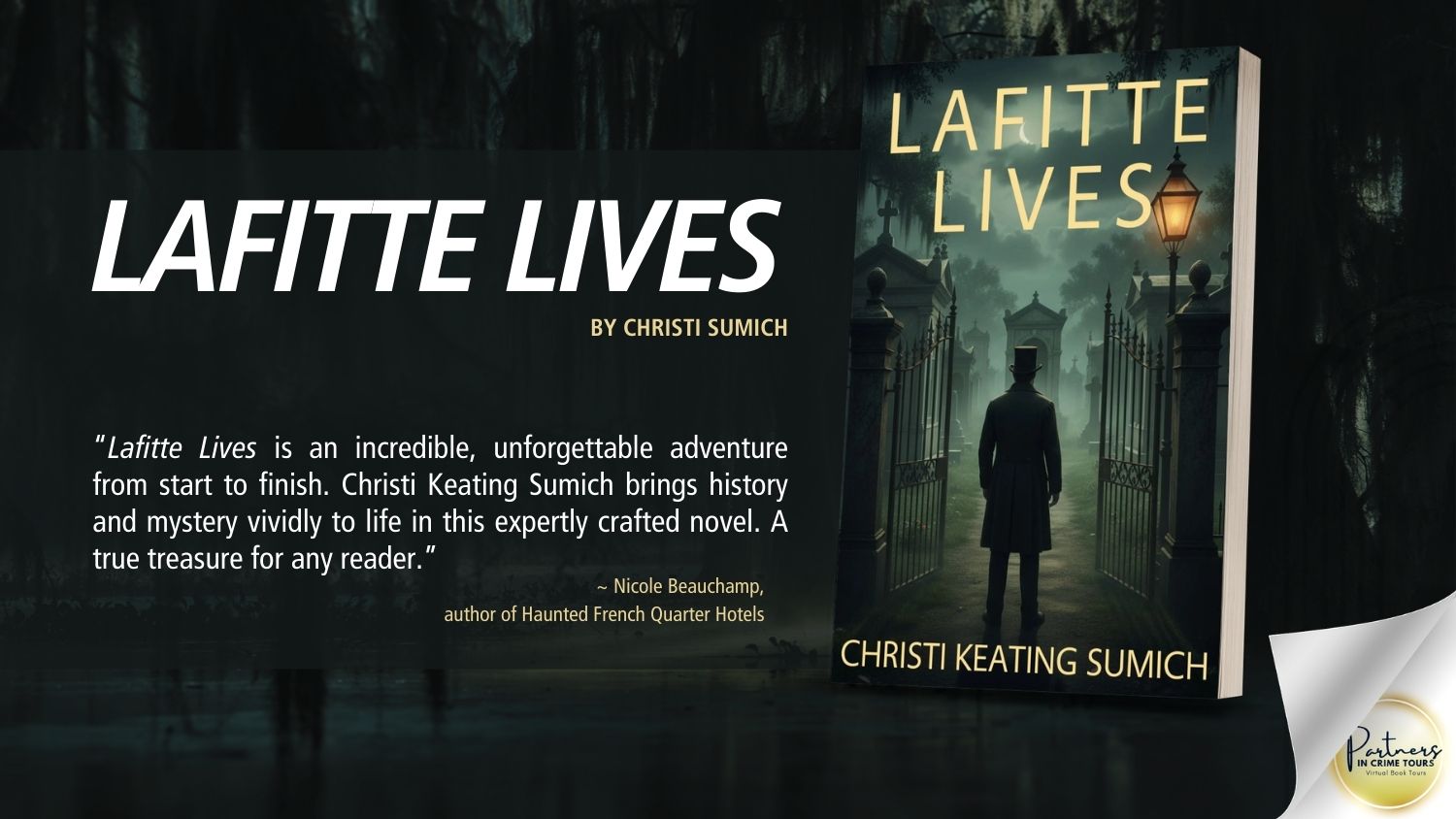
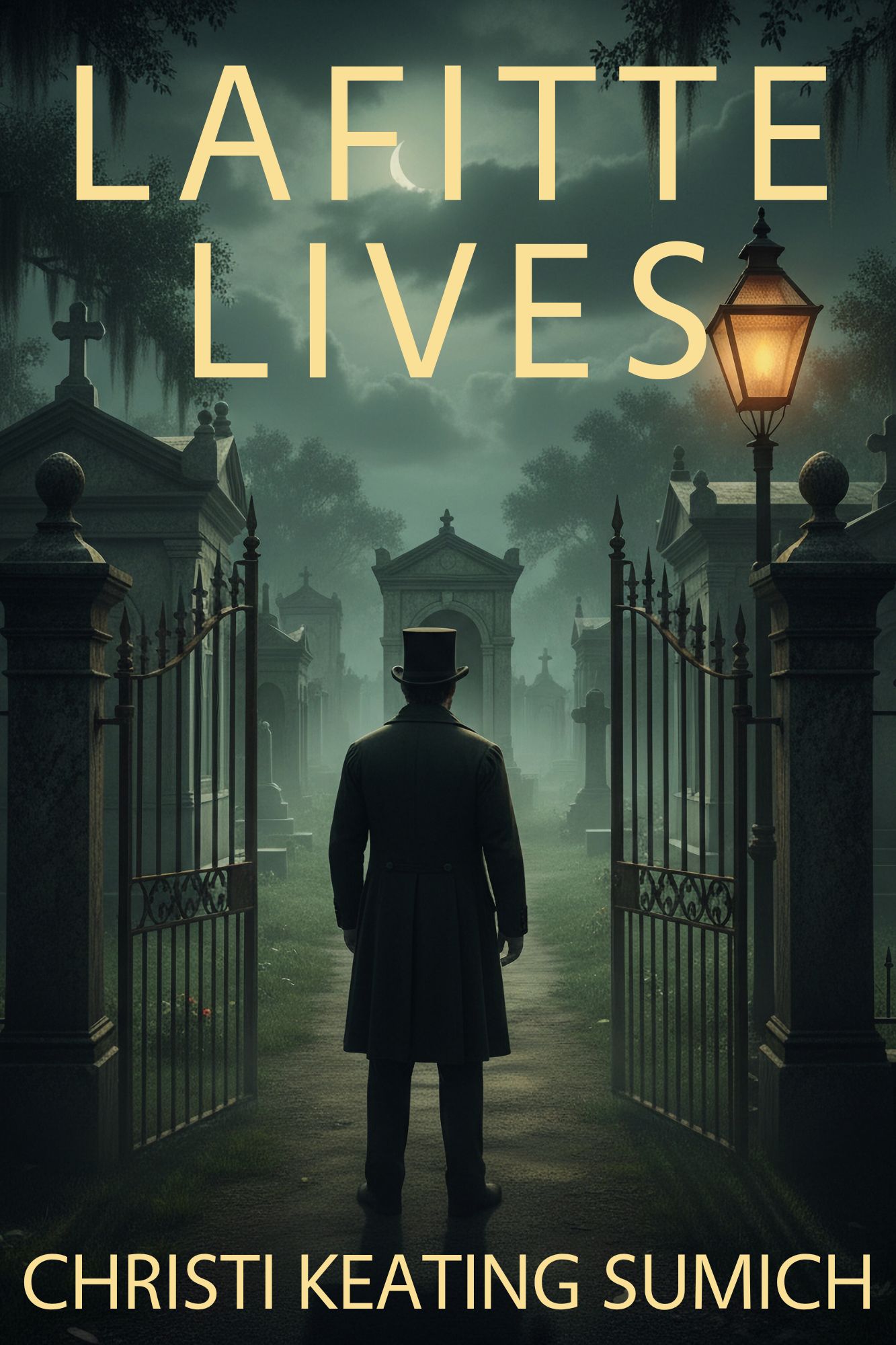
 LAFITTE LIVES 
By Christi Keating Sumich
 
After the loss of three of his five children to yellow fever Tobias Whitney sold his bookshop and lived in a miasma of grief. Taking a job as sexton at St. Louis Cemetery No. 2 Tobias tends to the graves, appreciating the silence and solitude despite the stench of a New Orleans summer in 1831. Noticing a bow on the nameplate of one of the mausoleums Tobias intends to repair it, but finds it hollowed out and a journal inside. Written in French, a language he is unable to read, Tobias shares his discovery with his wife. With Mary Catherine translating, the journal tells the story of Jean Lafitte written by his step-brother Dominique You. Even better than the adventure yarns he usually reads, Tobias learns that Lafitte did not die when everyone believed. The journal reveals many secrets about the legendary man, but will it also lead to treasure?
 
I found LAFITTE LIVES to be a fascinating and enjoyable read. However, it's not a mystery in the traditional sense. There's not a crime which Tobias sets out to solve. Rather it's an adventure story with mysterious elements. Indeed, most of the mystery isn't faced by Tobias, but rather the readers themselves. The brilliance is that you don't even truly realize all of the mysteries until the very end, when things click and you enjoy several aha moments!
 
There are two stories at play here, the life of Jean Lafitte and the story of Tobias and Mary Catherine. I really like both of the Whitneys, but especially the spitfire that is Mary Catherine. Smart, caring, with a fiery temper she will fight for her family as she yells at them. She understands the subtleties of human nature and uses that knowledge to help Tobias, in more than just her translations. While her role is much smaller, I also really like Olivia and how Voodoo is portrayed.
 
An adventure yarn within a historical mystery LAFITTE LIVES combines the facts, legends, and myths of the legendary pirate with the lives of an Irish family in 1830s New Orleans making a tale both thrilling and captivating. Just remember, never trust a pirate.
 
*************************************************************************** 

Lafitte Lives by Christi Sumich Banner

LAFITTE LIVES

by Christi Sumich

March 23 - May 1, 2026 Virtual Book Tour

Synopsis:

Lafitte Lives by Christi Sumich

Secrets can’t stay buried forever—but maybe some should.

In bustling, multicultural 1831 New Orleans, Tobias Whitney, the sexton of St. Louis Cemetery No. 2, uncovers a journal sealed inside the tomb of Dominique You—war hero of the Battle of New Orleans, privateer, and half-brother of the notorious pirate Jean Lafitte. Convinced that the journal holds the key to Lafitte’s lost treasure, Tobias turns to his sharp-witted and outspoken wife, Mary Catherine, to translate its cryptic French passages.

Tobias and Mary Catherine discover secrets they could not have imagined—secrets that could change their lives forever. But is it really the truth? As the journal warns, Never trust a pirate!

Lafitte Lives blends meticulous historical research with a page-turning mystery, bringing the legend of Jean Lafitte to life while telling the redemptive story of Tobias's grief and Mary Catherine's quest to help him overcome it.

Praise for Lafitte Lives:

"Lafitte Lives is an incredible, unforgettable adventure from start to finish. Christi Keating Sumich brings history and mystery vividly to life in this expertly crafted novel. A true treasure for any reader."
~ Nicole Beauchamp, author of Haunted French Quarter Hotels

"In August 1831, Tobias Whitney, Sexton—caretaker—of St. Louis Cemetery No. 2 in New Orleans, makes a startling discovery. Hidden in a hollow space in a mausoleum is the diary of Dominique You—half-brother of Jean Lafitte. The diary offers a first-hand account of Lafitte’s life after his reported death in 1823. As the title implies, Lafitte Lives. Find a comfortable seat, grab your favorite beverage, and let your imagination loose as Christi Keating Sumich delivers an engaging tale of the infamous pirate and patriot who may—or may not—have faded into the swamps and bayous of south Louisiana."
~ Michael Rigg, Author of the New Orleans-based medicolegal thriller, Voices of the Elysian Fields

"Lafitte Lives is a ripping good pirate yarn surrounded by a touching story of family heartbreak and healing, all wrapped up in a tantalizing mystery. Steeped in rich period detail, it’s a tale filled with secrets and surprises readers won’t see coming. After all, never trust a pirate!"
~ J.R. Sanders, author of the Shamus Award winning Nate Ross series

Lafitte Lives Trailer:

Book Details:

Genre: Historical Mystery
Published by: Level Best Books
Publication Date: February 24, 2026
Number of Pages: 320
Book Links: Amazon | Kindle | Barnes & Noble | BookShop.org | Goodreads

Read an excerpt:

Chapter 1

New Orleans
August 1831

The worst part of the job was the smell. A decaying human body releases an oddly distinct scent. It is a horrid mixture of rotting eggs and cabbage, mothballs, feces, and an off-putting garlic-like odor, depending upon the gases released at each stage of decomposition. Being an observant sort of chap, Tobias Whitney was well-versed in the stink of human decay able to discern how far along a body was in the process of decomposition based on the particular aroma the tomb was emitting. It might be a cloying reek or a putrid stench. The time of year was a contributing factor. The hot, humid summer months were the worst. So much rotting flesh in one place combined to produce a nauseating medley of noxious aromas so foul that even Tobias, who spent his days in the cemetery, felt his stomach churn as he inhaled the soupy air.

Tobias had smelled foul odors before, of course. Anyone who lived in New Orleans long enough had. At this time of year, the privy behind his cottage was the stuff of nightmares. A body could get used to almost anything, though. Tobias had taught himself to focus instead on the delicate, honeyed scent of the flowering sweet olive bushes planted in the courtyards of homes all through the Vieux Carré, or the French Quarter as the Americans called it, for the express purpose of making the stench of so many privies in such close proximity more bearable.

Similar aforethought had gone into the landscaping at St. Louis Cemetery No. 2, where Tobias had been sexton for nearly three years. Unfortunately, the ethereal scent of fragrant flowering bushes and trees planted along the perimeter and throughout the cemetery grounds was far too subtle to mask the stink. It invaded his nose and marched its way down to his mouth. He let out a breath he’d been holding and put his sleeve against his nose as he inhaled. He spit to rid himself of the foul taste. Both actions proved futile. It was no wonder. The body interred within the tomb he was cleaning had been laid to rest less than a year before, and the tomb's inhabitant to his right was an even fresher burial.

As sexton, he was responsible for maintaining the cemetery. Some months were busier than others, and August was keeping him at sixes and sevens, between all the yellow fever burials and the rains making a mess of the cemetery pathways. The cemetery had flooded recently, causing the crushed oyster-shell gravel to flow in rivulets between the above-ground tombs and collect in the lowest spot. Unfortunately, the lowest spot was the site of a recently built tomb.

The cemetery consisted mainly of above-ground tombs, whose care kept Tobias busy, though he remained fascinated by the structures. Above-ground burials were the custom here, in part due to the French and Spanish colonists who settled in New Orleans, and for more practical reasons. Guthrie Toups, the octogenarian and retired sexton whom Tobias replaced, had justified the tomb burials in the most colorful fashion.

“These tombs are your bosom friend.” He had waved his gnarled hand about, indicating the structures surrounding him, as he shuffled through the cemetery with Tobias on one of his final days on the job. “Smell like shite in summer but keep the floaters pinned down.” When Tobias failed to comment, Guthrie explained.

“Used to be, I worked at St. Peter Street Cemetery. All those souls went right in the ground. Two times I recall the rainwaters floodin’ the place somethin’ fierce. Coffins poppin’ up like gophers in springtime. Some washed down the street, right up to folks’ houses. When the lids came off, now that was a sight!” A shudder wracked Guthrie’s gaunt frame, rippling through his threadbare coat. “Took us weeks to round up the coffins. And then to find out who belonged where! Can’t put a body back in a hole when you don’t know who he is and which hole is his,” Guthrie shook his head. “Damn shame. You think lookin’ after these tombs is trouble until you gotta put coffins back whence they should never have been disturbed.”

Guthrie, who insisted on being called by his Christian name, had been gone from the cemetery for three years and from the world for two. Technically, he had never actually left St. Louis No. 2. He was enjoying his eternal rest, only one row of tombs over from where Tobias was currently toiling. Tobias considered whether Guthrie’s take on the tradeoff of floaters versus smell was valid. “Shite” seemed far too euphemistic a way to describe what was assailing his senses. Had the souls surrounding him been laid to rest underground, there would be no discernible odor, even in the August heat. However, in addition to being above ground, the vaults in St. Louis No. 2 were not airtight, a necessity since exposure to the elements ensured the bodies would decompose in a timely fashion. Following the bevy of recent rainstorms that Tobias’s wife referred to as “gully washers,” an additional component of stale, stagnant water added to the cemetery effluvium.

"God's teeth!" declared Tobias in frustration, blowing out a breath of putrid air as he gazed at the dispersed gravel and mud piled up along the front and sides of the low-lying tomb. He continued raking, attempting to redistribute the mud-soaked mess along the paths that separated the tombs. It was slow going. The puddles of standing water made the task challenging, and, of course, another drenching rain would produce a similar mess. It was the sort of mindless labor that allowed a person time to think, though Tobias, as of late, preferred not to indulge his brain in aimless wandering. It inevitably led back to dark and painful places. Instead, he compensated by replacing his internal monologue with the voices of others, imagining how they might describe what he was presently seeing. It engaged his mind and allowed him to distance himself from his thoughts. He often remembered the tombs' description, construction, and proper care, as Guthrie had first explained them to him. Even now, he could so vividly recall the old man’s gravelly voice, brittle as the oyster shells underfoot.

“Needed these tombs, the city did. So many coming to New Orleans after Jefferson bought her up, and so many dying here. Nowhere to put a cemetery unless you want to go digging graves in a swamp!” His guffaw had echoed off the tombs.

When Guthrie first began his tutelage, Tobias doubted that he could absorb any new information, so clogged was his brain with other thoughts. Still, the details distracted him. He yearned to learn all he could about the cemetery and the tombs where the bodies rested. He was fascinated, he feared morbidly so, with the amount of sadness one place could contain within its walls. Tobias could sense the pain and loss felt by the loved ones of St. Louis No. 2’s inhabitants, the heaviness of their collective grief threatening to crush him at times. He felt the familiar weight bearing down on him as he looked to his left, at the open tomb whose faceplate had been removed in anticipation of its next occupant, a newly deceased young woman who would be interred there tomorrow. The tomb was empty now, as she would be the first inhabitant.

He took a moment to wipe his brow and allowed himself to be transported back to the first time he had viewed an open tomb.

“‘Nother good thing ‘bout tombs is how many bodies you can stuff inside,” Guthrie had explained.

Tobias had to bend his lanky frame nearly horizontal to match the smaller man’s permanently hunched posture, but by doing so, he could peer into the yawning darkness of the tomb, the unnatural stillness of the space raising the hairs on the back of his neck.

“This one’s a single vault,” Guthrie said. “When the first one of the family dies, we put him in there, coffin an’ all. When the next one goes, that first one gets taken out of the coffin, and what remains of him gets put down in the caveau.” He motioned to the dark, far reaches of the tomb, beyond and below, where the coffin was to be placed. “And so it goes ‘til all the family is holed up in their tomb together. Here’s hopin’ they get along, cuz that’s some close quarters!” Guthrie punctuated this with a cackle and a bony elbow to Tobias’s ribs.

Guthrie’s litany of anecdotes and explanations encompassed nearly every inch of St. Louis No. 2, including the perimeter walls of the cemetery itself, comprised of stacked tombs that Guthrie had told him were called ovens.

“Cuz they look like ovens put one atop the other, and they heat up the bodies faster than cookin’ ‘em. That’s a good thing when you need to get a lot of bodies buried all at once.”

Guthrie’s mood had turned somber, the smile leaving his face. “I can remember stacking bodies up in ‘24 and ‘25 when Yellow Jack came for so many, and there was nary a place to put ‘em. Brought ‘em to the cemetery by the cartload and dumped ‘em right outside the cemetery gates, they did. Left those poor souls rotting in the sun, spreading their miasma over the city like a damned blanket. Least these ovens do the trick!”

The thought of yellow fever victims drew an involuntary shiver from Tobias, even this day, in the summer heat. Guthrie’s voice in Tobias’s head was sometimes the only company he had, not that he was complaining. Tobias craved solitude and was thankful to have this job. It paid a decent wage, enough for his family to live simply but comfortably, and perhaps best of all, it allowed him time to read.

He looked wistfully at his favorite reading bench, positioned in a particularly serene spot deep within the cemetery. The only sounds were the cooing of doves and the whining buzz of cicadas, so incessant this time of year as to become background noise. He felt the book’s weight in his pocket, ever-present and beckoning him to take a break. His vision blurred. He wiped the sweat from his forehead yet again to prevent more of it from dripping into his eyes. He yearned to lose himself, if only for an hour or so, in the all-absorbing action-adventure stories he loved so dearly. For the past few years, escaping from the world had become necessary for his survival. Strange, he often mused, that spending his days surrounded by the dead would be the only way he could cope with the living. Strange, but understandable, given what happened to him three years ago.

With a stubborn shake of his head, he said aloud, though no one else was around, “Not ‘til I put this tomb to rights.” Most families who owned vaults cared for them or paid the cemetery to perform the maintenance, which at the very least required replastering and whitewashing the brick from time to time. Even though the cemetery was relatively new, consecrated only eight years ago, he could already see the ravages the subtropical climate wreaked on those tombs without a caretaker to maintain them.

“Orphan tombs, these ones are,” Guthrie had said of the tombs left to crumble. “Got no livin’ kin to care for ‘em.” He had shaken his head, the wiry gray hairs swaying with the movement. “A whole family gone and no one to remember them.”

Tobias considered Guthrie’s words as worked this day. As he raked, he looked over his shoulder at one such orphan tomb and read aloud the inscriptions on the faceplate, “Constance Bulwark, born 1770, died 1824. Faithful wife, loving mother. ‘Blessed are the pure in heart, for they shall see God.’ Jeremiah Longstreet, born 1758, died 1827. Honest in labor, kind in spirit. May his soul rest in peace.” To preserve the dignity of the inhabitants within, he cleaned and made minor repairs to the orphan tombs, though it was technically beyond the purview of his duties. “You’ll not be forgotten,” he assured them before turning his attention to the task at hand.

The tomb before him was not an orphan, as the cemetery was contracted to maintain it, but it might as well have been. Its inhabitant had received no visitors since he was laid to rest. Still, this particular tomb had intrigued Tobias since its construction last November. Like most in St. Louis No. 2, it was brick. While not as extravagant as some tombs Tobias had seen, he found the elevated parapet facade aesthetically pleasing in a simple, elegant way. However, the feature that most fascinated him was the nameplate commemorating the occupant, Dominique You. You was a Freemason, as such, his tomb sported the square and compass symbol prominently carved into the top of the marble nameplate. Below the name was an inscription in French. Tobias was Irish and could not discern the writing, but he knew from the accounts he had read in the papers that the inscription was from Voltaire’s La Henriade:

Intrepid warrior on land and sea

in a hundred combats showed his valor.

This new Bayard without reproach or fear

Could have witnessed the ending of the world without trembling.

Dominique You was an infamous privateer and, some say, the half-brother of the notorious pirate Jean Lafitte. Tobias had read all about the adventures of the two buccaneer brothers in the weekly broadsheets he purchased. Lafitte had been killed in 1823, the same year St. Louis No. 2 opened. But while Lafitte’s whereabouts in the years before his death remained a mystery, Dominique You had lived out his final years in New Orleans, keeping a tavern and serving on the city council. He may have been a privateer, but he was also a war hero, having served valiantly as a gunner in the Battle of New Orleans, warding off a British invasion of the city by commanding a company of artillery composed of fellow pirates.

Stories about Dominique You and Jean Lafitte were legendary around New Orleans and made the adventure novels Tobias read pale in comparison. Tobias vividly recalled his excitement when Dominique You was buried right in front of where he was now standing. Although You died in a state of penury, the people of New Orleans did not forget his heroism. He was given a lavish funeral at the Cathedral of St. Louis, with full military honors, the likes of which the city had seldom seen. Throngs of mourners had followed the coffin to the cemetery. As the sexton, Tobias had been there to witness it all.

Many brought flowers to lay on his tomb, chrysanthemums or early-blooming camellias. Others brought magnolia leaves, fashioned into wreaths or dried herbs tied into bouquets with bits of ribbon or string. There were also rosaries, little vials of holy water, candles, and voodoo tokens left on You’s tomb. The mourners were as varied as the offerings they brought, well-dressed gentlefolk alongside the more common sort. They were all here for the same reason: to pay their respects to the man who helped save the city from the British fifteen years before.

Tobias had caught snippets of conversations all around the tomb. One, in particular, stayed with him. A group of rough-looking men, ill at ease in their mourning attire, had gathered at You’s tomb.

One of the men said, “Sailed with him, I did. No finer man you'd want at your side when things turned hairy. I’d trust him with my life."

"As would I," his mate agreed. "Fought beside him, too. Best cannoneer I ever saw. That’s why the general said he’d storm the gates of hell with Dominique as his lieutenant!”

Tobias had been particularly impressed with this, considering General Andrew Jackson was now president of the United States. He watched as they poured a slug of rum next to the tomb. It soaked into the gravel, leaving the scent of molasses and cloves lingering in the air like a final tribute. Tobias wondered with a shudder if these men were pirates themselves.

He’d had little time to dwell on it, as a Mason engaged him in conversation shortly after Tobias overheard this exchange. The man donned a fine wool suit, well cut and fashionable, with a frock coat that gracefully skimmed the back of the knees of his trousers. Tobias usually donned a working man’s attire for his days in the cemetery, loose-fitting tweed trousers and a jacket, although on this day, he donned a suit. It was one he used to wear as a shop owner before he became a cemetery sexton, though now he donned it only for Sunday Mass. His wife, Mary Catherine, would have his hide if he showed up to work on the day of an interment of such prominence in anything less. Tobias felt rather nattily clad until he beheld the sartorial superiority of the man. Despite their difference in clothing, the Freemason was eager to engage Tobias in conversation, and Tobias found this agreeable.

Funny how he spoke to almost no one these days, save his family and his close friend, the proprietor of his beloved bookshop, Chapter and Verse. Yet within the walls of the cemetery, he came back to life, if only for a short time. He felt at home here as much as he did in his cottage on Bienville Street. Though he knew precisely why this was, he found it a disconcerting aspect of his personality that he was more comfortable with mourners than with those unaffected by death.

“Not a business in New Orleans stayed open today. Everyone’s here to pay their respects,” the man told Tobias. “I suppose you heard the cannons fired for him?”

Tobias assured him that he had, and added that he’d also noticed the flags flown at half-mast.

The Mason nodded.

“He was a proud man, Dominique You.” The man seemed uneasy in the cemetery, as Tobias found most people to be. He suspected the Mason’s attempts to converse stemmed from a compelling need to fill the silence. Tobias noticed the man’s unconscious fidgeting with the intricately designed collar that nestled just below the tie on his starched white linen shirt, the adornment an indicator of his status among the Brotherhood. He spoke with a French accent, and his eyes told the story of a man who accepted the inevitable tribulations of life while still finding joy in living. Tobias was immediately envious of him.

“Had not a penny to his name at the end but did not tell a soul of his troubles.” The man gazed wistfully at Dominique’s tomb.

Tobias would have left him to his thoughts, but he continued. “We would have come to his aid, I can assure you of that. But Dominique was never one for charity. Tough old sailors rarely are. At least we could honor him in this way.” With a tip of his top hat by his white-gloved hand, the man moved on, presumably finding Tobias too taciturn.

Yet for all the military fanfare and grandeur surrounding the funeral, now, a mere nine months later, the tomb lay quiet. Tobias had seen no visitors at the tomb since that day. Dominique You had never married, and although he had been a rather upstanding citizen in the twilight of his life, he did not appear to have close friends, at least not that Tobias had seen. Close friends visited a grave from time to time, but not even his brothers from the Masonic lodge had come. And those had been the folks most upset by his death, at least if public grieving was any indication. Then again, Tobias had seen a lot of grief in his tenure at the cemetery, and it had been his observation that even members of the sterner sex could make an enormous fuss over the coffin and then never come back.

The people who looked the most distraught, as if they did not care to go on living, usually got over it by morning. It was the ones who never took their eyes off the coffin, even as it made its way into the vault, that you could be sure would put flowers there for years. Real grief was mostly invisible. It consumed a person from within, leaving only an outer shell that appeared to the world as a whole being, but was hollow inside. Tobias ought to know. He recognized it in others because he was just a shell himself.

Tobias wondered once again why the Freemasons had chosen this spot for You’s tomb. It seemed a poor location in the cemetery to build a tomb, but it was not Tobias’s place to say so. It was kind of the Freemasons to construct it for their brother, even if they had decreed it was to be sold in fifty years. This stipulation did not surprise him, as he knew people sometimes purchased tombs this way. The odd part to him was that an entire tomb would be dedicated to only one person when many held multiple family members.

Tobias would have thought a single man with no surviving family, and one who did not have much money, would not need a whole tomb to himself. But perhaps his contribution as a war hero had moved some hearts to loosen their purse strings and fund this stand-alone vault. This was a monument to Captain Dominique You, and Tobias would do his part to honor his memory by mucking out the mess around the man’s final resting place.

He finished raking the gravel around the front, repositioning it as best he could amid the puddles that stubbornly lingered even with the scorching August sun. Now he moved to the side of the tomb, where the ground was slightly lower, causing even more water to pool. He could not do much else until the water drained, which might take a while in New Orleans. In the meantime, he could wipe away some of the mud that had splashed onto the tomb from the rainstorm. He pulled a clean rag out of his pocket and decided to concentrate on the nameplate on the front of the tomb.

It was then that Tobias noticed the oddest thing—the marble plate was not flush against the bricks. Tobias chided himself for not observing this before, but as he studied it closely, he realized that it appeared to be placed properly from the front. It was not until he looked from the side that he could see the marble stone was bowing. This was indeed curious, as he himself had placed the outer tablet. As sexton, it was part of his duties to affix the plate upon the bricks after the body was interred and the tomb bricked up.

He had seen marble bow when exposed to extreme heat, but thick nameplates typically did not deform so quickly. It was a blessing in disguise that the rain, which would inevitably flood the cemetery in the summer months, had necessitated him spending time around this tomb, allowing him to observe it more closely. Had the Freemasons chosen a more optimal spot to place the tomb, it might have been many years before he had noticed this subpar workmanship. And since the inhabitant had no living family members, it might not have been until the fifty years were up and the sexton opened the tomb for a new burial that the faulty nameplate was discovered.

But surely, he would have noticed if something was amiss with the marble. He leaned in for a closer inspection and blinked rapidly. He thought perhaps it was a trick of the bright sunshine, but as he stared at the marble slab, he discerned a hairline fracture running the length of the stone. Dominique had been interred less than a year ago. This nameplate should not display such signs of degradation. Had he somehow damaged the stone when bolting the nameplate onto the brick vault? Utterly perplexed, Tobias pondered what he should do. He was exceedingly curious whether his workmanship was to blame for the bowing and cracking or if it was a defect in the stone itself.

He knew he should probably wait until he had help, but his inquisitive nature got the best of him, and he rushed off to retrieve his wrench. Removing the large bolts holding the nameplate in place would not be an easy job to perform by himself. He half-expected that he would not be able to loosen them at all, but was relieved and more than a bit surprised to find them coming loose without even having to apply heat. He knew the stone would be too heavy to maneuver on his own, but he planned to slide it down to the ground once it was free from the brick on the front of the vault. With less effort than should have been required for such an undertaking, Tobias freed the marble slab and eased it down about a foot until it rested upright against the tomb. To conduct a proper inspection, he would need to see the back of the slab. The stone was indeed heavy and should have been cumbersome for two men to handle, yet Tobias was able, with some difficulty, to lay the slab on the ground so that the back was visible.

He instantly understood why he was able to maneuver it unassisted. The back of the marble had been carved out, and the stone, too thin in the center to withstand the intense heat, had bowed as a result. The thinned-out stone also accounted for the hairline fracture Tobias had noticed. This nameplate was not the solid, thick slab he had affixed to Dominique’s vault nine months ago. The slab had been altered and reattached, unbeknownst to him. Tobias did not need to ponder why someone had done this because nestled within the carved-out space was a book.

***

Excerpt from Lafitte Lives by Christi Sumich. Copyright 2026 by Christi Sumich. Reproduced with permission from Christi Sumich. All rights reserved.


Author Bio:

Christi Sumich

Christi Keating Sumich holds a PhD in history from Tulane University and a master’s degree in English. Her research field is seventeenth-century disease and healing.

Christi’s writing combines her fascination with history with her love of the mystery genre. Her debut novel, Lafitte Lives (Level Best Books, March 2026), is a historical mystery centered on her ancestor, the notorious pirate Jean Lafitte. She is also the author of the Old New Orleans Bookshop Series, mysteries featuring characters from Lafitte Lives. The Swamp Ghost is the first book in the series (Level Best Books, September 2026).

Christi is also part of a writing team with her mother, Sharon Keating. They are the co-authors of Hauntingly Good Spirits: New Orleans Cocktails to Die For (Wellfleet Press, 2024) and The Brandy Milk Punch (Louisiana State University Press, 2025), part of the Iconic New Orleans Cocktail Series.

Catch Up With Christi Sumich:

ChristiSumich.com
Amazon Author Profile
Goodreads
BookBub
Instagram - @casumich
Facebook - @christi.keating.sumich.author


Tour Participants:

Click through the other tour stops for can’t-miss reviews, insider interviews, exclusive guest posts, and more chances to win!

Click here to view the Tour Schedule


Claim Your Treasure! Celebrate LAFITTE LIVES!

This giveaway is hosted by Partners in Crime Tours for Christi Keating Sumich. See the widget for entry terms and conditions. Void where prohibited.
LAFITTE LIVES by Christi Sumich | Gift Cards

Can't see the giveaway? Click Here!

Get More Great Reads at Partners In Crime Tours

Tuesday, April 7, 2026

Lafitte Lives - An Interview, Excerpt, & Giveaway

I'm pleased to welcome Christi Sumich to Cozy Up With Kathy today. Christi's latest release is LAFITTE LIVES.


Kathy: LAFITTE LIVES tells the story of Tobias Whitney and his wife Mary Catherine who discover the journal of Dominique You—war hero of the Battle of New Orleans, privateer, and half-brother of the notorious pirate Jean Lafitte. Do you keep a journal?

CS: Sort of—I keep a running commentary in my head of what I’m doing and how I’m feeling. (It’s weird, but I’ve always done it, so it comes naturally now.) I did keep a physical diary when I was younger. I should probably go back and read it sometime. The last time I glanced at it, I remember thinking it was the cringiest thing I had ever read.

Kathy: Tobias believes the journal holds the key to Lafitte’s lost treasure. Have you ever gone treasure hunting?

CS: Only if you count searching for shells on the beach! 


Kathy: Historical mysteries require an extra special brand of research. What's your favorite method to research this time period?

CS: I have a PhD in history, so the research component is critically important to me. When I began researching Jean Lafitte, it quickly became apparent that Lafitte scholars disagree on even the most basic aspects of his life, such as where he was born, when he was born, and when he died. I read the scholars who disagreed most vehemently about his life and juxtaposed their accounts to decide which I wanted to go with. This is where writing fiction feels freeing because I can pick and choose the accounts that best help me tell the story I want to tell.

Kathy: Before writing this novel did you know a lot about Lafitte? Was there anything in your research that really surprised you?

CS: I did. It’s hard to grow up in New Orleans without knowing about Jean Lafitte. There are streets, bars, hotels, and towns named after him. Plus, according to family legend, Lafitte is an ancestor. My mother’s grandmother was a Saint Amant and owned land in Barataria, supposedly land inherited from Captain Jean Lafitte, through an illegitimate branch of the family.

I also grew up with documents written by Jean Lafitte hanging up in my parents’ house. My paternal grandfather had done some business in London and was repaid with papers written by Jean Lafitte, which he gave to his daughter-in-law (my mother) because of her supposed connection to the man. My parents had them framed and hung them on the wall in our dining room. When I asked about them, my parents told me they were “a legal contract to do something illegal.” The papers delineated the terms and conditions under which one of his privateering captains could commandeer ships. They outlined in meticulous detail what would happen and how the spoils would be divided, leaving nothing to chance.

Those papers were in the background of my life as I was growing up. They were written in French, so I couldn't understand them, but I can still picture his signature and the date, 1805. They came to symbolize mystery and adventure for me.

What surprised me the most about my research was the lack of consensus about his life. I have come to the conclusion that, as a privateer, it was in his best interest to have the details of his life remain murky. As a character says in the book, his name is his treasure, and he does not wish to share it. Jean Lafitte did an excellent job guarding that particular treasure.

Kathy: What first drew you to historical mysteries?

CS: I absolutely love history. I think it’s fascinating, which is why I decided to become a historian. I also think the way history is presented can make all the difference in engendering a love of history in others. I’ve always approached teaching history with this idea in mind. To me, novels are magic—they transport us to another time and place. Historical mysteries combine the elements I most love about reading and history. We get to glimpse another era and see the world from a completely different perspective. There’s something about that perspective shift that actually changes the way we view our own loves and the time period we are living in. Did I mention it’s magical? On top of that, we get to solve a mystery! It’s the perfect genre.


Kathy: Do you write in any other genres?

CS: Yes! In addition to my scholarly work, I have written two cocktail history books with my mom. Hauntingly Good Spirits: New Orleans Cocktails to Die For (Wellfleet Press, August 2024) and The Brandy Milk Punch (Louisiana State University Press, March 2025), part of the Iconic New Orleans Cocktail Series. They are both New Orleans-themed. We had so much fun researching and writing them!

Kathy: Tell us about your book. 

CS: In 1831 New Orleans, Tobias Whitney, the sexton of St. Louis Cemetery No. 2, uncovers a journal sealed inside the tomb of Dominique You—war hero of the Battle of New Orleans, privateer, and half-brother of the notorious pirate Jean Lafitte. Convinced that the journal holds the key to Lafitte’s lost treasure, Tobias turns to his sharp-witted and outspoken wife, Mary Catherine, to translate its cryptic French passages. Tobias and Mary Catherine discover secrets they could not have imagined—secrets that could change their lives forever. But is it really the truth? As the journal warns, Never trust a pirate!

Do you have a favorite character? If so, who and why?

CS: I feel like I should say no, because it’s like picking a favorite child, but I do. It’s Mary Catherine Whitney. I really loved writing her. She's spunky, but she has heart. (And for the record, I do not have a favorite child, although I admit to liking one better than the others depending upon the day.)
 

Kathy: Did you have a specific inspiration for your series?

CS: Those mysterious Lafitte papers hanging in my parents’ dining room were my inspiration. When I wrote LAFITTE LIVES, I intended it to be a standalone. After I finished it, I couldn't shake the sensation that I wasn't done with the characters. I guess it would be fair to say that Mary Catherine inspired the Old New Orleans Bookshop Mysteries. They take place immediately after the conclusion of LAFITTE LIVES and focus on Mary Catherine and her mystery-solving abilities. The first one is THE SWAMP GHOST. It will be released in September. 
 

Kathy: What made you decide to publish your work?

CS: After my mother and I wrote our cocktail books, I wanted to try my hand at fiction. I always knew I would try the traditionally published route because it was the only path to publication I had experience with. I wanted to get my story out to as many people who might enjoy it as I could. Had I not found a publisher, I would have self-published it. I was determined it would not live on my computer forever!

Kathy: If you could have a dinner party and invite 4 authors, living or dead, in any genre, who would you invite?

CS: I’m a huge Faulkner fan, so he would be on my list. I don't care much for Hemingway's work, but I think he would be fun at a party, so he could come. Then I would say Anne Rice, so we could chat about New Orleans. Finally, Theodor Seuss Geisel (Dr. Seuss), because he’s iconic, and I could thank him in person for writing GREEN EGGS AND HAM. It’s the book that taught me how to read. I memorized the story, then matched the words in my head to the ones on the pages.


Kathy: What are you currently reading?

CS: I just read PENDERGAST: THE BEGINNING by Douglas Preston and Lincoln Child. I love the series! I am very late to the party, but I just read REMARKABLY BRIGHT CREATURES. It blew me away.

Kathy: Will you share any of your hobbies or interests with us?

CS: Besides reading, I love to travel. Exploring a new place, learning its history, and seeing the world from a new perspective are so appealing to me. But I'm an enigma, because I’m also a homebody. I love a family game night or an afternoon in the pool with my favorite people.
 

Kathy: Name 4 items you always have in your fridge or pantry.

CS: Eggs, tortillas, berries, coffee

Kathy: Do you have plans for future books?

CS: Absolutely! I’ve finished THE SWAMP GHOST and am working on the third book in the Old New Orleans Bookshop Mysteries. In addition to those, I have written the first in a series of paranormal culinary cozy mysteries with my mom. They are set in modern-day New Orleans, but each has a historical element (that’s the paranormal part). I’ve really enjoyed writing the humor and including recipes. We have an agent for that series, so we’re not sure who will publish it or when it will come out, but we are working on books two and three right now.


Kathy: What's your favorite thing about being an author?

CS: Working from my chair in the living room or, when the weather is nice, on my back porch, with my two dogs and my cat cuddled up next to me. I love writing. I suppose it may get tedious at some point, but I look forward to opening my laptop and getting to work. I’m still amazed at the stories and characters that come out of my head. Transforming a blank Google Doc into a novel is nothing short of magic. I am so grateful to be given the chance to do it!

*************************************************************************** 

Lafitte Lives by Christi Sumich Banner

LAFITTE LIVES

by Christi Sumich

March 23 - May 1, 2026 Virtual Book Tour

Synopsis:

Lafitte Lives by Christi Sumich

Secrets can’t stay buried forever—but maybe some should.

In bustling, multicultural 1831 New Orleans, Tobias Whitney, the sexton of St. Louis Cemetery No. 2, uncovers a journal sealed inside the tomb of Dominique You—war hero of the Battle of New Orleans, privateer, and half-brother of the notorious pirate Jean Lafitte. Convinced that the journal holds the key to Lafitte’s lost treasure, Tobias turns to his sharp-witted and outspoken wife, Mary Catherine, to translate its cryptic French passages.

Tobias and Mary Catherine discover secrets they could not have imagined—secrets that could change their lives forever. But is it really the truth? As the journal warns, Never trust a pirate!

Lafitte Lives blends meticulous historical research with a page-turning mystery, bringing the legend of Jean Lafitte to life while telling the redemptive story of Tobias's grief and Mary Catherine's quest to help him overcome it.

Praise for Lafitte Lives:

"Lafitte Lives is an incredible, unforgettable adventure from start to finish. Christi Keating Sumich brings history and mystery vividly to life in this expertly crafted novel. A true treasure for any reader."
~ Nicole Beauchamp, author of Haunted French Quarter Hotels

"In August 1831, Tobias Whitney, Sexton—caretaker—of St. Louis Cemetery No. 2 in New Orleans, makes a startling discovery. Hidden in a hollow space in a mausoleum is the diary of Dominique You—half-brother of Jean Lafitte. The diary offers a first-hand account of Lafitte’s life after his reported death in 1823. As the title implies, Lafitte Lives. Find a comfortable seat, grab your favorite beverage, and let your imagination loose as Christi Keating Sumich delivers an engaging tale of the infamous pirate and patriot who may—or may not—have faded into the swamps and bayous of south Louisiana."
~ Michael Rigg, Author of the New Orleans-based medicolegal thriller, Voices of the Elysian Fields

"Lafitte Lives is a ripping good pirate yarn surrounded by a touching story of family heartbreak and healing, all wrapped up in a tantalizing mystery. Steeped in rich period detail, it’s a tale filled with secrets and surprises readers won’t see coming. After all, never trust a pirate!"
~ J.R. Sanders, author of the Shamus Award winning Nate Ross series

Lafitte Lives Trailer:

Book Details:

Genre: Historical Mystery
Published by: Level Best Books
Publication Date: February 24, 2026
Number of Pages: 320
Book Links: Amazon | Kindle | Barnes & Noble | BookShop.org | Goodreads

Read an excerpt:

Chapter 1

New Orleans
August 1831

The worst part of the job was the smell. A decaying human body releases an oddly distinct scent. It is a horrid mixture of rotting eggs and cabbage, mothballs, feces, and an off-putting garlic-like odor, depending upon the gases released at each stage of decomposition. Being an observant sort of chap, Tobias Whitney was well-versed in the stink of human decay able to discern how far along a body was in the process of decomposition based on the particular aroma the tomb was emitting. It might be a cloying reek or a putrid stench. The time of year was a contributing factor. The hot, humid summer months were the worst. So much rotting flesh in one place combined to produce a nauseating medley of noxious aromas so foul that even Tobias, who spent his days in the cemetery, felt his stomach churn as he inhaled the soupy air.

Tobias had smelled foul odors before, of course. Anyone who lived in New Orleans long enough had. At this time of year, the privy behind his cottage was the stuff of nightmares. A body could get used to almost anything, though. Tobias had taught himself to focus instead on the delicate, honeyed scent of the flowering sweet olive bushes planted in the courtyards of homes all through the Vieux Carré, or the French Quarter as the Americans called it, for the express purpose of making the stench of so many privies in such close proximity more bearable.

Similar aforethought had gone into the landscaping at St. Louis Cemetery No. 2, where Tobias had been sexton for nearly three years. Unfortunately, the ethereal scent of fragrant flowering bushes and trees planted along the perimeter and throughout the cemetery grounds was far too subtle to mask the stink. It invaded his nose and marched its way down to his mouth. He let out a breath he’d been holding and put his sleeve against his nose as he inhaled. He spit to rid himself of the foul taste. Both actions proved futile. It was no wonder. The body interred within the tomb he was cleaning had been laid to rest less than a year before, and the tomb's inhabitant to his right was an even fresher burial.

As sexton, he was responsible for maintaining the cemetery. Some months were busier than others, and August was keeping him at sixes and sevens, between all the yellow fever burials and the rains making a mess of the cemetery pathways. The cemetery had flooded recently, causing the crushed oyster-shell gravel to flow in rivulets between the above-ground tombs and collect in the lowest spot. Unfortunately, the lowest spot was the site of a recently built tomb.

The cemetery consisted mainly of above-ground tombs, whose care kept Tobias busy, though he remained fascinated by the structures. Above-ground burials were the custom here, in part due to the French and Spanish colonists who settled in New Orleans, and for more practical reasons. Guthrie Toups, the octogenarian and retired sexton whom Tobias replaced, had justified the tomb burials in the most colorful fashion.

“These tombs are your bosom friend.” He had waved his gnarled hand about, indicating the structures surrounding him, as he shuffled through the cemetery with Tobias on one of his final days on the job. “Smell like shite in summer but keep the floaters pinned down.” When Tobias failed to comment, Guthrie explained.

“Used to be, I worked at St. Peter Street Cemetery. All those souls went right in the ground. Two times I recall the rainwaters floodin’ the place somethin’ fierce. Coffins poppin’ up like gophers in springtime. Some washed down the street, right up to folks’ houses. When the lids came off, now that was a sight!” A shudder wracked Guthrie’s gaunt frame, rippling through his threadbare coat. “Took us weeks to round up the coffins. And then to find out who belonged where! Can’t put a body back in a hole when you don’t know who he is and which hole is his,” Guthrie shook his head. “Damn shame. You think lookin’ after these tombs is trouble until you gotta put coffins back whence they should never have been disturbed.”

Guthrie, who insisted on being called by his Christian name, had been gone from the cemetery for three years and from the world for two. Technically, he had never actually left St. Louis No. 2. He was enjoying his eternal rest, only one row of tombs over from where Tobias was currently toiling. Tobias considered whether Guthrie’s take on the tradeoff of floaters versus smell was valid. “Shite” seemed far too euphemistic a way to describe what was assailing his senses. Had the souls surrounding him been laid to rest underground, there would be no discernible odor, even in the August heat. However, in addition to being above ground, the vaults in St. Louis No. 2 were not airtight, a necessity since exposure to the elements ensured the bodies would decompose in a timely fashion. Following the bevy of recent rainstorms that Tobias’s wife referred to as “gully washers,” an additional component of stale, stagnant water added to the cemetery effluvium.

"God's teeth!" declared Tobias in frustration, blowing out a breath of putrid air as he gazed at the dispersed gravel and mud piled up along the front and sides of the low-lying tomb. He continued raking, attempting to redistribute the mud-soaked mess along the paths that separated the tombs. It was slow going. The puddles of standing water made the task challenging, and, of course, another drenching rain would produce a similar mess. It was the sort of mindless labor that allowed a person time to think, though Tobias, as of late, preferred not to indulge his brain in aimless wandering. It inevitably led back to dark and painful places. Instead, he compensated by replacing his internal monologue with the voices of others, imagining how they might describe what he was presently seeing. It engaged his mind and allowed him to distance himself from his thoughts. He often remembered the tombs' description, construction, and proper care, as Guthrie had first explained them to him. Even now, he could so vividly recall the old man’s gravelly voice, brittle as the oyster shells underfoot.

“Needed these tombs, the city did. So many coming to New Orleans after Jefferson bought her up, and so many dying here. Nowhere to put a cemetery unless you want to go digging graves in a swamp!” His guffaw had echoed off the tombs.

When Guthrie first began his tutelage, Tobias doubted that he could absorb any new information, so clogged was his brain with other thoughts. Still, the details distracted him. He yearned to learn all he could about the cemetery and the tombs where the bodies rested. He was fascinated, he feared morbidly so, with the amount of sadness one place could contain within its walls. Tobias could sense the pain and loss felt by the loved ones of St. Louis No. 2’s inhabitants, the heaviness of their collective grief threatening to crush him at times. He felt the familiar weight bearing down on him as he looked to his left, at the open tomb whose faceplate had been removed in anticipation of its next occupant, a newly deceased young woman who would be interred there tomorrow. The tomb was empty now, as she would be the first inhabitant.

He took a moment to wipe his brow and allowed himself to be transported back to the first time he had viewed an open tomb.

“‘Nother good thing ‘bout tombs is how many bodies you can stuff inside,” Guthrie had explained.

Tobias had to bend his lanky frame nearly horizontal to match the smaller man’s permanently hunched posture, but by doing so, he could peer into the yawning darkness of the tomb, the unnatural stillness of the space raising the hairs on the back of his neck.

“This one’s a single vault,” Guthrie said. “When the first one of the family dies, we put him in there, coffin an’ all. When the next one goes, that first one gets taken out of the coffin, and what remains of him gets put down in the caveau.” He motioned to the dark, far reaches of the tomb, beyond and below, where the coffin was to be placed. “And so it goes ‘til all the family is holed up in their tomb together. Here’s hopin’ they get along, cuz that’s some close quarters!” Guthrie punctuated this with a cackle and a bony elbow to Tobias’s ribs.

Guthrie’s litany of anecdotes and explanations encompassed nearly every inch of St. Louis No. 2, including the perimeter walls of the cemetery itself, comprised of stacked tombs that Guthrie had told him were called ovens.

“Cuz they look like ovens put one atop the other, and they heat up the bodies faster than cookin’ ‘em. That’s a good thing when you need to get a lot of bodies buried all at once.”

Guthrie’s mood had turned somber, the smile leaving his face. “I can remember stacking bodies up in ‘24 and ‘25 when Yellow Jack came for so many, and there was nary a place to put ‘em. Brought ‘em to the cemetery by the cartload and dumped ‘em right outside the cemetery gates, they did. Left those poor souls rotting in the sun, spreading their miasma over the city like a damned blanket. Least these ovens do the trick!”

The thought of yellow fever victims drew an involuntary shiver from Tobias, even this day, in the summer heat. Guthrie’s voice in Tobias’s head was sometimes the only company he had, not that he was complaining. Tobias craved solitude and was thankful to have this job. It paid a decent wage, enough for his family to live simply but comfortably, and perhaps best of all, it allowed him time to read.

He looked wistfully at his favorite reading bench, positioned in a particularly serene spot deep within the cemetery. The only sounds were the cooing of doves and the whining buzz of cicadas, so incessant this time of year as to become background noise. He felt the book’s weight in his pocket, ever-present and beckoning him to take a break. His vision blurred. He wiped the sweat from his forehead yet again to prevent more of it from dripping into his eyes. He yearned to lose himself, if only for an hour or so, in the all-absorbing action-adventure stories he loved so dearly. For the past few years, escaping from the world had become necessary for his survival. Strange, he often mused, that spending his days surrounded by the dead would be the only way he could cope with the living. Strange, but understandable, given what happened to him three years ago.

With a stubborn shake of his head, he said aloud, though no one else was around, “Not ‘til I put this tomb to rights.” Most families who owned vaults cared for them or paid the cemetery to perform the maintenance, which at the very least required replastering and whitewashing the brick from time to time. Even though the cemetery was relatively new, consecrated only eight years ago, he could already see the ravages the subtropical climate wreaked on those tombs without a caretaker to maintain them.

“Orphan tombs, these ones are,” Guthrie had said of the tombs left to crumble. “Got no livin’ kin to care for ‘em.” He had shaken his head, the wiry gray hairs swaying with the movement. “A whole family gone and no one to remember them.”

Tobias considered Guthrie’s words as worked this day. As he raked, he looked over his shoulder at one such orphan tomb and read aloud the inscriptions on the faceplate, “Constance Bulwark, born 1770, died 1824. Faithful wife, loving mother. ‘Blessed are the pure in heart, for they shall see God.’ Jeremiah Longstreet, born 1758, died 1827. Honest in labor, kind in spirit. May his soul rest in peace.” To preserve the dignity of the inhabitants within, he cleaned and made minor repairs to the orphan tombs, though it was technically beyond the purview of his duties. “You’ll not be forgotten,” he assured them before turning his attention to the task at hand.

The tomb before him was not an orphan, as the cemetery was contracted to maintain it, but it might as well have been. Its inhabitant had received no visitors since he was laid to rest. Still, this particular tomb had intrigued Tobias since its construction last November. Like most in St. Louis No. 2, it was brick. While not as extravagant as some tombs Tobias had seen, he found the elevated parapet facade aesthetically pleasing in a simple, elegant way. However, the feature that most fascinated him was the nameplate commemorating the occupant, Dominique You. You was a Freemason, as such, his tomb sported the square and compass symbol prominently carved into the top of the marble nameplate. Below the name was an inscription in French. Tobias was Irish and could not discern the writing, but he knew from the accounts he had read in the papers that the inscription was from Voltaire’s La Henriade:

Intrepid warrior on land and sea

in a hundred combats showed his valor.

This new Bayard without reproach or fear

Could have witnessed the ending of the world without trembling.

Dominique You was an infamous privateer and, some say, the half-brother of the notorious pirate Jean Lafitte. Tobias had read all about the adventures of the two buccaneer brothers in the weekly broadsheets he purchased. Lafitte had been killed in 1823, the same year St. Louis No. 2 opened. But while Lafitte’s whereabouts in the years before his death remained a mystery, Dominique You had lived out his final years in New Orleans, keeping a tavern and serving on the city council. He may have been a privateer, but he was also a war hero, having served valiantly as a gunner in the Battle of New Orleans, warding off a British invasion of the city by commanding a company of artillery composed of fellow pirates.

Stories about Dominique You and Jean Lafitte were legendary around New Orleans and made the adventure novels Tobias read pale in comparison. Tobias vividly recalled his excitement when Dominique You was buried right in front of where he was now standing. Although You died in a state of penury, the people of New Orleans did not forget his heroism. He was given a lavish funeral at the Cathedral of St. Louis, with full military honors, the likes of which the city had seldom seen. Throngs of mourners had followed the coffin to the cemetery. As the sexton, Tobias had been there to witness it all.

Many brought flowers to lay on his tomb, chrysanthemums or early-blooming camellias. Others brought magnolia leaves, fashioned into wreaths or dried herbs tied into bouquets with bits of ribbon or string. There were also rosaries, little vials of holy water, candles, and voodoo tokens left on You’s tomb. The mourners were as varied as the offerings they brought, well-dressed gentlefolk alongside the more common sort. They were all here for the same reason: to pay their respects to the man who helped save the city from the British fifteen years before.

Tobias had caught snippets of conversations all around the tomb. One, in particular, stayed with him. A group of rough-looking men, ill at ease in their mourning attire, had gathered at You’s tomb.

One of the men said, “Sailed with him, I did. No finer man you'd want at your side when things turned hairy. I’d trust him with my life."

"As would I," his mate agreed. "Fought beside him, too. Best cannoneer I ever saw. That’s why the general said he’d storm the gates of hell with Dominique as his lieutenant!”

Tobias had been particularly impressed with this, considering General Andrew Jackson was now president of the United States. He watched as they poured a slug of rum next to the tomb. It soaked into the gravel, leaving the scent of molasses and cloves lingering in the air like a final tribute. Tobias wondered with a shudder if these men were pirates themselves.

He’d had little time to dwell on it, as a Mason engaged him in conversation shortly after Tobias overheard this exchange. The man donned a fine wool suit, well cut and fashionable, with a frock coat that gracefully skimmed the back of the knees of his trousers. Tobias usually donned a working man’s attire for his days in the cemetery, loose-fitting tweed trousers and a jacket, although on this day, he donned a suit. It was one he used to wear as a shop owner before he became a cemetery sexton, though now he donned it only for Sunday Mass. His wife, Mary Catherine, would have his hide if he showed up to work on the day of an interment of such prominence in anything less. Tobias felt rather nattily clad until he beheld the sartorial superiority of the man. Despite their difference in clothing, the Freemason was eager to engage Tobias in conversation, and Tobias found this agreeable.

Funny how he spoke to almost no one these days, save his family and his close friend, the proprietor of his beloved bookshop, Chapter and Verse. Yet within the walls of the cemetery, he came back to life, if only for a short time. He felt at home here as much as he did in his cottage on Bienville Street. Though he knew precisely why this was, he found it a disconcerting aspect of his personality that he was more comfortable with mourners than with those unaffected by death.

“Not a business in New Orleans stayed open today. Everyone’s here to pay their respects,” the man told Tobias. “I suppose you heard the cannons fired for him?”

Tobias assured him that he had, and added that he’d also noticed the flags flown at half-mast.

The Mason nodded.

“He was a proud man, Dominique You.” The man seemed uneasy in the cemetery, as Tobias found most people to be. He suspected the Mason’s attempts to converse stemmed from a compelling need to fill the silence. Tobias noticed the man’s unconscious fidgeting with the intricately designed collar that nestled just below the tie on his starched white linen shirt, the adornment an indicator of his status among the Brotherhood. He spoke with a French accent, and his eyes told the story of a man who accepted the inevitable tribulations of life while still finding joy in living. Tobias was immediately envious of him.

“Had not a penny to his name at the end but did not tell a soul of his troubles.” The man gazed wistfully at Dominique’s tomb.

Tobias would have left him to his thoughts, but he continued. “We would have come to his aid, I can assure you of that. But Dominique was never one for charity. Tough old sailors rarely are. At least we could honor him in this way.” With a tip of his top hat by his white-gloved hand, the man moved on, presumably finding Tobias too taciturn.

Yet for all the military fanfare and grandeur surrounding the funeral, now, a mere nine months later, the tomb lay quiet. Tobias had seen no visitors at the tomb since that day. Dominique You had never married, and although he had been a rather upstanding citizen in the twilight of his life, he did not appear to have close friends, at least not that Tobias had seen. Close friends visited a grave from time to time, but not even his brothers from the Masonic lodge had come. And those had been the folks most upset by his death, at least if public grieving was any indication. Then again, Tobias had seen a lot of grief in his tenure at the cemetery, and it had been his observation that even members of the sterner sex could make an enormous fuss over the coffin and then never come back.

The people who looked the most distraught, as if they did not care to go on living, usually got over it by morning. It was the ones who never took their eyes off the coffin, even as it made its way into the vault, that you could be sure would put flowers there for years. Real grief was mostly invisible. It consumed a person from within, leaving only an outer shell that appeared to the world as a whole being, but was hollow inside. Tobias ought to know. He recognized it in others because he was just a shell himself.

Tobias wondered once again why the Freemasons had chosen this spot for You’s tomb. It seemed a poor location in the cemetery to build a tomb, but it was not Tobias’s place to say so. It was kind of the Freemasons to construct it for their brother, even if they had decreed it was to be sold in fifty years. This stipulation did not surprise him, as he knew people sometimes purchased tombs this way. The odd part to him was that an entire tomb would be dedicated to only one person when many held multiple family members.

Tobias would have thought a single man with no surviving family, and one who did not have much money, would not need a whole tomb to himself. But perhaps his contribution as a war hero had moved some hearts to loosen their purse strings and fund this stand-alone vault. This was a monument to Captain Dominique You, and Tobias would do his part to honor his memory by mucking out the mess around the man’s final resting place.

He finished raking the gravel around the front, repositioning it as best he could amid the puddles that stubbornly lingered even with the scorching August sun. Now he moved to the side of the tomb, where the ground was slightly lower, causing even more water to pool. He could not do much else until the water drained, which might take a while in New Orleans. In the meantime, he could wipe away some of the mud that had splashed onto the tomb from the rainstorm. He pulled a clean rag out of his pocket and decided to concentrate on the nameplate on the front of the tomb.

It was then that Tobias noticed the oddest thing—the marble plate was not flush against the bricks. Tobias chided himself for not observing this before, but as he studied it closely, he realized that it appeared to be placed properly from the front. It was not until he looked from the side that he could see the marble stone was bowing. This was indeed curious, as he himself had placed the outer tablet. As sexton, it was part of his duties to affix the plate upon the bricks after the body was interred and the tomb bricked up.

He had seen marble bow when exposed to extreme heat, but thick nameplates typically did not deform so quickly. It was a blessing in disguise that the rain, which would inevitably flood the cemetery in the summer months, had necessitated him spending time around this tomb, allowing him to observe it more closely. Had the Freemasons chosen a more optimal spot to place the tomb, it might have been many years before he had noticed this subpar workmanship. And since the inhabitant had no living family members, it might not have been until the fifty years were up and the sexton opened the tomb for a new burial that the faulty nameplate was discovered.

But surely, he would have noticed if something was amiss with the marble. He leaned in for a closer inspection and blinked rapidly. He thought perhaps it was a trick of the bright sunshine, but as he stared at the marble slab, he discerned a hairline fracture running the length of the stone. Dominique had been interred less than a year ago. This nameplate should not display such signs of degradation. Had he somehow damaged the stone when bolting the nameplate onto the brick vault? Utterly perplexed, Tobias pondered what he should do. He was exceedingly curious whether his workmanship was to blame for the bowing and cracking or if it was a defect in the stone itself.

He knew he should probably wait until he had help, but his inquisitive nature got the best of him, and he rushed off to retrieve his wrench. Removing the large bolts holding the nameplate in place would not be an easy job to perform by himself. He half-expected that he would not be able to loosen them at all, but was relieved and more than a bit surprised to find them coming loose without even having to apply heat. He knew the stone would be too heavy to maneuver on his own, but he planned to slide it down to the ground once it was free from the brick on the front of the vault. With less effort than should have been required for such an undertaking, Tobias freed the marble slab and eased it down about a foot until it rested upright against the tomb. To conduct a proper inspection, he would need to see the back of the slab. The stone was indeed heavy and should have been cumbersome for two men to handle, yet Tobias was able, with some difficulty, to lay the slab on the ground so that the back was visible.

He instantly understood why he was able to maneuver it unassisted. The back of the marble had been carved out, and the stone, too thin in the center to withstand the intense heat, had bowed as a result. The thinned-out stone also accounted for the hairline fracture Tobias had noticed. This nameplate was not the solid, thick slab he had affixed to Dominique’s vault nine months ago. The slab had been altered and reattached, unbeknownst to him. Tobias did not need to ponder why someone had done this because nestled within the carved-out space was a book.

***

Excerpt from Lafitte Lives by Christi Sumich. Copyright 2026 by Christi Sumich. Reproduced with permission from Christi Sumich. All rights reserved.


Author Bio:

Christi Sumich

Christi Keating Sumich holds a PhD in history from Tulane University and a master’s degree in English. Her research field is seventeenth-century disease and healing.

Christi’s writing combines her fascination with history with her love of the mystery genre. Her debut novel, Lafitte Lives (Level Best Books, March 2026), is a historical mystery centered on her ancestor, the notorious pirate Jean Lafitte. She is also the author of the Old New Orleans Bookshop Series, mysteries featuring characters from Lafitte Lives. The Swamp Ghost is the first book in the series (Level Best Books, September 2026).

Christi is also part of a writing team with her mother, Sharon Keating. They are the co-authors of Hauntingly Good Spirits: New Orleans Cocktails to Die For (Wellfleet Press, 2024) and The Brandy Milk Punch (Louisiana State University Press, 2025), part of the Iconic New Orleans Cocktail Series.

Catch Up With Christi Sumich:

ChristiSumich.com
Amazon Author Profile
Goodreads
BookBub
Instagram - @casumich
Facebook - @christi.keating.sumich.author


Tour Participants:

Click through the other tour stops for can’t-miss reviews, insider interviews, exclusive guest posts, and more chances to win!

Click here to view the Tour Schedule


Claim Your Treasure! Celebrate LAFITTE LIVES!

This giveaway is hosted by Partners in Crime Tours for Christi Keating Sumich. See the widget for entry terms and conditions. Void where prohibited.
LAFITTE LIVES by Christi Sumich | Gift Cards

Can't see the giveaway? Click Here!

Get More Great Reads at Partners In Crime Tours