Showing posts with label Excerpt. Show all posts

Friday, November 20, 2026

Death of a Dove - A Review, Excerpt, & Giveaway

I apologize for technical difficulties. The full review will be posted later tonight.

 Review


DEATH OF A DOVE by Eleanor Kuhns
The Thirteenth Will Rees/Shaker Mystery

A runaway boy, a girl who fled her father to join the Shakers, and the brutal murder of a man and his wife have Will Rees scratching his head. His boisterous family life just got even more complicated as he tries to help his friend Rouge, the local constable. With an outraged father, who brought the man he intends his missing daughter to marry, and an obnoxious brother causing a ruckus Will has to wonder, could one of these men be a killer? With his wife Lydia and her knowledge of the Shakers to help him Will will do his best to solve the murders and find the missing young people all while maintaining his farm and preparing for a loss of his own.



Death of a Dove by Eleanor Kuhns Banner

DEATH OF A DOVE

by Eleanor Kuhns

November 2 - December 11, 2026 Virtual Book Tour

Synopsis:

Death of a Dove by Eleanor Kuhns

A Will Rees/Shaker Mystery


A murdered farmer and his wife, a young girl fleeing to the Shakers and a runaway boy result in a complicated investigation for Will and Lydia Rees. When Sister Colombe, a young Shaker Sister, is also murdered, the case comes home to the Shaker community of Zion. Are these incidents connected or are there two or even three murderers in this small Maine town?

Greed, revenge and obsessive love all play a part in the murders.

Another exciting mystery set in the Federal period of the new United States.

Death of a Dove Trailer:

Book Details:

Genre: Historical Murder Mystery
Published by: Indie
Publication Date: October 1, 2026
Number of Pages: 311
Series: A Will Rees/Shaker Mystery, Book 13
Book Links: Amazon | Kindle | Goodreads | BookBub

Read an excerpt:

Chapter 1

Rees was driving home through town when he saw Rouge standing with two men outside the tavern. The audible shouting, accompanied with angry gestures, stirred Rees’s curiosity – Sundays were usually the quietest of days – and he pulled into the yard.

The two men facing Rouge, a shorter balding fellow, and a large, much younger man with brown hair were amusingly dissimilar. Easily Rouge’s height, the young man’s hands were the size of small hams. But it was the smaller of the two who was doing all the talking. Rees thought they looked familiar but knew he didn’t know them.

“I want my daughter,” the smaller man shouted as he shook his finger in Rouge’s face. “I want you to find her in that strange religious group and return her to me.”

Rouge sighed and glanced longingly at the tavern’s door. As the town constable, he was frequently pulled away from his business, and usually not at a convenient time.

“What’s going on?” Rees asked as he climbed out of the wagon.

“I should have known you’d turn up, as soon there was some excitement,” Rouge said. But he looked relieved.

“What’s going on here?” Rees repeated.

“My daughter was abducted by that group, the ones they call the Shakers,” the belligerent man said. “And he,” gesturing to Rouge, “won’t help me get her back.”

“Abducted?” Rees said in surprise. That did not sound like the Shakers to him. An insular group, they usually kept to themselves. “Did they capture her and drag her off?”

“As good as. She met one of those young men selling seeds, whips and such, and he turned her head talking about the community. The next thing I know, she says she wants to join them. Then, when I say no, she runs off. Fifteen, and off on her own.”

‘She first joined the Shakers in March,” Rouge told Rees. He nodded. Now he remembered these men.

“Mr. Weitz, is it?” he asked. The enraged fellow spared a glance at Rees before turning back to Rouge. “And Brother Jonathan,” the constable continued, “allowed you to take her home. When was that? April? No,

May.”

“So, she was not abducted,” Rees said.

“She’s only fifteen,” Weitz said angrily. “Who knows what will happen to her –.” He stopped abruptly, on something that sounded almost like a sob.

Rees recalled the terror that had gripped him when his oldest son David had run away several years ago. Anything could happen on the road and Rees, at that time, knew nothing about the Shakers, the formally named The United Society of Believers in Christ’s Second Coming. Frightened, consumed with guilt, Rees had done exactly what this man had done; pursued his son.

“I understand,” he said, turning a sympathetic glance at the other man. “Let’s hope she reaches Zion. She’ll be safe there.”

“Safe? That man – the Brother – told her all kinds of lies. He deceived her. And as soon as she could, she ran away to join him. When I got her home in May, I locked her in her room.”

“She ran away twice?” Rees said, his eyebrows rising.

“Yes. I’m not sure how she got away this time.”

Rees could guess. A locked door was barely a deterrent to a determined woman. “How long ago did your daughter leave?” he asked.

“Three days. As soon as I saw she was gone, Jacob and I drove here as fast as we could. But, this time, when I asked Brother Jonathan about her, he said they hadn’t seen her.”

“Then she isn’t there,” Rees said.

“That Elder is lying,” Mr. Weitz said, so angry spit flew out of his mouth.

“If the Elder says they don’t have her, they don’t,” Rees said. He could see Rouge was hanging on to his temper with an effort. He was clenching and unclenching his hands. “The Shakers do not lie.”

“So, you see, Mr. Weitz, I can do nothing.” Rouge did not sound regretful.

“Are you certain Zion is where she would go?’” Rees asked. “Maybe another community? A relative?”

“Of course she’d come here. Weren’t you listening? This is where she ran to before. And she followed that Brother.” Mr. Weitz said ‘Brother’ as though it was a dirty word.

“She seems pretty determined,” Rees said. David had been as well. But Rees had not tried to force his son home. Instead, he’d tried to understand why David had run away.

Rees glanced at Mr. Weitz’s companion. He was a young man, twenties probably, and rather too old to be Mr. Weitz’s son. Was he a brother then? Cousin?

“Becca is young and foolish,” Mr. Weitz said. “She can’t make this weighty decision by herself. When I find her, she’ll come home with me and marry Jacob Hughson here and live a normal life.”

Mr. Hughson’s cheeks turned pink.

Rees could feel his eyes widening. Fifteen was young to wed; he could not imagine his daughter Jerusha marrying anyone, and she was almost seventeen. He wondered what she would say about Mr. Weitz’s plans for his daughter, plans Becca evidently had no say in whatsoever.

Rouge sighed. “I’ll ask again,” he said.

“Ask? Ask? You need to take some armed men to that village and force them to surrender my daughter.”

“We don’t even know if she’s there.” Rouge frowned at Mr. Weitz. “That is not the way we conduct ourselves here, especially when we have no proof of any crime. I will ask again; that is all I can do.”

Mr. Weitz stared at Rouge for several long seconds and Rees wondered if the little banty rooster of a man planned to throw a punch. But instead, muttering under his breath, Mr. Weitz turned around. “Come Jacob,” he said and marched from the tavern.

“You handled that very well,’ Rees said, clapping his friend on the back.

‘I wish you didn’t sound so surprised,” Rouge said with a grin. Then his smiled faded. “I just hope Mr. Weitz doesn’t do anything foolish.” He glanced at Rees. ‘Why are you here, anyway?’

“I heard shouting when I drove by,” Rees replied. “I thought you were in trouble.”

“Pshaw,” Rouge scoffed.

“If I have time, I’ll stop at Zion and speak with Jonathan. He doesn’t lie. If the girl is there, he’ll tell me.”

Rouge nodded but said, “You have to feel sorry for the little hen. It is clear she doesn’t want the life her father has planned out for her.”

Rees’s thoughts went once again to Jerusha. If he’d refused permission for her continued studies, would she have run away? Just imagining that sent his heart racing and he experienced a spasm of sympathy for Mr. Weitz. “I understand why Mr. Weitz is so upset. He’s frightened. My Jerusha is going to a school in Connecticut; she wants to teach in an academy. She’ll be so far away . . .”

“You don’t want her to go?”

“Not really.”

“Then keep her home. She’s only a girl and will get married anyway.”

“And risk driving her away forever?” Why, that would be so much worse. Rees did not want to be in Weitz’s shoes. But he did not want to display his vulnerability to Rouge. Instead. he said, “I wonder what Margaret Kitt would say.” Mrs. Kitt, a widow, ran a boarding house and so far had resisted Rouge’s offers of marriage.

Rouge, looking alarmed, shook his head and changed the subject. “The kids of today; I don’t know what’s wrong with them.”

When Rees left the tavern, both Mr. Weitz and the purported bridegroom had vanished.

Chapter 2

Lydia clicked her tongue disapprovingly when Rees told her about Mr. Weitz. “I’d run away too,” she said. Since that was exactly what she’d done, Rees knew she understood. Lydia’s father, however, had not bothered to search for her, enabling her to enjoy her years with the Shakers.

Rees spent the afternoon in the buckwheat field and felt quite virtuous at day’s end. Of course, he would do exactly the same the day following; each day like the one before it; so monotonous. And indeed, the following day began as usual; with milk the cows and feeding and watering the livestock. Some days he thought he would go to meet his Maker with his head on Daisy’s flanks. Finally finished at half past seven, he decided to take a respite from farm work. As he drank his first cup of coffee, he settled down to read the paper - although the news was worrisome. The Barbary Pirates were continuing their attacks against American ships. Dispatches sent via Portugal said the Bey insisted on a tribute of $20,000, a significant increase over prior years. The United States government could not afford such an amount. Although former President Adams had paid the tribute, President Jefferson refused and instead sent a fleet of ships to the Mediterranean. It appeared the United States was headed for a war.

A sudden knocking on the door interrupted Rees’s unhappy thoughts. He glanced at Lydia. She and Jerusha had begun boiling the first of many pots of water for the laundry. “I’m not expecting anyone,” Lydia said. “Certainly not now, not so early.”

“Me either,” Rees said in exasperation. Dropping the paper on the table, he went to the door and opened it. “Tobias!” he exclaimed in astonishment, his annoyance evaporating. They had not spoken in almost a year, not since Rees had questioned him regarding a previous murder in town. “Welcome. Come in.”

“I can’t stay,” Tobias said, his voice shaking. “I need your help.”

Rees examined the man in front of him. Tobias’s eyes were huge, and his dark skin glistened with sweat.

“Is something wrong with Ruth or the baby?” Lydia asked anxiously, wiping her hands on her apron as she stepped forward.

Tobias shook his head, his eyes fixed on Rees.

“You better come in,” Rees said, stepping away from the open door and gesturing the other man inside.

“I apologize for intruding,’ Tobias said. ‘And so early.’ He tried to smile.

‘It’s no trouble,” Rees said. “What’s wrong?”

Tobias took a deep breath. “It’s the Meeker family. I went to speak to Mr. Meeker. I sold him a new table and he hasn’t paid me for it yet, although last night he promised me he would, and I thought if I went early, I could deliver the table and catch him before he went to town, and then –.”

“Slow down,” Rees said. ‘Take a breath.’ He watched Tobias inhale. ‘All right. You went to the Meeker farm. Then what?” Rees knew the Meeker family had moved into Durham from Augusta about six months ago but had not yet met anyone except the oldest son, George. He was apprenticed to the town printer.

“I’ve met Mrs. Meeker a few times,” Lydia said. “She is a very pleasant woman.”

“They’re dead,” Tobias gasped. “They’re all dead.” A sob rose into his throat and he clapped a hand over his mouth.

“Who’s dead?” Rees asked. “The Meekers?”

“There’s blood everywhere.” Tobias gasped and closed his eyes as though pushing away the sight.

Seeing he would not get a clear account from Tobias, Rees looked at Lydia. She’d turned pale and one hand clutched her throat.

“I’d better go and look,” he said. “I suspect this is not so terrible as he thinks.” He gestured to the trembling man beside him. Lydia nodded.

“Yes. Go. We’ll be fine. Annie should be back home soon.”

Annie had left the night before to join her husband in inspecting their new house. It was still not completed, and the new bride was growing frustrated with the delays. Rees, however, was not unhappy. These pauses meant Annie would continue to live at the farm. Both Annie and Jerusha would be leaving soon, Jerusha within the next week, to begin the next chapter of their lives. Annie would join Thomas as a married woman and Jerusha would continue her studies at the Litchfield Female Academy in Connecticut. What would Lydia do once these young women left? Both were hard workers and relieved Lydia of much of the housework.

“What will I do?” Rees thought with a sigh. He would miss them both very much.

“I’ve passed Annie’s house several times,” Tobias said, momentarily diverted from his own worries. “How big will it be?”

“Six rooms and a large attic,” Rees said. “I expect she’ll need to add on. Eventually, when the children come.”

“There’s land enough,” Tobias said, nodding.

“We’d better go,” Rees said, putting his hat on his head. “I want to see what we’re facing before Constable Rouge hears about this and arrives.”

“It’s too late,” Tobias said glumly as they went through the door. “He’s already there.”

Rees turned to look at his friend. “I was hoping to send you home so Rouge didn’t know

you were there.”

Tobias shook his head. “I saw the constable driving toward the Meeker place with another man. And I know they saw me as well.”

Rees sighed. Rouge, a man prone to jumping to conclusions, would deem Tobias’s discovery of the bodies suspicious and assume his guilt. Rees reasoned that if Tobias had had anything to do with the murders, he would have slipped away unseen with no one the wiser. “All right. I’ll follow you to your shop. We can drive to the Meeker farm together.”

“I don’t want to go back to that place,” Tobias said. He took his foot from the wagon step and turned around. “You don’t know what it was like. Horrible. I’ll never forget it.”

“That may be true. But, if Rouge saw you and knows you were there, it will look suspicious if you don’t accompany me. As though you were hiding something.”

Tobias bit his lip. Rees waited. He knew Tobias had reason to worry. A few years previously, he’d been kidnapped off the streets of town and sold into slavery. Once he’d escaped, and rescued his wife, he’d been a suspect in the murder of the slave owner who’d pursued them all the way to Maine.

“All right,” Tobias said at last. He climbed into the seat of his wagon.

“Wait,’ Rees said, hurrying to the paddock. He was not prepared; he still had to harness Hannibal to his wagon.

“Why don’t we take my wagon?” Tobias suggested.

Rees preferred to take his own and he shook his head. “If I take my own vehicle, you can leave early.”

Tobias nodded gratefully.

They were soon on their way. It was only a few miles before they passed the spot where

Annie’s and Thomas’s farm would lie. Rees did not stop. He could hear raised voices, both male

and female, over the thick undergrowth screening the property from the road and guessed they were arguing with the builder. Since August was now well advanced, the leaves on the trees were a tired green, and dusty. He hoped the house was finished before the cold weather. It would be close. Some of the maples already bore patches of orange.

It was only a few more miles before they reached the Meeker farm. It had once belonged to the White family but after the smallpox epidemic the previous fall, and the deaths of most of the children, the bereaved parents had moved away.

They pulled up in front of the house, next to Dr Burke’s gig. Rouge’s bay and another, unfamiliar horse, had been tied to a nearby tree. Rees jumped down and looked around.

During the Whites’ tenancy, this farm had appeared indifferently cared for: the buildings dilapidated, and garbage strewn across the front yard. Now the trash was gone and the new wood repairing the house shone white with fresh paint. A cluster of yellow flowers bloomed near the fence.

“I’m not going in,” Tobias said from the seat of his wagon. “I won’t go in.”

Rees nodded. “Very well. Wait here. I’ll return directly.” He strode across the dusty yard and went over the splintered porch. The front door stood open. He could already smell blood, thick and metallic, and hear the loud buzzing of flies.

Rees suddenly wished he had not wished for a break in the monotony.

Coming Soon!!

***

Excerpt from Death of a Dove by Eleanor Kuhns. Copyright 2026 by Eleanor Kuhns. Reproduced with permission from Eleanor Kuhns. All rights reserved.


Author Bio:

Eleanor Kuhns

Eleanor Kuhns was the 2011 winner of the Minotaur/Mystery Writers of America First Crime Novel for A Simple Murder. This was the first in her Will Rees/Shaker mystery series. She has since published eleven other mysteries in the same series, ending with Death of a Dove.

Catch Up With Eleanor Kuhns:

www.eleanor-kuhns.com
Amazon Author Profile
Goodreads
BookBub - @eleanorkuhns
Instagram - @edl0829
Facebook - @writerkuhns


Tour Participants:

Click through the other tour stops for can’t-miss reviews and more chances to win!

Click here to view the Tour Schedule


A Dove, a Death... and a Giveaway

This giveaway is hosted by Partners in Crime Tours for Death of a Dove by Eleanor Kuhns. See the widget for entry terms and conditions. Void where prohibited.
DEATH OF A DOVE by Eleanor Kuhns | Gift Cards

Can't see the giveaway? Click Here!

Get More Great Reads at Partners In Crime Tours

Friday, November 13, 2026

The Medici Heresy - A Review, Excerpt, & Giveaway

 Review


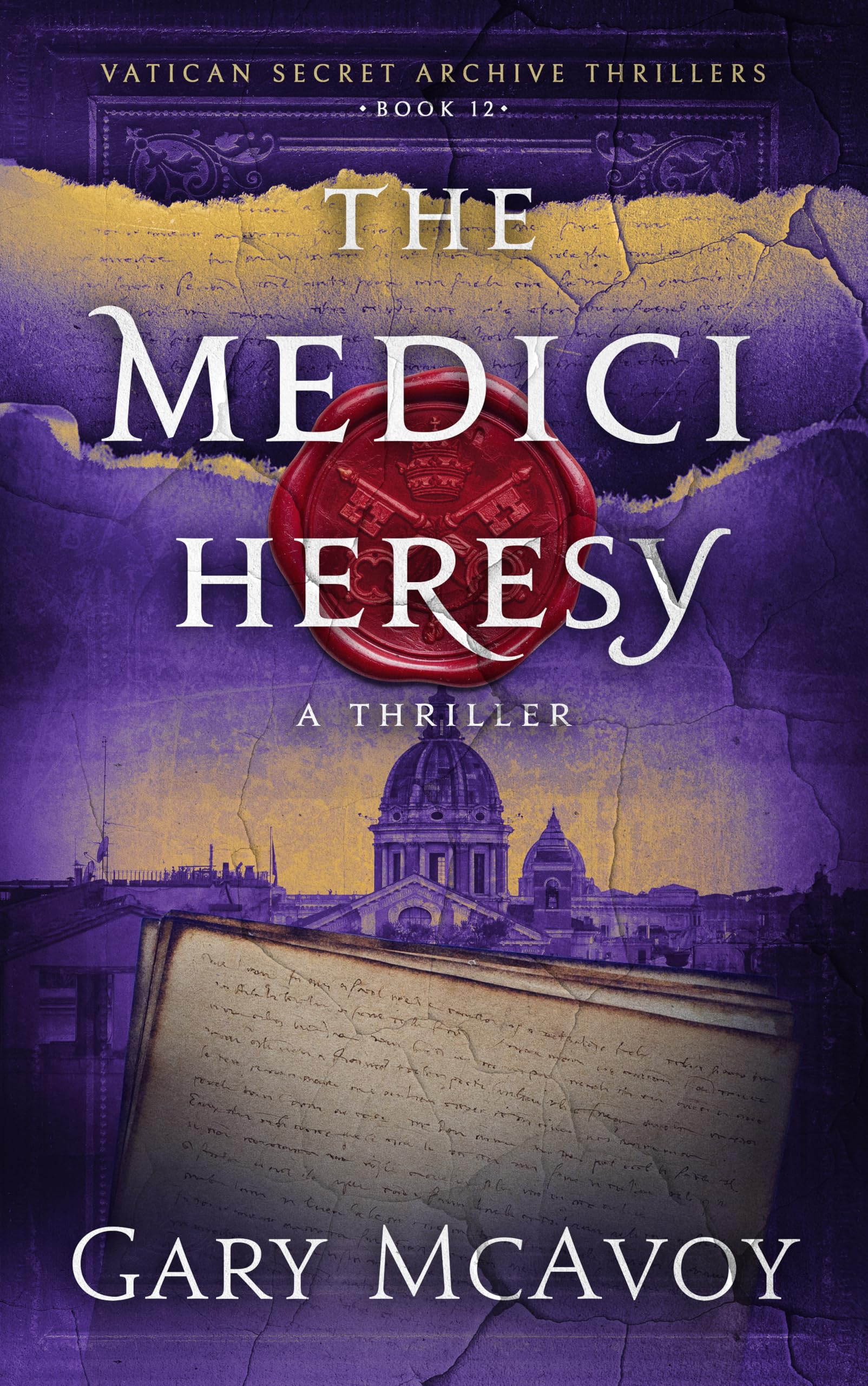
THE MEDICI HERESY by Gary McAvoy
The Twelfth Vatican Secret Archive Thriller 

As Father Michael Dominic prepares for another day working in the Vatican archives something unusual comes through the mail. A parcel sent via the Vatican's internal postal network includes a letter from Pope Clement VII, a Medici. A letter that intimated a gospel the world wasn't ready for in 1533, a gospel that would turn the Roman Catholic Church upside down, one that he felt needed to be hidden, but couldn't be destroyed. The missive provided clues to a series of other letters which would eventually lead "the one who still seeks" to a document that could destroy the Church. With the help of his good friends, journalist Hana Sinclair and two Swiss Guards, among other confidants, Father Michael will follow the trail of clues left by the long ago Pope. But who sent him on this treasure hunt? More importantly, who wants him stopped?

I was swept away by the trill of the chase in THE MEDICI HERESY. Clues to a new gospel hidden away because a pope felt the world wasn't ready for the truth. Perhaps he was correct, but the question remains; is today's world ready? Alessandro de' Medici exemplifies his relatives from the past-confident that he and his name are the truth, that he can build or destroy Rome and the entire papacy and Church. It was fascinating to see the modern methods he employed. While Father Michael, Hana, Karl, and Lukas are the lead characters I found myself appreciating Michael's aide, Ian, and Sr. Teri just as much. I loved how the two were able to thwart the Medici computer infiltration.

It was fascinating to read the clues by Pope Clement VII and follow them throughout Italy and France. The vivid descriptions made me feel as if I was in those ancient deserted buildings, the cool stones chilling me just as much as the threat of being discovered by Medici's men.

Raising questions about faith, truth, and loyalty THE MEDICI HERESY encourages readers to think. While the Gospel of the Beloved and the Codex are purely fictional, the possibility of their reality, or something similar is intriguing. Combined with the historical facts I found the novel compelling.

A treasure hunt, ecclesiastical intrigue, and the importance of truth make THE MEDICI HERESY an exciting page turner of a thriller. 

************************************************************************* 

The Medici Heresy by Gary McAvoy Banner

THE MEDICI HERESY

by Gary McAvoy

November 2 - 27, 2026 Virtual Book Tour

Synopsis:

The Medici Heresy by Gary McAvoy

A Vatican Secret Archive Thriller


When Father Michael Dominic uncovers a sealed Renaissance letter hidden deep within the Vatican Archives, he awakens a five-hundred-year-old secret buried by Pope Clement VII at the height of the Medici dynasty. Joined by investigative journalist Hana Sinclair, Michael follows a trail of clues through forgotten chapels, papal confessions, and ancient astronomical alignments, each step drawing them deeper into a mystery the Church once swore to silence. What begins as a scholarly puzzle quickly becomes a struggle for survival as shadowed forces—both inside and outside the Vatican—move to control or destroy what Clement left behind.

Their search reveals two extraordinary manuscripts: the Gospel of the Beloved, attributed to Mary Magdalene, and the Codex of Voices, a Renaissance record documenting the Church’s attempt to bury it forever. As Michael, Hana, and their Swiss Guard allies navigate the danger closing in around them, they confront a truth that challenges not doctrine but conscience: why some voices endure across centuries while others are violently erased. With each revelation, the line between faith and fear grows thinner, and the cost of honesty becomes terrifyingly clear.

Rich in historical detail and steeped in Vatican intrigue, The Medici Heresy weaves a modern thriller through one of the Church’s darkest chapters. From Medici Florence to the underground chambers beneath St. Peter’s Basilica, Gary McAvoy delivers a gripping tale of courage, betrayal, and redemption—where the past refuses to stay buried and the future belongs to those brave enough to face it.

While part of the Vatican Secret Archive Thrillers series, The Medici Heresy is a standalone adventure that can be enjoyed by new readers and longtime fans alike.

Praise for The Medici Heresy:

"A guilty pleasure! I’ve read all of these books in the series and love anything about Mary Magdalene. The rain became an oppressive character and seems like would have prevented them seeing the light coming through the aperture to find the hidden compartment of the sixth or so letter. I appreciate that the author distinguishes fact and fiction at the end of the book and hope he does not run out of archives to chase down."
~ Karin

"Bravo.....again!!! You keep me captivated! I look forward to the next story in the archival series. I adore every one of your characters, good and bad. Please keep writing."
~ Karen Veltman

"Great read! Gary McAvoy’s novels are all exciting and filled with historical references …but I truly enjoyed this novel the most—he has a way of painting pictures with words."
~ Amazon Customer

The Medici Heresy Trailer:

Book Details:

Genre: Vatican Historical Thrillers
Published by: Literati Editions
Publication Date: November 25, 2025 | HC
Number of Pages: 394 | HC
ISBN: 9781954123786 (ISBN10: 1954123787)
Series: A Vatican Secret Archive Thriller, Book 12 || Stand Alone
Book Links: Amazon | Kindle | Barnes & Noble | BookShop.org | Goodreads | BookBub | Gary McAvoy Books

Read an excerpt:

Vatican City, Present Day

Father Michael Dominic cherished mornings the way a monastic scribe once revered a well-cut quill: not as luxury, but as necessity. In the hushed corridors beneath the Apostolic Palace, where the sunlight filtered weakly through narrow glass slits and history exhaled dust from every shelf, he found peace in routine.

Each morning began before the bells. Rising at five, he slipped into the worn cassock that had traveled with him from his Jesuit seminary days, now threadbare at the cuffs but softened with memory.

But for his pre-dawn run, the cassock stayed folded on its hook. Michael preferred the quiet streets before sunrise—the echo of his footsteps on cobblestone, the scent of baking bread drifting from Trastevere, the soft hum of Rome preparing to wake. When he circled back toward the Borgo, sweat cooling on his skin, he made his customary stop at Pergamino Caffè just outside the colonnade.

Signora Palazzolo, who had run the tiny shop since her husband’s passing, spotted him through the window before he reached the door. She bustled out from behind the counter with a small bundle wrapped in brown paper. “Padre Dominic,” she said, wagging a finger at the sight of his running clothes, “the Holy Father may tolerate many things, but not a priest entering the Vatican dressed like a marathoner.”

Michael smiled. “You spoil me, Signora. You know that, don’t you?”

“I preserve your dignity,” she corrected, pressing the parcel into his hands. Inside was a freshly laundered cassock—one of two she kept for him, neatly sewn and ironed, refusing payment beyond a whispered blessing. “The restroom is free. Go, go. Before the guard at Sant’Anna thinks you’ve lost your vocation.”

He thanked her, ducked into the small restroom at the back, and splashed cool water on his face until the last traces of sweat faded. He unwrapped the cassock, slipping into the familiar black fabric and fastening the collar with practiced ease. The transformation was always the same: from runner to priest, from solitude to service.

When he stepped back into the cafĂ©, Signora Palazzolo handed him a steaming paper cup. “For the road,” she said. “And tell the Swiss Guard I said buongiorno.”

Michael grinned, lifted the coffee in a small salute, and stepped into the crisp morning air. The Porta Sant’Anna gate waited a short walk away, its stone arch flanked by the bright uniforms of the Swiss Guard—his threshold to a world of parchment, secrets, and the quiet weight of history waiting to be unsealed.

Father Michael Dominic did not resemble the image most people carried of a Vatican archivist. Tall and athletically toned, with long black hair often tied back and deep brown eyes that missed little, he moved with the quiet confidence of someone accustomed to slipping between worlds—faith and doubt, past and present, obedience and inquiry. Raised in Queens by his devout mother, the housekeeper of the parish rectory, Michael had spent his childhood in the company of priests, altar candles, and shelves of worn theological books. It was Father Enrico Petrini, the parish’s pastor and the closest thing Michael had ever known to a father, who nurtured his restless curiosity and encouraged him toward the priesthood long before Michael understood what such a calling would demand.

He went on to study paleography at the Pontifical Institute at the University of Toronto and theology at the Gregorian University, credentials that earned him a coveted post in the Vatican Apostolic Archives. But what truly distinguished him was not his scholarship—it was his temperament. Michael approached hidden truths with the humility of a believer and the relentlessness of an investigator, guided by a conscience that refused to ignore what others preferred to bury. He possessed an almost unsettling ability to sense when history had been bent or softened for convenience, and he had learned that the Church’s oldest secrets rarely slept quietly. In Rome, that made him invaluable—and, at times, dangerous to those who feared what he might uncover next.

His key—a heavy, iron-forged piece given only to him as Prefect and to two deputies—turned with a low click in the Archives’ bronze door. The great subterranean labyrinth beyond stirred only with the hum of climate controls and the occasional scurry of mice that had somehow defied Swiss Guard extermination efforts for generations.

He always entered alone.

Descending the spiral stone staircase into the belly of the Vatican, Michael would pause briefly before the marble sculpture of St. Lawrence, patron saint of archivists. The statue stood solemn watch in the vestibule, his martyr’s gridiron beside him, eyes uplifted as if still seeking light in the depths. Michael touched the cool marble of its base, murmuring a quiet invocation in Latin: “Custos silentii, ora pro nobis”—Guardian of silence, pray for us.

Then began the work.

Today had begun like any other. He had donned his archivist gloves, retrieved his logbook, and walked the long central corridor toward the restricted manuscript chamber. The hum of dehumidifiers formed a familiar backdrop to his thoughts. A new cataloging project awaited—three fifteenth-century codices donated by the Archdiocese of Seville, each wrapped in cloth and tagged in Vatican gray. He had been preparing a report for the Cardinal Librarian on the authenticity of their bindings. Nothing about the day had suggested interruption.

But at precisely 9:43 a.m., as the daily delivery from the Vatican Post Office arrived via pneumatic tube—a sleek, hissing canister that thudded gently into the brass receptacle near his desk—his day unraveled.

The canister clunked against the metal lip with more force than usual.

Michael turned with mild curiosity. Inside was the usual: interdepartmental memos, two periodicals, and a sealed envelope marked Bibliotheca Apostolica Vaticana. But below them was something he didn’t recognize: a flat parcel wrapped in vellum, the edges tied neatly with deep burgundy ribbon. It bore no address, only his name—P. Michael Dominic—written in looping script that instantly evoked another age.

He stared at it for a long moment before touching it.

The handwriting was unlike any he had seen in modern routine Vatican correspondence. Ornate, yet disciplined. The capital “P” had a serpentine curl; the “M” was double-looped in the style of Renaissance scribes. Someone had gone to great lengths to mimic or preserve an earlier penmanship, complete with sepia-toned ink. There was no seal, no watermark, no sender’s mark on the reverse. Just a small, embossed Medici crest faintly pressed into the parchment—a shield bearing six spheres and a lily crown.

His pulse stirred.

He turned the envelope in gloved hands. The sender had access to the Vatican’s internal postal network. That narrowed the list considerably—and dangerously. Only a handful of people were authorized to send mail directly to the Secret Archives via internal courier. Which meant one of two things: either a trusted insider had left him a relic—or someone had breached the Vatican’s most secure internal system with cunning precision.

Either way, it would require discretion.

Michael slipped the package into his document satchel and continued his day as if nothing had happened. But the weight of the thing—though barely a few ounces—gnawed at the back of his thoughts like a thread working loose in a tapestry.

Later, after lunch in the Sala Clementina with two fellow scholars, he retreated to his personal workroom. It was a modest chamber tucked off the northeast passage—just large enough for a desk, three chairs, and a carved wood icon of St. Jerome, patron saint of librarians and biblical scholars, in his study—a fitting presence in a place where symbology saturates every hallway, painting, and page, speaking in codes as ancient as the Church itself. The room smelled of old oak, wax polish, and aging paper.

He shut the door, drew the curtains, and sat.

With deliberate calm, Michael untied the ribbon.

Inside was a folded letter on parchment that had yellowed with age but remained pliant, as if it had been lovingly preserved. No brittle edges, no flaking. The ink had faded in parts, but the script remained legible—calligraphic Latin in a bold humanist hand. The opening line read:

Ad futurum pontificem, qui veritatem non timebit… “To the future pontiff who shall not fear the truth…”

Michael leaned forward, his breath shallow.

The salutation alone stirred unease. Not merely because of its boldness—but because of the signature. Faint, in the lower corner, faded but unmistakable:

Clemens VII, Pontifex Maximus

For several long moments, he stared at the name.

Clement VII—Giulio de’ Medici—was one of the most politically embattled popes in Church history. His papacy had spanned the brutal Sack of Rome, the rise of the Protestant Reformation, and desperate diplomatic dances with Francis I and Charles V. The idea that Clement had left behind a secret letter—undocumented, unarchived—was staggering.

But then he read on.

Rome, the Feast of St. Mark the Evangelist, Anno Domini 1533

To my successor, in whose soul doubt may rise like smoke from Sinai—

If you are reading this, the tide of silence has receded. The world has changed—or will. This manuscript is not false. But neither is it safe. You must decide what to do with it, as I have decided only to protect it…

I write not as Sovereign Pontiff, but as one burdened by knowledge too fragile to bear the papal seal. There are truths which the Tiara cannot touch without unraveling, and it is such a truth that now coils around my soul like incense refusing to dissipate.

In my final years, the Lord permitted that a document should reach my hands—unbidden, and unblessed. It was not borne by nuncio or legate, but by a friar whose hands trembled with reverence and whose lips bled from silence. He died three days after its delivery, whether from fever or fear, I cannot say. What he brought was not a heresy, nor an apocryphon in the usual mold. It bore no mark of Gnosticism or madness. It was, in its way, painfully lucid.

It claimed to be a testimony. Not from a prophet, nor from one of the Twelve—but from her who stood beside Him in death and rose to proclaim Him living. From the one whom Rome later draped in penitence and shame.

I will not name her here. You know of whom I speak.

The words within that document are carved in the flesh of theology. They do not merely challenge our structures—they undo them. They proclaim a communion without hierarchy, a grace without ordination, a love that refuses the architecture we have so diligently erected over centuries.

In reading it, I felt both awe and vertigo. It was as though a familiar cathedral were shown to me upside down: beautiful still, but terrifying in its reordering of heaven and earth.

And so I ask: What if the first church was not built upon a rock, but upon tears?

I have not destroyed this document. Nor have I revealed it. I have preserved it—sealed it—until such time as Providence should declare a soul ready not merely to possess it, but to be possessed by it.

If this letter has reached you, that time may be at hand.

But beware: the key does not turn for the ambitious, nor the curious. It opens only to the one who approaches with fear and truth in equal measure.

You must not seek clarity from this letter alone. There are others—seven more—written in silence, placed like stepping-stones for the heart to follow. Some will lead you backward in history. Others, inward into conscience. All will ask more than they answer.

I could not entrust the full weight of this truth to any single hand, lest it be crushed under the pressures of cowardice or ambition. Let these eight letters, scattered across the bones of Christendom, call forth only the one willing to walk the full Via Veritatis—the road of truth.

To begin, I offer this:

Follow the ink that weeps gold.

It stains only those prepared to be marked.

Seek not the treasure first, but the wound that precedes it.

With trembling hand,

✠ Clemens PP. VII

Pontifex Maximus

Michael stared at the final lines, reading them again and again, as if repetition might clarify what Clement had deliberately veiled. Follow the ink that weeps gold… The phrase lingered like incense after Mass—haunting, poetic, elusive.

The script was genuine. The watermark faint but distinct. The Medici crest, a subtle impression on the lower corner, sealed the letter’s pedigree like a fingerprint from history. But it wasn’t the external clues that disturbed him. It was the voice.

This wasn’t some elaborate forgery or theological curiosity. It read like a confession. A burdened man on the edge of death writing to posterity—not with pride, but with trembling hope. And if Clement’s words were true, he had held something that defied not only doctrine, but the very foundations of the Church’s authority.

A gospel. Written not by one of the Twelve, but by her. The first witness. The Beloved.

Michael sat motionless for nearly ten minutes. He did not take notes, nor reach for his cataloging software. Instead, he simply absorbed the implications, each one heavier than the last.

Who had brought this to him? Who had waited nearly five centuries to let it breathe? And why now?

At last, he reached for his secure tablet and composed a brief text message to the one person whose instincts he trusted as much as his own: Meet me by the Cortile della Pigna at sunset. We have a ghost from the Renaissance who wants to speak to us.


They met beneath the towering bronze pinecone of the Cortile della Pigna, a relic of pagan Rome now perched like a fossilized thought in the Vatican’s Renaissance courtyard. The hour was shifting, twilight dissolving into dusk, and the last of the sun lay like a fading brushstroke across the travertine walls.

Hana Sinclair was already there, seated near the fountain. She wore a slate-gray linen jacket over her blouse, the soft glow of the courtyard lamps catching in her hair. A reporter’s notepad rested loosely in her lap, more instinct than necessity, like a catechism waiting to be opened. When she saw him approach, she rose and tucked the notebook into her jacket.

Hana had the air of someone who carried her own weather with her, a quiet intensity softened by a quick, discerning intelligence. She carried the poise of someone who had learned to listen before she spoke—a trait that had made her one of Le Monde’s most respected investigative correspondents. Paris had shaped her manner, but Rome had sharpened her instincts, and nothing in the Vatican surprised her anymore. Except, perhaps, the way Michael looked at her now, with the quiet certainty of a man whose life had shifted after a single sealed parchment.

The reforms enacted by the late Pope Ignatius, allowing priests to marry under specific conditions, had changed both their futures. After years of shared danger, whispered trust, and unspoken affection, Michael and Hana were now engaged—a truth they held gently between them, as private and steady as breath. The Church was still adjusting. So were they.

“You sounded… urgent,” she said.

Michael Dominic glanced around, quietly noting the open archways and shadowed windows above. No guards lingered. The clatter of tourists had long since faded. A nun passed quietly to the west, rosary in hand. They were, for the moment, alone.

Only then did he draw the archival sleeve from his satchel and hand it to her.

She took it without a word, her fingertips brushing his for a moment before she stepped aside to read. As the last of the sun poured over the courtyard, she opened the parchment and let her eyes drift down its lines.

Her lips moved silently. Her breath grew shallow. By the time she reached the final passage—“Seek not the treasure first, but the wound that precedes it”—her expression had darkened with something between awe and apprehension.

She looked up slowly.

“Michael… this isn’t just a letter. This is a riddle. A lament.” Her voice was barely above a whisper. “It doesn’t name the gospel, doesn’t describe it… but the implications are—”

“Devastating,” he finished. “If they’re true.”

“Clement read something he couldn’t burn. And couldn’t share.” She shook her head. “He wasn’t protecting the Church. He was protecting its image. Its structure.”

Michael nodded. “It shook his confidence in the very thing he was meant to uphold.”

Hana reread a line, eyes narrowing. “‘The one whom Rome later draped in penitence and shame…’ That’s Mary Magdalene. It has to be. He’s all but saying it.”

“And he calls her the first to proclaim the Resurrection.”

She folded the parchment and exhaled slowly. “So the gospel Clement received… if it exists… rewrites apostolic authority. It places her at the center, not Peter. Not the hierarchy. Not the priesthood.”

Michael said nothing.

“And this line here—‘follow the ink that weeps gold’—is he sending the reader to another letter?”

“I think so. There’s a path he’s designed. Breadcrumbs across time.”

Hana frowned. “Why? If he wanted to suppress it, why leave clues at all?”

“Because he didn’t want it lost forever. Only buried until someone was ready.” Michael’s tone was quiet. “And he thought that person might be a future pope.”

“But instead it landed in your hands.” She tilted her head. “Do you think this was meant for you?”

He hesitated. “I think… someone inside the Curia wanted it to be.”

Hana looked sharply at him. “An insider?”

“It came through internal channels. Quietly. Discreetly. That takes access.”

“Then this wasn’t a leak. It was an invitation.” Her brow furrowed. “Or a trap.”

Michael nodded grimly. “That’s what I don’t know. If they wanted to reveal the gospel, they’d go to the media. Or scholars. Not to me. Not like this.”

“You think someone’s testing you.”

“Or baiting me. Either way, it’s calculated.”

She stared at him, her voice now edged with urgency. “If what Clement saw was real… it would shake every theological pillar on which the Vatican rests. Not just women’s roles, but the idea of hierarchical grace, apostolic succession… even priestly absolution.”

“It would democratize the divine.”

“And the moment that idea gains traction…” Hana didn’t finish the sentence. She didn’t have to.

They sat in silence for a long moment. As the sun dipped behind Rome’s ochre rooftops, a low peal of bells rolled across the city, solemn and resonant. From the dome of St. Peter’s to the shadowed courtyards of Trastevere, the call to Vespers drifted through alleys and over piazzas like a blessing carried on evening air. The sounds were peaceful, but the feeling between them was not. It was the stillness before a fracture.

Finally, Michael rose.

“I’ll scan the letter tonight,” he said. “Privately. No logging. I’ll cross-check Clement’s handwriting and reach out to Florence for ink comparison. Quiet channels only.”

“And I’ll begin pulling every known piece of Clement’s private correspondence from his final year,” Hana said, rising beside him. “Any marginal notes, off-ledger entries, even librarian rosters. If there are more letters, they may already be hidden in plain sight.”

He nodded. “And if this is only the first of eight…”

“Then we’ve barely scratched the surface.”

They walked from the courtyard slowly, side by side, shadows stretching long behind them.

Above, the dome of St. Peter’s loomed in silhouette, serene and immovable. But somewhere beneath its weight, truth had begun to stir. And this time, it would not return to silence easily.

***

Excerpt from The Medici Heresy by Gary McAvoy. Copyright 2025 by Gary McAvoy. Reproduced with permission from Gary McAvoy. All rights reserved.


Author Bio:

Gary McAvoy

Gary McAvoy is an American novelist known for internationally bestselling thrillers that blend historical intrigue, religious scholarship, and modern suspense. A lifelong researcher of rare manuscripts and Church history, he draws on extensive archival study to craft narratives rooted in authentic detail. His work includes the Vatican Secret Archive Thrillers, the Magdalene Chronicles, and the Vatican Archaeology Thrillers. Before turning to fiction, McAvoy built a distinguished career as an entrepreneur, technology consultant, and collector of historical documents. He now writes full time from the Pacific Northwest, where he continues to explore the shadowed crossroads of faith, power, and history.

Catch Up With Gary McAvoy:

GaryMcAvoy.com
Amazon Author Profile
Goodreads - @garymcavoy
BookBub - @garymcavoy
Instagram - @gary_mcavoy
X - @GaryMcAvoy
Facebook - @GaryMcAvoyAuthor


Tour Participants:

Click through the other tour stops for can’t-miss reviews, insider interviews, exclusive guest posts, and more chances to win!

Click here to view the Tour Schedule


Some Secrets Stay Buried. This Giveaway Doesn’t.

This giveaway is hosted by Partners in Crime Tours for The Medici Heresy by Gary McAvoy. See the widget for entry terms and conditions. Void where prohibited.
THE MEDICI HERESY by Gary McAvoy | Gift Cards

Can't see the giveaway? Click Here!

Get More Great Reads at Partners In Crime Tours

Sunday, October 25, 2026

The Resurrection of Evania James - A Review, Excerpt, & Giveaway

 Review


THE RESURRECTION OF EVANIA JAMES
By Jaime Jo Wright 

In the 1800s, and even later, if a man found a woman to be a nuisance or someone he just didn't care to deal with anymore he merely had to say she was insane and have her committed to a lunatic asylum for the rest of her life. It made absolutely no difference if she was not mentally ill. So in 1879 Indiana when Evania James becomes pregnant out of wedlock and then despondent when the baby dies, her father decides she needs to go! Evania's sister Eloise does her best, but with their mother long dead and the fact that she's been trained to be submissive, she is no match for her father, a so called pillar of the community. Despite Evania being sent away, Eloise is determined to get her back. Meanwhile in modern time Tilly Thompson has always admired the James Mansion. Caretaker to her grandfather, who has recently been diagnosed with Alzheimer's, she's stunned to discover that Grandpa Joe has bought the house for her, with the plan to live in it together. But nothing can prepare her when they find a body in the wall!

Mental institutions, grave robbers, and walls that talk? Yes please! As someone who works in the mental health field, I've always been interested in the history of mental institutions. Sadly, what happened to Evania is not uncommon. I love that the book features historical truths, as frightening as they are. Eloise's story sucked me right in while the sections from the wall's perspective was mesmerizing! I enjoyed seeing how Tilly's story corresponded to Eloise's and how Tilly found her own truth.

Evil men and justice seekers haunt the pages of the story as the James Mansion itself speaks. A dual time story I really enjoyed the historical portion of the story best, though the modern story finally put the full story to rest with hopes for a much brighter future.

A story of redemption and truth THE RESURRECTION OF EVANIA JAMES is a story both spooky and provocative. Both gripping and thought provoking it is a fantastic read!

*************************************************************************** 

The Resurrection of Evania James by Jaime Jo Wright Banner

THE RESURRECTION OF EVANIA JAMES

by Jaime Jo Wright

October 5 - 30, 2026 Virtual Book Tour

Synopsis:

The Resurrection of Evania James by Jaime Jo Wright

If walls could talk, what nightmare might they expose?

1879

When Eloise James's sister, Evania, goes missing after being admitted to an asylum, Eloise is determined to find her sibling but instead discovers evidence of dying patients and missing remains. Wannabe journalist Silas Dobbs has his own suspicions that something more nefarious is at work, and that black market sales may originate at the asylum. Together, they are intent on learning whether Evania is alive, or if her body has also been stolen. But unraveling a web of underground resurrectionists proves daunting, and the dead cannot share their secrets.

Present Day

Tilly Thompson is horrified to find historical human remains entombed in a wall of the Gothic mansion her grandfather just purchased, launching her into an investigation of the original owners' questionable past. The James family legacy harbors a darkness tightly woven through decades of secrets, but the past refuses to remain ensnared by silence. Will revealing the truth resurrect dangers best kept buried forever?

Jaime Jo Wright masterfully weaves a dual-timeline gothic suspense novel that brings together a haunting historical tale and a shadowy modern-day mystery. For fans of atmospheric thrillers, spooky reads, the Victorian era, creepy mansions, and dark family secrets.

Book Details:

Genre: Gothic Fiction; Christian Mystery & Suspense
Published by: Bethany House Publishers
Publication Date: October 27, 2026
Number of Pages: 336 Pbk
ISBN: 9780764246258 (ISBN10: 0764246259)
Book Links: Amazon | Kindle | Barnes & Noble | BookShop.org | Goodreads | BookBub | Baker Book House

Read an excerpt:


Author Bio:

Jaime Jo Wright

Jaime Jo Wright is a Publishers Weekly bestselling author of more than eighteen novels and three novellas, including Christy Award-winner and ECPA bestseller The Vanishing at Castle Moreau, Christy Award and Daphne du Maurier Award-winner The House on Foster Hill, Christy Award-winner Night Falls on Predicament Avenue, and Carol Award-winner The Reckoning at Gossamer Pond. She lives in Wisconsin with her family and fabulous felines.

Learn more at

JaimeWrightBooks.com
Amazon Author Profile
Goodreads
BookBub - @JaimeJoWright
Instagram - @jaimejowright
Threads - @jaimejowright
YouTube - @madlitmusings
Spotify - MadLit Musings
Facebook - @JaimeJoWright


Tour Participants:

Click through the other tour stops for can’t-miss reviews, insider interviews, exclusive guest posts, and more chances to win!

Click here to view the Tour Schedule


Don't Make a Grave Mistake… Enter to Win

This giveaway is hosted by Partners in Crime Tours for The Resurrection of Evania James. See the widget for entry terms and conditions. Void where prohibited.
The Resurrection of Evania James by Jaime Jo Wright | Paperback + Gift Card

Can't see the giveaway? Click Here!

Get More Great Reads at Partners In Crime Tours

Thursday, October 22, 2026

The Swamp Ghost - A Review, Excerpt, & Giveaway

 Review


THE SWAMP GHOST by Christi Keating Sumich
The First Old New Orleans Bookshop Mystery 
 
Mary Catherine Whitney is at her wits end. Very pregnant, her husband is urging her to rest more and get someone to help around the house, at least part time to cook and help with their two hellion young boys. Something even more interesting comes her way, however. Aiden Doyle is the foreman of the front running crew of ditchers, digging the New Basin Canal. One of his men claimed a blur orb chased him back to camp. The other ditchers said it was a fifolet, a pirate ghost guarding treasure. The next morning the man is dead and the other ditcherers refuse to come back to work. With his job on the line, Aiden follows his fiancĂ©e's advice and asks Mrs. Whitney for help. After all, she was clever enough to write that pirate book about Jean Lafitte! With a little help from unexpected places Mary Catherine will set about trying to determine just who, or what, killed the ditcher. 
 
The first Old New Orleans Bookshop Mystery brings back characters from a previous novel. Where LAFITTE LIVES was more of an adventure yarn, THE SWAMP GHOST is distinctly a mystery, a historical cozy one at that! This shift is probably why this book is considered the first in the series, even though we've seen the main characters before. While I really enjoyed LAFITTE LIVES I absolutely adored THE SWAMP GHOST!
 
Mary Catherine Whitney is a force to be reckoned with! She's loud, opinionated, dramatic, funny, and smart. And she's not about to let being very pregnant in 1833 New Orleans stop her from using her wit, and wiles, to solve a murder! She had me laughing... that scene at the bank!...and her dealings with her neighbor and her boys. I'm laughing again thinking about those scenes. I also love the addition of Henrietta, a perfect match for Mary Catherine. While Tobias takes more of a backseat in this story, his quiet strength is always evident and he's always there when needed, providing love and support.
 
Delightfully funny with a heady mix of history and adventure THE SWAMP GHOST is an engaging mystery and one of the best books I've read all year. 
 
********************************************************************* 

The Swamp Ghost by Christi Keating Sumich Banner

THE SWAMP GHOST

by Christi Keating Sumich

October 12 - November 6, 2026 Virtual Book Tour

Synopsis:

The Swamp Ghost by Christi Keating Sumich

AN OLD NEW ORLEANS BOOKSHOP MYSTERY


In 1833, Irish immigrants are hard at work digging the New Basin Canal, a waterway that will connect New Orleans to Lake Pontchartrain. When one of the workers sees a strange blue orb glowing in the swamp at night, he fears it is a Fifolet (fee-foo-lay) guarding Jean Lafitte’s buried treasure. Legend has it that pirates killed a crewman and buried his body with their loot, dooming his ghost to stand guard forever. The next morning, the worker is found dead. The men believe the site is cursed, and Aiden Doyle, the crew's leader, must uncover the truth or risk losing his job. When the newly formed police force refuses to investigate, Aiden seeks help from Mary Catherine Whitney, now renowned throughout New Orleans for her mystery-solving skills after she and her husband, Tobias, unraveled the secrets of the notorious pirate Jean Lafitte and wrote a popular adventure story about it. She’ll need all her cleverness and wit to unlock the secrets of the Fifolet, and she may even need a little help from Lafitte himself.

Continuing characters from Lafitte Lives, The Swamp Ghost is the first in the Old New Orleans Bookshop Mysteries, featuring Mary Catherine Whitney, irascible wife, mother, and amateur sleuth in this charming series set in nineteenth-century New Orleans.

Praise for The Swamp Ghost:

"In The Swamp Ghost, the lovable Mary Catherine Whitney returns to lead readers on a captivating adventure through 1833 New Orleans as she investigates the mysterious death of a troublemaker who died while digging a canal. Word goes out that an evil spirit attacked him. A merry band of helpers joins Mary Catherine to find the true killer — or confirm the evil spirit tale. Along the way, they encounter pirates, gamblers, and drunkards. Once again, Christi Keating Sumich entertains us while immersing us in the sights, sounds, smells, and folklore of New Orleans."
~ Marlie Parker Wasserman, author of First Daughter

"If you love strong-willed women solving spooky mysteries in the heat of the bayou, this book is perfect for you! Introduced to the Whitney family in Sumich's first book, THE SWAMP GHOST expands their world and the mysteries in it. Mary Catherine Whitney is a force to be reckoned with. Even the supernatural can't hide from her investigations."
~ Nicole Asselin, Author of the Minor League Mysteries, Host of Baseball, Books, and Banter podcast.

'In Christi Sumich's new novel featuring the Whitney family, feisty Mary Catherine continues to berate her rambunctious sons and, if I may say, saintly husband, but is now stepping not-so-quietly into the world of the amateur sleuth, with help from her equally acerbic cook, Mrs. Clarke. We return to New Orleans. It's a divided city, where the Creoles and the influx of Irish are vying for economic and political dominance. At the heart of this novel is the death of an Irish "digger," just one of hundreds who are digging a new canal out of a swamp. Was his death a murder, or did a ghost protecting pirate treasure kill him? Although this is your classic who-dun-it, albeit with ghosts and pirates, the background of a city and the plight of immigrants is nicely documented. I'm looking forward to Mary Catherine's next "case"!'
~ Claire M. Johnson, author of the Fog City Noir series

Book Details:

Genre: Historical Mystery
Published by: Level Best Books
Publication Date: September 22, 2026
Number of Pages: 232
Series: An Old New Orleans Bookshop Mystery, Book 1
Book Links: Amazon | Kindle | Goodreads | BookBub

Read an excerpt:

Swamps Outside of New Orleans
1833

Chapter One

Sean Leery smacked his own cheek with such force that he felt like he was back in Ireland, on the receiving end of a blow in one of his many pub brawls. He missed County Cork and his cottage there. It hadn’t been much, but it was certainly better than his present circumstances, trying to catch some sleep in a sweltering Louisiana swamp. The pitiful cypress log hut that was his temporary home while he was out digging the New Basin Canal offered little comfort and couldn’t keep out the water from the daily rainstorms, let alone the mosquitoes that swarmed him and his fellow diggers.

He wiped a smear of blood from his face, slightly mollified to see this one had a full belly, judging by the sizable blood splatter. Hell, most of it was probably his to begin with, but at least the menace would feast on him no more this evening. Not that it would do much good. Ridding the Louisiana bayous of one mosquito had about the same effect as plucking a snowflake off an avalanche. God, he even missed the snow and cold of his homeland, though he still recalled shivering next to the stove, trying to extract the last bit of warmth from the feeble coal remnants. It was just so hot here. And not only during the day. In the summer, which seemed to last most of the year, it was equally unbearable at night, especially in the swamp. Even now, in October, the air was so thick he felt he needed to chew it before he could breathe it in.

He stretched his feet past the edge of his cot to restore circulation before tucking them back under the mosquito netting. Tomorrow, he’d have to find the hole where they were getting in and stitch it up. Cagey little suckers, they were. They’d weasel their way through the tiniest opening. He flopped onto his side, hoping sleep would envelop him again. He needed to rest if he had any hope of performing the arduous labor his job required. The sooner they finished their digging, the sooner he could high-tail it back to New Orleans and civilization.

Though the working and living conditions were less than ideal, Sean considered himself lucky to be on Aiden Doyle’s digging crew. Aiden was a fair foreman, much better than some of the others. He treated his “ditchers” well, as the men digging out the swamp were called.

They were the lead crew on the project, an ambitious plan by the New Orleans Canal and Banking Company to dig a navigable commercial waterway from Lake Pontchartrain to the American Sector of New Orleans, located behind the Vieux Carré, or the French Quarter, as the Americans called it. The canal was to be six to ten feet deep, sixty yards wide, and six miles long. It was being dug by a workforce composed mainly of Irish immigrants wielding picks, shovels, and wheelbarrows, slowly making their way through the swamps outside the city.

It was dangerous, backbreaking work. Ditchers, even young ones, often did not fare well. Because Irish immigrants were arriving in New Orleans in large numbers and were willing to toil for low wages, the company hired them as “expendable labor,” knowing that excavating mosquito-infested swampland meant losing many workers to yellow fever, cholera, and malaria. Some of the foremen joked that to dig a canal, at least four things were necessary: a shovel, a pick, a wheelbarrow, and an Irishman.

Aiden Doyle was Irish, so Sean supposed that might explain his more compassionate nature. Most bosses wouldn’t have taken on someone as old as Sean, let alone someone with his less-than-stellar reputation. Sean would be forty-two on his next birthday, but he looked far older. Hard living took its toll on a man. So did drinking too much whiskey and trying to live by his wits for too long, especially since he hadn’t been blessed with an abundance of them. His bulbous nose was a testament to his love of drink, and its crookedness to the brawling that generally followed.

Sean also loved cards, and he owed debts to the sort of people who expressed their displeasure at not being promptly reimbursed in unfortunate physical ways. So when his debts began piling up and he feared the threats of bodily harm were no longer mere threats, he sought employment out of sheer necessity. He would work until he could pay the most pressing debts to the most violent of his creditors, then quit and resume his life of gambling, drinking, and enjoying the company of disreputable women. Such was his pattern, and Sean was eager to return to it—if he survived this present job.

Sean flopped onto his back, blowing out a frustrated breath. In addition to the stifling heat and swarming blood suckers, his ability to fall back asleep was being hindered by Darren’s snoring and Murph’s farts. Might as well take a piss while I’m awake.

Sean grunted as he shifted to his feet. They were sore after the day’s labors. Every inch of him hurt, but the worst was his shoulders. They ached and throbbed, adding to his insomnia. He needed to sleep if he was to get up the next day and do more digging. If he couldn’t work, Aiden would have to replace him on his crew. Sean wasn’t keen to find another crew. He didn’t particularly like any of the men he worked with out here in this godforsaken place, but he figured he had less than a month to go before he would have enough money to quit. What could be worse than having to beg your way back onto a job you hated? He needed to tough it out.

He pulled on his boots and left the shack. The sliver of moon did little to dispel the swamp's stygian darkness. As he made his way to the temporary privy the crew had erected, he was careful not to trip over the cypress knees poking out of the semi-solid earth and to avoid any snakes that might be hiding in the tall grass. No doubt there were alligators to avoid as well. He shuddered at the thought of disturbing a sleeping gator as he swatted futilely at the mosquitoes buzzing around his head.

Suddenly, his hand froze in front of his face. Were his eyes playing tricks on him? The sight before him shouldn’t be there. A bright blue orb was dancing in the distance, just beyond a copse of water gum trees. Could it be his imagination? It was easy to think so. After all, this landscape was eerie and otherworldly at night. It occupied a nebulous space between water and earth, always wet and only sometimes solid. The densely packed cypress trees, dripping with tattered Spanish moss that reminded Sean of ghosts caught in the branches, crowded out the sun during the day, making it perpetual dusk at its brightest and forcing the humid air to hover over the swamp dwellers like a hot, moist blanket.

Sean had seen some unusual sights out here, but this went beyond any of them. Could it be the moonlight illuminating some swamp gas? He knew this wasn’t it, but he was desperate for a logical explanation. Sean was not superstitious, unlike some of the men he worked with, fools still clinging to their Irish folklore like a lifeline in this strange place. Yet the sight before him sent chills down his body, straight through his aching arms and into his cramping feet.

What was he looking at? There should not be a blue light shining in front of him out here in the desolate swamp. It was not a fire or a lantern, of that he was certain.

Sean was not a religious man, yet he crossed himself in an unconscious, protective gesture. He needed to get back to the safety of the shack and the other diggers, but fear froze him in place. There was a terrifying moment of stasis, and then the blue orb advanced rapidly toward Sean, as if sensing his presence and locking onto him, preparing to give chase. Sean heard a scream and realized it was coming from his own throat. He turned and ran back through the swamp, trying to stay upright as he stumbled over the cypress knees and deep eddies, all thoughts of sleeping gators and rattlers driven from his mind. He burst into the shack, waking the rest of the crew.

As they rubbed sleep from their eyes and sat up in astonishment, trying to make sense of what was happening, they took in the strange sight before them. Sean Leery, the ornery old bastard they had assumed feared nothing and no one, was gasping for breath, sputtering about something he’d spotted in the swamp. His face was as white as if he’d seen the very devil himself, and a dark, wet spot spread across the front of his breeches where he’d pissed himself.

***

Excerpt from The Swamp Ghost by Christi Keating Sumich. Copyright 2026 by Christi Keating Sumich. Reproduced with permission from Christi Keating Sumich. All rights reserved.


Author Bio:

Christi Keating Sumich

Christi Keating Sumich holds a PhD in History and a master’s degree in English. Her writing combines her fascination with history with her love of the mystery genre. She is the author of Lafitte Lives (Level Best Books, February 2026), a historical mystery centered on her ancestor, the notorious pirate Jean Lafitte. It is the prequel in the Old New Orleans Bookshop Mysteries, followed by The Swamp Ghost (Level Best Books, September 2026). She is also the author of the short story “The Night Doctor of New Orleans” in Crime Before Our Time (Level Best Books August 2026).

Christi's nonfiction titles include Hauntingly Good Spirits: New Orleans Cocktails to Die For (Wellfleet Press, 2024) and The Brandy Milk Punch (Louisiana State University Press, 2025), both written with her mother, Sharon Keating.

Christi lives just outside New Orleans with her husband and too many pets, as she has a soft spot for “unconventionally attractive” animals in need of homes. She is the mother of three grown children (plus a daughter-in-law). Her claim to fame is being the winningest contestant on Hollywood Squares.

Catch Up With Christi Keating Sumich:

ChristiSumich.com
Amazon Author Profile
Goodreads
BookBub - @sumichchristi
Instagram - @casumich
Facebook - @christi.keating.sumich.author


Tour Participants:

Click through the other tour stops for can’t-miss reviews, insider interviews, exclusive guest posts, and more chances to win!

Click here to view the Tour Schedule


Enter If You Dare...

This giveaway is hosted by Partners in Crime Tours for The Swamp Ghost by Christi Keating Sumich. See the widget for entry terms and conditions. Void where prohibited.
THE SWAMP GHOST by Christi Keating Sumich | Gift Card

Can't see the giveaway? Click Here!

Get More Great Reads at Partners In Crime Tours

Friday, October 9, 2026

The Harlot of St. Cecelia's - A Review, Excerpt, & Giveaway

 Review

 
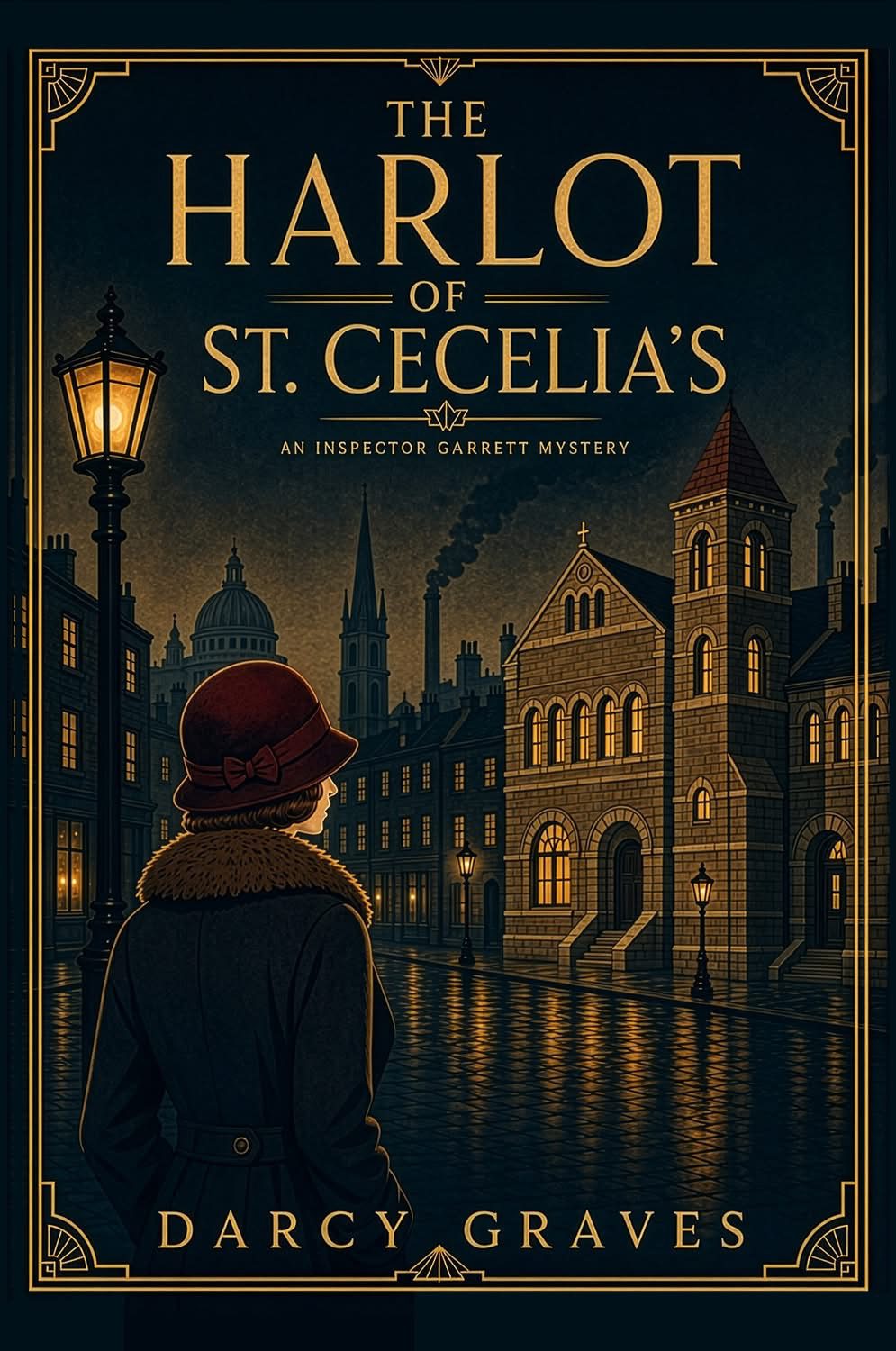
THE HARLOT OF ST. CECELIA'S by Darcy Graves
The First Inspector Garrett Mystery 

As Eden Brior has no plans and wants to finish up some work she volunteers to stay and close St. Cecelia's library for the night. After witnessing some unexpected drama with a stunning French woman and a bright young thing she accidentally gets locked in the library vault with that very bright young thing, a playboy named Simon Cross. Released by the police in the morning Eden wonders how they knew to rescue them. The problem is that the police weren't there to save them, but because there was a dead body in the library - that of the French woman. Even with his supervisor leaning on him to make a quick arrest, along with saddling him with an incompetent sergeant, Detective Inspector Garrett intends to fully investigate the murder, even if the evidence is pointing directly to Simon Cross. Eden believes Simon is innocent. After all, he was trapped with her and simply didn't have enough time to kill the woman. Both Inspector Garrett and Eden will follow the clues to find the killer, but is that person closer than they think? 

I truly enjoyed being in 1923 London with Eden. I like how she's both a fish out of water, an American expat living in London with few friends, as well as someone who is right in her element, working in the sanctity that is St. Cecilia's library and investigating the murder. THE HARLOT OF ST. CECELIA'S has more than a few laughs, Eden's play-reading circle that both opens and closes the book and Inspector Garrett's dealings with both his stoogeish sergeant and the children, for example. 

I appreciate the nods to the Golden Age of detective fiction, particularly the use of fair play. I noticed a clue early on which led me to consider the killer before any of the protagonists. That clue made me suspicious, but not certain, and I enjoyed seeing the investigation proceed by both Inspector Garrett and Eden.

Distinct characterizations, adept historical world building, and a finely crafted mystery make THE HARLOT OF ST. CECELIA'S a delightful start to a new series. 

************************************************************************** 

The Harlot of St. Cecelia's by Darcy Graves Banner

THE HARLOT OF ST. CECELIA'S

by Darcy Graves

September 21 - October 16, 2026 Virtual Book Tour

Synopsis:

The Harlot of St. Cecelia's by Darcy Graves

An Inspector Garrett Mystery


London, 1923. American expat librarian Eden Brior thinks things are bad when she is accidentally locked overnight in the St. Cecelia’s Library vault with the charming and unreliable Simon Cross. Then she emerges to find the body of his estranged wife — a celebrated French actress — draped over a chair upstairs.

Detective Inspector William Garrett is methodical, quietly perceptive, and already fairly certain he has his man. He tells Eden firmly to go home and leave the detecting to the professionals. But how can she?

Racing to clear their names before Garrett closes the case, Eden follows the truth from the bright footlights of the London stage through the sleek drawing rooms of Jazz Age society, and into secrets that someone will kill to keep buried.

Steeped in the style of the golden age of detective fiction, The Harlot of St. Cecelia’s captures a London still glittering on the surface and shadowed underneath — where every drawing room hides a secret and every secret has a price.

Perfect for fans of Jacqueline Winspear’s Maisie Dobbs series.

Praise for The Harlot of St. Cecelia's:

"This novel consistently delights, from the spicy title to the last page."
~ Kirkus Reviews

Book Details:

Genre: Historical Mystery
Published by: Independently Published
Publication Date: May 3, 2026
Number of Pages: 306
ISBN: 979-8195315580
Series: Inspector Garrett Mystery Series, Book 1
Book Links: Amazon | Kindle | Barnes & Noble | Goodreads | BookBub

Read an excerpt:


Author Bio:

Darcy Graves

Darcy Graves grew up in Boston and holds an MA in English history and a BS in copywriting. A marketing content writer for over thirty years, she brings to her work a deep love of the golden age of detective fiction — particularly Agatha Christie and P.D. James — and the whimsy of P.G. Wodehouse.

Darcy lives in the Berkshires with her daughter, two ragdoll cats, and a very naughty terrier named Merial. The Harlot of St. Cecelia's is her first novel.

Catch Up With Darcy Graves:

DarcyGravesAuthor.com
Amazon Author Profile
Goodreads
BookBub - @darcygravesauthor
Instagram - @darcygravesauthor


Tour Participants:

Click through the other tour stops for can’t-miss reviews, insider interviews, exclusive guest posts, and more chances to win!

Click here to view the Tour Schedule


Don’t Get Locked Out... Enter for a Chance to Win!

This giveaway is hosted by Partners in Crime Tours for The Harlot of St. Cecelia's. See the widget for entry terms and conditions. Void where prohibited.
THE HARLOT OF ST. CECELIA'S by Darcy Graves | Gift Card

Can't see the giveaway? Click Here!

Get More Great Reads at Partners In Crime Tours

Tuesday, October 6, 2026

The Harlot of St. Cecilia's - An Interview, Excerpt, & Giveaway

I'm pleased to welcome Darcy Graves to Cozy Up With Kathy today. Darcy writes the Inspector Garrett Mystery series. THE HARLOT OF ST. CECILIA'S is the first book in the series and was released earlier this year. I hope you'll return to the blog Friday when I'll share my review.

Kathy: It is said that THE HARLOT OF ST. CECILIA'S is steeped in the style of the Golden Age of detective fiction. Who are some of your favorite authors of this time period and how did they influence this book?

DG: Ngaio Marsh is probably my favorite, but I also love Dorothy L. Sayers, Josephine Tey, Christianna Brand, and, of course, Dame Agatha.

I love the puzzles, so obviously that’s foundational. But sometimes even the older mysteries can feel flat if they are all about the puzzle.

What I really react to, and I think a lot of readers do, is the people and the world around the puzzle. For one thing, it’s simpler. A dear friend of mine recently said: “Sometimes I don’t want to deal with all the forensics and sexual assault and just want someone to get strangled by a string of pearls.” That resonates with me.

What I love and want to recreate is all the cleverness and wit in the Golden Age mysteries, which in some ways is just a characteristic of the time. Think of Dorothy Parker and Dash Hammett and all that snappy, smart wit. I love that.

I also really appreciate the writers who deliver meaningful character. Sayers, in particular, created characters who had rich lives outside the mechanics of the murder. Lord Peter Wimsey changes in those books. His relationships matter.

That was something I wanted for The Harlot of St. Cecelia’s. I wanted a mystery that could be solved, with clues that mattered, and sparkling repartee — but I also wanted Eden, Garrett, Simon, and the other characters to feel as though they had lives that existed before a body appeared and that those lives would continue meaningfully after the murderer was caught.

Kathy: In this, the first Inspector Garrett Mystery, Eden is accidentally locked overnight in the St. Cecelia’s Library vault. While I may not like being locked in a library vault, I would certainly enjoy being locked in a library. What about you?

DG: Hah! If it were a library like St. Cecelia’s, maybe… with its comfortable reading room, deep chairs, and far too many books, I think I could manage.

But I’ll be honest: there is something about libraries after dark that is slightly unnerving. Is there a more likely place to find ghosts than hiding in books? You have all those voices of people who have been dead for hundreds of years sitting quietly on the shelves, waiting for somebody to fall asleep in a reading room.

Kathy: While Detective Inspector William Garrett thinks he has an open-and-shut case, Eden follows the truth from the bright footlights of the London stage through the sleek drawing rooms of Jazz Age society. If you were in London in 1923, what would you most like to see and do?

DG: I would go straight to Gordon Square and people-watch.

I studied the Bloomsbury Group a lot when I was younger. I still have shelves full of their letters, diaries, monographs, biographies and whatnot. (I have a draft of a play about Vanessa Bell in my unfinished projects folder.) So I would absolutely sit on a bench in Gordon Square, hoping John Maynard Keynes or Lytton Strachey wandered past in the thick of an argument.

After that, I’d want to see London at night.

I’d find one of the nightclubs beginning to spring up around the city, order a cocktail, and watch everybody. The early 1920s are fascinating because you have so many different generations occupying the same city at once: Victorians, Edwardians, veterans of the Great War, and of course, the Bright Young Things.

So yeah, I’d probably spend most of my time snooping and eavesdropping.

(For research purposes, obviously.)

Kathy: Why did you choose this time period for your series?

DG: Britain between the wars was my minor field as a historian, and the 1920s have fascinated me for a very long time.

I think what interests me most is that it was a society trying to decide what came next after everything shattered. The First World War broke all the assumptions about class, duty, empire, masculinity, technology — civilization really. Then everyone had to go home and just pick up and carry on.

At the same time, technology was changing daily life at an astonishing pace. Motorcars, aviation, radio, cinema, telephones, mass advertising. Women’s lives were changing. Social and sexual conventions were changing.

And we forget, this was not just a handover to a new generation. There were still Victorians still alive who were clinging to an Empire gone by. There were Edwardians, who had grown up believing in a social order that the war had blown enormous holes through. And then, yes, there was this younger generation coming along saying, essentially, ‘the world has collapsed, so let’s just drink and dance.’

And we think we have generational conflict now.

For a novelist, it’s an irresistible mix. Everyone in that world can look at the same event and understand it completely differently.

Kathy: What first drew you to historical mysteries?

DG: Mysteries have been part of my reading life for as long as I can remember, but the history is what makes them matter. Really, the two forms ask surprisingly similar questions.

A historian looks at surviving evidence, considers who created it and why, notices what is missing, and tries not to assume that the obvious explanation is necessarily the correct one.

So does a detective.

I remember reading about how in WWII the best codebreakers were medieval scholars, because they were best at understanding material from arcane clues, without all the facts. So history and mystery are perfect companions.

I’m also interested in historical fiction that is immersive and makes you feel what it felt like before people knew what was going to happen next. We know which technologies became ordinary, which social movements succeeded, which wars came later. The people living in 1923 didn’t.

A mystery gives me a wonderful way to explore that uncertainty because the characters are already trying to make sense of incomplete information. If that makes sense.

Kathy: Do you write in any other genres?

DG: I do! Although I keep them under separate pen names because they are very different.

I write YA dystopian science fiction, and under a third pen name I write very spicy Greek mythology romantasy/retellings.

The separation is partly practical. I would hate for someone who enjoyed a fairly traditional 1920s murder mystery to innocently wander into one of the spicy books and need therapy.

And they’re very different stories, but I suspect I return to some of the same things in all of them: complicated characters, power, identity, and people discovering that the story they’ve been given may not be entirely true.
 

Tell us about your series.

DG: The Inspector Garrett Mysteries follow Detective Inspector William Garrett but also a supporting cast who at various times step into the limelight.

That is Eden Brior, an American expatriate librarian (and, spoiler alert, future journalist), and then the charming Simon and Meg Cross, who are siblings from the upper middle class. Their paths cross in the first book, but they’ll go on to intersect as they solve a series of murders in 1920s Britain.

Inspector Garrett is the spine of the series, of course. And each book has a self-contained mystery, but the relationships and unfinished business among the characters continue from one book to the next.

Kathy: Do you have a favorite character? If so, who and why?

DG: That has to be Simon Cross.

I feel slightly guilty saying that, because Inspector Garrett does have his name on the series, and Eden is technically the secondary amateur sleuth in THE HARLOT OF ST. CECILIA'S.

But it’s Simon, always and forever for me. I remember reading somewhere that Dorothy Sayers was accused of falling in love with Lord Peter Wimsey, and let’s just say I COMPLETELY understand this problem.

Simon is charming, intelligent, funny, maddening, deeply loyal, wounded, and so, so much more damaged than he wants anyone to notice. He’s also capable of walking into a scene I have carefully planned and upending it.

Unfortunately, like Lord Peter, he is entirely out of my league.

Kathy: Did you have a specific inspiration for your series?

DG: The period itself was really the inspiration, but as far as literary catalysts, I’ll say Robert Graves was particularly important. You may know him as the author of I, CLAUDIUS, but he also wrote a wrenching Great War memoir called GOODBYE TO ALL THAT. That book had an enormous influence on how I thought about the war and that generation. It’s so heartbreaking.

Both Simon Cross and Garrett grew directly out of a fascination with the men who returned from the war expected to resume their old lives, but were profoundly changed by what had happened to them. Simon in a really broken way, and Garrett, who is someone who believes deeply in institutions and order — in a world where both are being challenged.

Alan Hodge’s THE LONG WEEKEND, about life in Britain between the wars, was another formative book. And the young war poets like Siegfried Sassoon and Wilfred Owen.

Two movies that didn’t exactly influence plot but that I found evocative and inspiring of the time were Chariots of Fire and Mrs. Parker and the Vicious Circle. Both have such a strong sense of place and character. I wanted to tap into that.
 

Kathy: What made you decide to publish your work?

DG: Oddly enough, Andy Weir.

I have been writing for years, and had done querying and even had an agent at one point. But various threads of that publishing journey had petered out over time, due mainly to timing or luck, and my books were sitting under the proverbial bed.

Then I heard Andy Weir talking with Neil deGrasse Tyson on his StarTalk podcast, and his advice to writers was essentially: “Self-publish. There has never been a better time.”

Something about hearing him say it just clicked for me. Publishing had always felt like this enormous gate you had to somehow persuade somebody else to open. Suddenly I thought: Well, what exactly am I waiting for? At the very least, I’ll have a copy of this book for my own shelf, and it won’t be a file that dies with my laptop.

So I pulled out the file and my shelved cover design, and I went for it.

Kathy: If you could have a dinner party and invite four authors, living or dead, in any genre, who would you invite?

DG: This is such a hard question, and I might answer it differently tomorrow. But today, I’m choosing entirely for witty conversation.

Dorothy Parker, P. G. Wodehouse, Robertson Davies, and David Sedaris.

I’d expect a dinner conversation you could sharpen knives on.

Parker and Wodehouse bring just extraordinary wit from completely different directions. Robertson Davies was enormously erudite but also so funny and interested in wonderfully strange subjects. And David Sedaris would probably have so much fun provoking them and then summing it up. I’d just love to see how that conversation would progress.

I would mostly sit there drinking wine and hoping nobody turned their attention or sharp tongue on me.

Kathy: What are you currently reading?

DG: At the moment, nothing. Which is very unusual for me, except when it’s not.

I’m not allowed to read while I’m writing. That’s a rule that goes back to a very unfortunate incident involving reading some P. G. Wodehouse, which resulted in several chapters requiring serious reworks. A lot of gentlemen’s club shenanigans.

So yeah, I’ve learned that I’m a little too susceptible to other writers’ rhythms and voices while I’m writing fiction. Now, I mostly read around the book instead: history, letters, biographies, research material, things like that.

I’m actively drafting the second Inspector Garrett mystery, and my TBR is growing in the background. Once this draft is finished, I’ll go back to it.


Kathy: Will you share any of your hobbies or interests with us?

DG: Travel and museums are probably where most of my discretionary income disappears.

I’m happiest wandering through a house museum, historic neighborhood, gallery, library, archaeological site, or basically anywhere somebody will let me look at old things. Love things. The Victoria and Albert Museum in London is my happy place.

I also read constantly when I’m not actively drafting, and I genuinely enjoy research far more than any sensible person probably should. That’s my medieval historian roots. I can lose an alarming amount of time to an old magazine.
 

Kathy: Name four items you always have in your fridge or pantry.

DG: Nutella.

Harney & Sons tea. (I have an unreasonable number of Harney & Sons tea tins.)

Nespresso pods. Can’t live without a morning latte.

And popcorn. So much popcorn. (But specifically the big “mushroom” kernels that pop into those enormous round pieces that hold butter.)

I apparently require caffeine, chocolate, and snacks in order to write!

Kathy: Do you have plans for future books either in your current series or a new series?

DG: Yes!

The second Inspector Garrett Mystery is underway. It’s called THE TREASURE OF MAYFAIR. Eden, Garrett, and Simon all return as POVs (Meg is away for most of this book). This time, the victim is a young Mayfair socialite who is murdered during a country-house treasure hunt with a group of friends.

The victim and suspects have connections to Simon, and Eden gets pulled into the investigation, and the mystery becomes tangled up with money, family history, old grudges, and the First World War.

I’m having a great deal of fun with the puzzle in this one. I think (I hope) the murderer will be harder to guess.

Beyond that, I already have ideas sketched for at least a half dozen more Garrett books. There is so much about the 1920s that I still want to explore. I’d love to move Garrett through some different corners of Britain and different themes and subcultures as the series develops.

Kathy: What’s your favorite thing about being an author?

DG: The characters. Hands down.

There’s a point in writing a book where someone you invented stops feeling like a handful of choices you made and starts feeling like a person you are discovering.

They tell you what they would say or never say. You get surprised by what frightens them or what they find funny or infuriating. And for a little while, you get to be them.

That is probably the strangest and most wonderful part of writing for me. I can live inside lives I will never have, in places and periods I can never actually visit, and see the world through new pairs of eyes.

Then, if I’m super lucky, readers get to meet those people, too. 

*********************************************************************** 

The Harlot of St. Cecelia's by Darcy Graves Banner

THE HARLOT OF ST. CECELIA'S

by Darcy Graves

September 21 - October 16, 2026 Virtual Book Tour

Synopsis:

The Harlot of St. Cecelia's by Darcy Graves

An Inspector Garrett Mystery


London, 1923. American expat librarian Eden Brior thinks things are bad when she is accidentally locked overnight in the St. Cecelia’s Library vault with the charming and unreliable Simon Cross. Then she emerges to find the body of his estranged wife — a celebrated French actress — draped over a chair upstairs.

Detective Inspector William Garrett is methodical, quietly perceptive, and already fairly certain he has his man. He tells Eden firmly to go home and leave the detecting to the professionals. But how can she?

Racing to clear their names before Garrett closes the case, Eden follows the truth from the bright footlights of the London stage through the sleek drawing rooms of Jazz Age society, and into secrets that someone will kill to keep buried.

Steeped in the style of the golden age of detective fiction, The Harlot of St. Cecelia’s captures a London still glittering on the surface and shadowed underneath — where every drawing room hides a secret and every secret has a price.

Perfect for fans of Jacqueline Winspear’s Maisie Dobbs series.

Praise for The Harlot of St. Cecelia's:

"This novel consistently delights, from the spicy title to the last page."
~ Kirkus Reviews

Book Details:

Genre: Historical Mystery
Published by: Independently Published
Publication Date: May 3, 2026
Number of Pages: 306
ISBN: 979-8195315580
Series: Inspector Garrett Mystery Series, Book 1
Book Links: Amazon | Kindle | Barnes & Noble | Goodreads | BookBub

Read an excerpt:


Author Bio:

Darcy Graves

Darcy Graves grew up in Boston and holds an MA in English history and a BS in copywriting. A marketing content writer for over thirty years, she brings to her work a deep love of the golden age of detective fiction — particularly Agatha Christie and P.D. James — and the whimsy of P.G. Wodehouse.

Darcy lives in the Berkshires with her daughter, two ragdoll cats, and a very naughty terrier named Merial. The Harlot of St. Cecelia's is her first novel.

Catch Up With Darcy Graves:

DarcyGravesAuthor.com
Amazon Author Profile
Goodreads
BookBub - @darcygravesauthor
Instagram - @darcygravesauthor


Tour Participants:

Click through the other tour stops for can’t-miss reviews, insider interviews, exclusive guest posts, and more chances to win!

Click here to view the Tour Schedule


Don’t Get Locked Out... Enter for a Chance to Win!

This giveaway is hosted by Partners in Crime Tours for The Harlot of St. Cecelia's. See the widget for entry terms and conditions. Void where prohibited.
THE HARLOT OF ST. CECELIA'S by Darcy Graves | Gift Card

Can't see the giveaway? Click Here!

Get More Great Reads at Partners In Crime Tours