Showing posts with label 1890s. Show all posts

Sunday, May 10, 2026

First Daughter - A Review, Excerpt, & Giveaway

Review


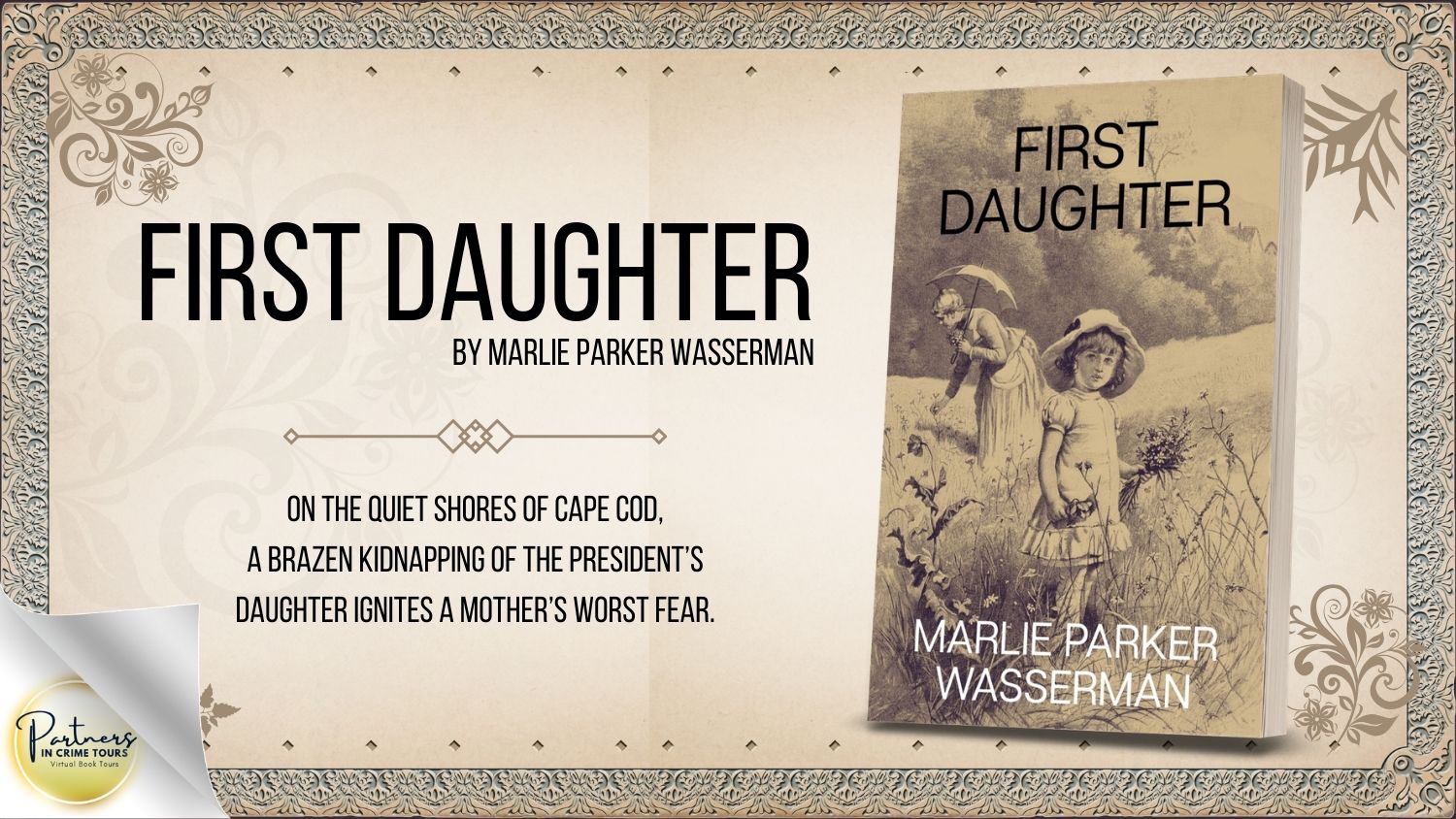
FIRST DAUGHTER
By Marlie Parker Wasserman

It was supposed to be a joyous day. Away from the Washington D.C. crowds President Grover Cleveland and his family are spending time at Gray Gables. His wife, Frances, has just given birth to their third daughter, but cries of joy soon turn to horror. Ruth, the Cleveland's eldest child, has gone missing. Is the three-year-old simply hiding, or has she been taken? Fortunately, Ruth is found, but the woman who took her ran off before she could be caught. While the President wants the matter kept quiet, his wife wants to do everything possible to find the woman before she can try again. Despite a new baby, a husband who's ignoring her concerns, and secret service men who think she's hysterical, Frances Cleveland is determined to find the abductor and keep her family safe!

Can a mother's love overcome a quest for vengeance? FIRST DAUGHTER crafts a story of what if. There are historically documented threats to the Clevelands, but no reported kidnapping. This book borrows the question, what if there was. The book is delineated into sections, referencing two women, Frances Cleveland, the first lady, and Mary Brinksi. While the thrust of the story takes place during the summer and early autumn of 1895, it also goes back in time, giving backstory and thus motive.

While it is a work of fiction, it is imbued with plenty of historical fact. I really enjoyed learning more about Grover Cleveland and his wife Frances. Despite their differences I appreciated their devotion to each other and their daughters. I really loved the bits of history of which I was unaware, like the electricity switch and Cleveland's misdeeds. Being from Buffalo, I also liked the many references to that city-there is a lot of presidential history. Relations between the Clevelands, the secret servicemen, and townsfolk meld into an enjoyable and fascinating read.

A compelling read, FIRST DAUGHTER is ultimately a story of love.

******************************************************************* 
FIRST DAUGHTER by Marlie P Wasserman Banner

FIRST DAUGHTER

by Marlie Parker Wasserman

May 4-29, 2026 Virtual Book Tour

Synopsis:

FIRST DAUGHTER by Marlie P Wasserman

In the summer of 1895, President Grover Cleveland and his pregnant wife, Frances, retreat to their secluded Cape Cod home, eager to avoid Washington’s heat and hassles. The very day that Frances gives birth, their three-year-old daughter vanishes. A ransom note surfaces, demanding a mysterious and peculiar sum.

Is the kidnapper a political enemy or someone closer to home? Secret service agents chase multiple leads but reach dead ends. Desperate, Frances Cleveland searches for answers on her own. As the hunt continues, the kidnapper carefully plots each move and determines to settle a score.

The historical record documents threats against the Clevelands, but no actual kidnapping. Yet, what if the president and his wife, known for keeping secrets, concealed a terrifying chapter of their lives? In this gripping blend of fact and fiction, the line between public duty and private anguish blurs in a mother’s fight to save her child.

Praise for First Daughter:

"Arresting, brilliant, emotional! Marlie Wasserman's First Daughter had me hooked from the very first page. Like her other works, fact and fiction are delightfully blurred by the fantastic level of historical detail, creating an exhilarating ride through the kidnapping of President Grover Cleveland's first child and his obscure misdeeds."
~ Jane L. Rubin, author of the award-winning Gilded City series

"In this masterfully woven historical thriller, the past comes alive with rich detail and taut suspense. In the summer of 1895, President Grover Cleveland and his wife retreat to their Cape Cod estate, seeking respite from political turmoil-until their three-year-old daughter vanishes. A ransom note surfaces, but is the culprit a political enemy or someone in their household? Seamlessly blending fact and fiction, this novel delivers a riveting tale of betrayal, resilience, and a mother's relentless quest for truth."
~ Maryka Biaggio, award-winning author of Gun Girl and the Tall Guy and The Model Spy

"A parent's worst nightmare unfolds for President and Frances Cleveland - their daughter is kidnapped. And no one knows why she was taken. The real motive behind the kidnapping may lie closer to home than anyone dares to imagine. First Daughter is a thrilling tale that clutches your heart and won't let go. This haunting historical mystery steeped in vivid period detail explores the cost of secrets and the burden of public life, wrapped in a mother's relentless instinct to protect her family-no matter the consequences."
~ JF Tanner, author of The King's Collar

"Grabbed from the very first page, Wasserman's tale of the abduction of President Grover Cleveland's young daughter Ruth (Baby Ruth) delivers Gilded Age details, tense characters and no bigger problem than a child in danger. With the deftly structured combination of Frances Cleveland's determination to bring justice to her family and a parallel hard luck tale, readers will forget this is non-fiction."
~ Chris Keefer, author of Find Your Way to My Grave a Carrie Lisbon Mystery

"First Daughter is an intriguing and intricately-plotted historical mystery novel. I loved the depth of research and the evocative setting of President Grover Cleveland's summerhouse Gray Gables at Buzzards Bay. I look forward to reading more from Marlie Parker Wasserman."
~ Margo Laurie, author of The Anarchist's Wife 

Book Details:

Genre: Historical Crime Fiction
Published by: Level Best Books
Publication Date: April 14, 2026
Number of Pages: 324
Book Links: Amazon | Kindle | Barnes & Noble | BookShop.org | Goodreads | BookBub

Read an excerpt:

At the western edge of Cape Cod, in the grandest bedroom in the sprawling residence known as Gray Gables, Frances Cleveland couldn’t stifle the rising sound of her own screams. Between pains, she rested. The late morning breeze drifted across the lawn from Buzzards Bay, fluttering the lace curtain and cooling the sweat on her forehead.

Even at this moment, Frances felt grateful that Grover chose to spend summers away from Washington’s heat, away from the prying public. Here, in this secluded haven, she needn’t fear strangers hovering near the windows of the Executive Mansion for a glimpse of their president—or, more likely, of his wife and daughters. She could concentrate her fears on her pains and pray for the safe birth of her third child, in the same way she had for her first and again for her second. Frances expected from experience that her suffering would soon recede, replaced by the joy of motherhood. She did not know that before the day was over, her bodily misery would end, yielding not to joy but to overwhelming terror.

The previous February, after sensing a flutter beneath her gown while greeting a crowd of visitors at a reception, Frances guessed the baby would be her third girl. Practiced at keeping confidences, she never mentioned her prediction to her preoccupied husband. When she gave birth to another girl, the blathering journalists would have their say. They would try out their jokes about the president’s little harem. Most days, Frances ignored the journalists. Most days, she trusted Grover to love each of his babies.

The image of a trio of girls was far from Frances’s mind now, as she suffered in bed. She cried out, too loudly. Dr. Bryant reminded her that she’d survived labor pains before. “Don’t you dare say that again,” she said, in a shrill tone that surprised her.

At last, Frances heard the newborn’s cry, faint but lovely. Dr. Bryant chuckled while he clamped and cut the cord. “Mrs. Cleveland, should I bring the president upstairs to see his new daughter? He’s pacing on the front porch. Once he sees this one—she’s beautiful—he won’t regret it’s not a son.”

“Yes,” Frances said, with the strongest voice she could muster. A girl, as she’d guessed. For an instant, with the last of her contractions, she’d ignored her prediction and hoped for a boy. Now, she didn’t linger on that momentary weakness of character. She let a surge of pride swell over her, above the exhaustion. She’d done it. Again.

Frances turned to the local midwife hired to assist. “Tell the steward, his name is Sinclair, to get Ruth and Esther. I want my daughters to see their new sister.”

Frances raised herself a few inches, enough to see the midwife slip into the hall. The woman returned and gave Frances a nod. The girls would come shortly. Frances sank back and watched the midwife wipe down the infant and swaddle her. She did look beautiful. “Here,” Frances said, crooking her arm to make room for Marion, the name Grover chose that would serve for a girl or a boy. The same name as a town across Buzzards Bay, where many of their friends lived. Frances appreciated Grover’s decision to buy an estate on the outskirts of a different but nearby town, Bourne. The family could escape Washington’s heat and busybodies.

And escape the threats.

Hours earlier, Frances gave thanks for the breeze blowing through the open window, reminding her that Gray Gables was perfectly located on a point overlooking the Bay’s east side. But now she blocked the sound of wind and waves. straining to make sense of other sounds, to hear what Grover would say about a third daughter. The doctor scurried downstairs. The midwife remained stationed over the bed, tending to Frances and crooning softly to the baby. Frances ignored the woman, mindful only of the voices wafting in through the window. First, low tones as the doctor talked to Grover. They were friends. Dr. Bryant saved Grover’s life two summers ago, removing the cancer eating away at his palate. Now, Frances imagined the doctor patting her thickset husband on his shoulder and shaking his hand. She hoped Grover would offer the doctor a contented smile. Seconds later, Grover clomped upstairs. The doctor followed behind, with lighter steps.

“So happy, Frankie.” Her husband used one of her nicknames. After their wedding, she asked Grover to call her by her more dignified name, Frances. He still used Frankie or Frank in private moments. She let him—the nicknames added tenderness to his gruff voice. “The doctor tells me you’re fine. You managed without chloroform this time, too. And the baby’s healthy. Marion, right? Three girls. They will enjoy each other’s company.”

He said the right thing. She didn’t need to feel anxious about another girl. He was a good man, kind to her, whatever others thought. He wouldn’t hold the baby, rarely did. But he wiped his chubby hand on a cloth, then touched Marion’s forehead. He stood there for a few minutes, cherishing their third child. For him, it was a fourth, but no matter. His eyes shifted to gaze at her. He wouldn’t see the tall, slender belle he married nine years ago, the one the reporters called lovely. He’d see a tired, sweat-drenched woman who looked every day of her thirty years.

“Ruth and Esther?” Frances asked again, eyeing the midwife. “Did you send Sinclair for them?”

“Yes, ma’am. The steward went a minute ago.” The midwife spoke quietly, carefully. She’d feel nervous in the presence of the president.

Still almost flat in bed, Frances clutched Marion, admiring the infant. Perfect features. Ten fingers and ten toes. Another blessing from God.

A familiar sound at the door. Sinclair knocked softly. His usual pattern—soft, loud, soft—keeping to the household code. Another sound, when the midwife opened the door. Next, Frances would hear four little feet rushing toward the newest baby.

No feet. Only hushed words.

“Sinclair found Annie,” the midwife said. “She’s your older daughter’s nursemaid, right? He tells me she needs another minute to bring Ruth and to tell your younger daughter’s nursemaid to bring Esther.” The midwife stood far from Frances’s bed, speaking almost in a whisper.

Grover didn’t look concerned. His rough mustache skimmed Frances’s cheek as he kissed her lightly on her damp forehead. She was too tired to return the kiss. She heard him drop into the nearby rocking chair.

“Joseph,” he said, addressing the doctor, “you’re certain Frankie is fine? No complications?”

“Just fine, Grover. Ready for the next one before long.”

Four years earlier, when Ruth was born, Dr. Joseph Bryant told Frances how to manage her family. “Breastfeed for six months.” He looked straight at her, with no awkwardness. “You’ll not get in the family way, and the baby will stay healthy. After six months, well, you and Grover can proceed to another.” And so they had. Esther after Ruth. Marion after Esther. A daughter every two years.

Frances closed her eyes, relying on her ears. Dr. Bryant thanked the midwife for her assistance. The woman tidied up, gathering soiled sheets and opening a chest, hunting for fresh linens. The room went silent, except for the soft, repetitious squeak of the rocking chair. Grover leaned up, then back, up then back. Frances sensed herself drifting off.

Another soft knock, barely a sound, followed by a pause, and two more soft knocks. Not Sinclair. One of the nursemaids. Annie? The midwife opened the door. “Ma’am.” Annie’s voice came out as a croak. “I can’t find Ruth.”

***

Excerpt from FIRST DAUGHTER by Marlie Parker Wasserman. Copyright 2026 by Marlie Parker Wasserman. Reproduced with permission from Marlie Parker Wasserman. All rights reserved.


Author Bio:

Marlie Parker Wasserman

Marlie Parker Wasserman loves writing historical crime fiction. She has published three novels--First Daughter will be her fourth. After a career in publishing in New Jersey, she moved to Chapel Hill, NC with her husband. When she is not writing, she travels, reads, and sketches. One of her goals is to visit every national park in the U.S., and she is close to her goal.

Catch Up With Marlie Parker Wasserman:

www.marliewasserman.com
Amazon Author Profile
Goodreads
BookBub - @marliewasserman
Instagram - @marliepwasserman
Bluesky - @marliewasserman.bsky.social
Facebook


Tour Participants:

Click through the other tour stops for can’t-miss reviews, insider interviews, exclusive guest posts, and more chances to win!

Click here to view the Tour Schedule


A Novel Way to Celebrate FIRST DAUGHTER… Start Here

This giveaway is hosted by Partners in Crime Tours for Marlie Parker Wasserman. See the widget for entry terms and conditions. Void where prohibited.
FIRST DAUGHTER by Marlie Parker Wasserman | Gift Card

Can't see the giveaway? Click Here!
Get More Great Reads at Partners In Crime Tours

Wednesday, May 6, 2026

Currently Reading...

I'm currently reading First Daughter by Marlie Parker Wasserman. This standalone work of historical fiction was released last month.

It was supposed to be a joyous day. Away from the Washington D.C. crowds President Grover Cleveland and his family are spending time at Gray Gables. His wife, Frances, has just given birth to their third daughter, but cries of joy soon turn to horror. Ruth, the Cleveland's eldest child, has gone missing. Is the three-year-old simply hiding, or has she been taken? Fortunately, Ruth is found, but the woman who took her ran off before she could be caught. While the President wants the matter kept quiet, his wife wants to do everything possible to find the woman before she can try again. Despite a new baby, a husband who's ignoring her concerns, and secret service men who think she's hysterical, Frances Cleveland is determined to find the abductor and keep her family safe!

Friday, January 30, 2026

Asylum Murders - A Review

 Review


ASYLUM MURDERS by Michael G. Colburn
The Second Lady Black Mystery 

Lady Edith Black made the mistake of intimating that she was bored. She soon gets wrapped up in an investigation that's exciting, dangerous, and deadly. The theft of the Parliamentary Mace, body parts being found around the city, and a woman beaten nearly to death and unlikely to regain consciousness has Detective McElroy feeling the pressure, especially as  most of the force wishes he'd stayed in London. Calling on his friend, Edie Black, to help him with the interviews he at least has a friendly face he can trust. Though she doesn't know it, people from Edie's London past are also residing in Melbourne. The dangerous and duplicitous Henderson, the tricky Rohwedder, now with a new persona and trade, and her good friend Britina. Britina, forced to enter the novitiate in London, has been transferred to Australia where she's been assigned to work at the Kew Asylum. Britina soon discovers that horrible things are happening at the asylum. Will she be able to help, or will she be the one needing help?

The second Lady Black Mystery is filled with seemingly disparate things - body parts washing up in the city, theft of a parliamentary mace, and a missing woman. What I like best is the way these separate mysteries meld together creating a complete mystery. I enjoyed the relationship between Edie and Detective McElroy, helping, protecting, and trusting. Britina's journey was fascinating and I'm happy she took on a major role in this story. I also really enjoyed the minor characters, who weren't minor at all. Ralphie and Sammy, Dr. Tharp, and Kirb are well drawn out characters who are vital to the story. 

ASYLUM MURDERS is a well plotted mystery containing thrills and the stark realities of 1890s Australia with enough humor to balance the horrors. As someone who currently works in a psychiatric center it was fascinating to read about the Kew Asylum, even a fictional version. I appreciated the look at "new" treatments and how surgeons were trained at that time.

With lots of moving parts ASYLUM MURDERS is a thrilling historical mystery that will keep you on the edge of your seat. 

Wednesday, January 7, 2026

Currently Reading...

I just finished reading Asylum Murders by Michael G. Colburn. This is the second book in the Lady Black Mystery series and was released last month.

Lady Edith Black made the mistake of intimating that she was bored. She soon gets wrapped up in an investigation that's exciting, dangerous, and deadly. The theft of the Parliamentary Mace, body parts being found around the city, and a woman beaten nearly to death and unlikely to regain consciousness has Detective McElroy feeling the pressure, especially as  most of the force wishes he'd stayed in London. Calling on his friend, Edie Black, to help him with the interviews he at least has a friendly face he can trust. Though she doesn't know it, people from Edie's London past are also residing in Melbourne. The dangerous and duplicitous Henderson, the tricky Rohwedder, now with a new persona and trade, and her good friend Britina. Britina, forced to enter the novitiate in London, has been transferred to Australia where she's been assigned to work at the Kew Asylum. Britina soon discovers that horrible things are happening at the asylum. Will she be able to help, or will she be the one needing help?

Sunday, November 23, 2025

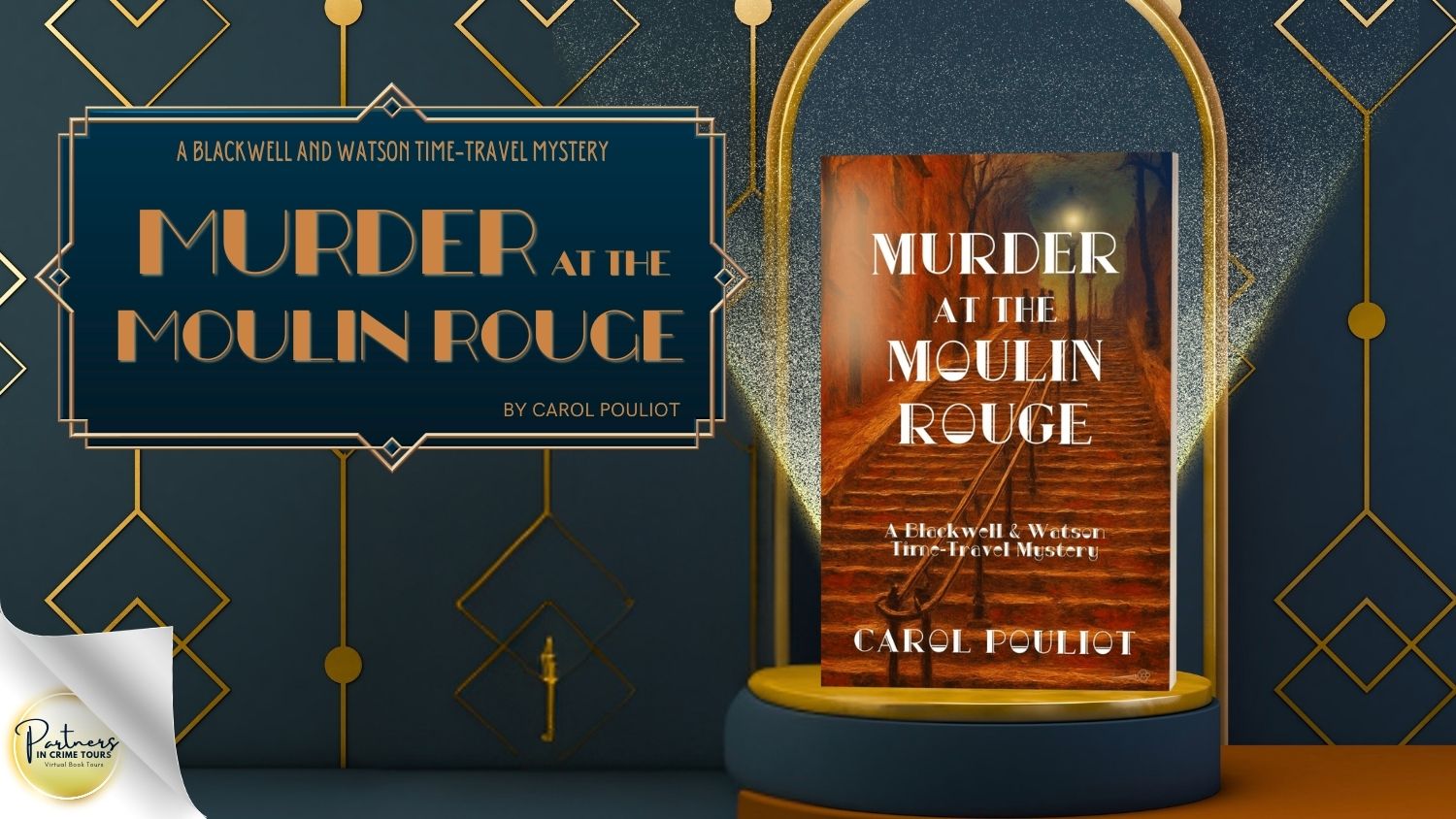
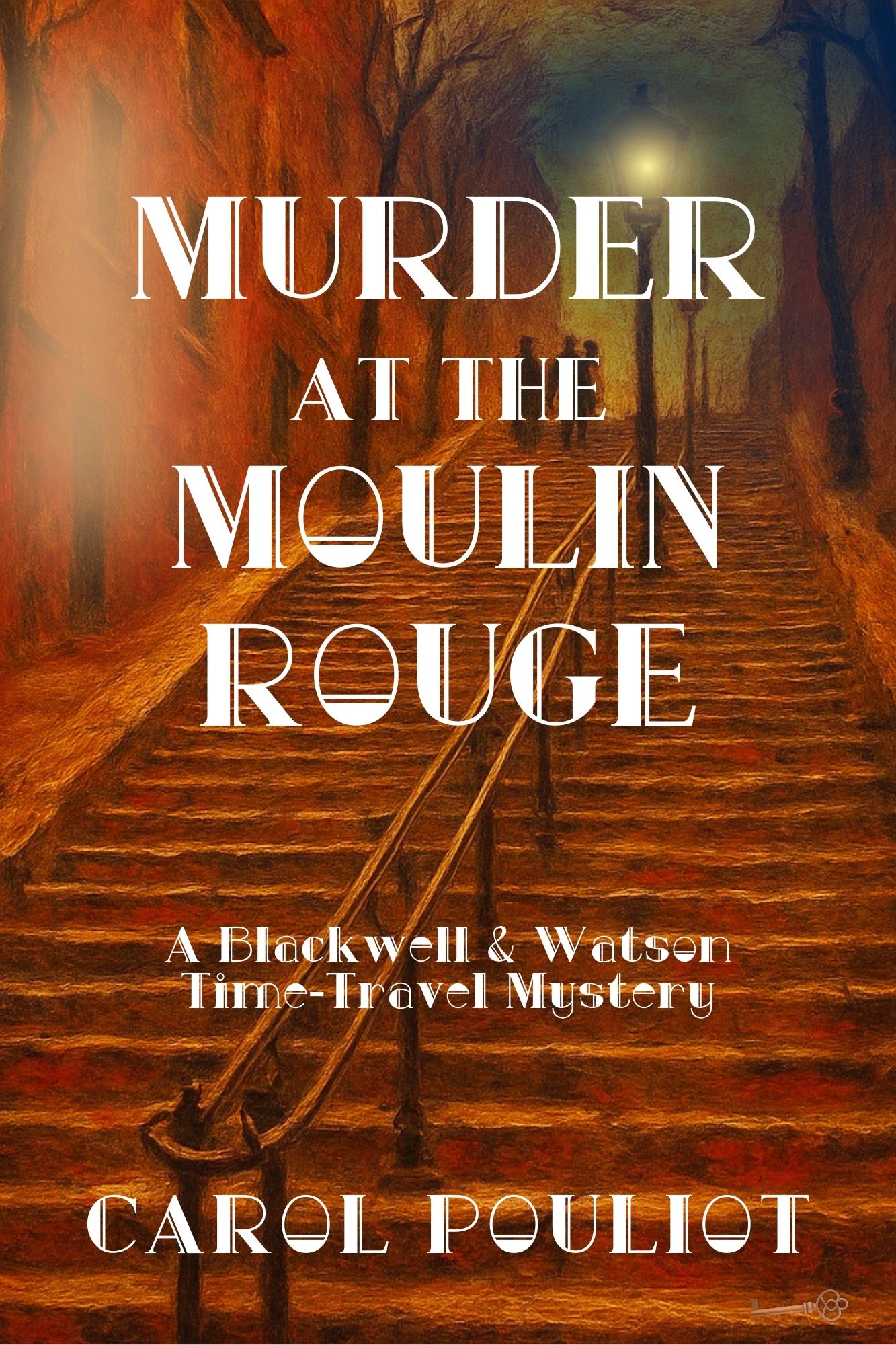
Murder at the Moulin Rouge - A Review. Excerpt, & Giveaway

 Review


MURDER AT THE MOULIN ROUGE by Carol Pouliot
The Fifth Blackwell & Watson Mystery
 
Steven Blackwell has gotten used to the fact that his home is a conduit of sorts, first meeting Olivia Watson who lives in the house in the 2010s and allowing him to visit the future and Olivia the ability to visit his time, the 1930s. What he didn't expect was to see a young version of his deceased mother coming and telling him that he and Olivia need to come with her to solve a murder in 1895 Paris! The pair, stunned, agree and soon are investigating the death of a dancer. While it was deemed accidental, a horrible fall down icy stairs, some things don't add up and Henri Toulouse-Lautrec thinks it's murder. Fortunately for Steven, Detective Etienne Berthot with the Sûreté agrees and is able to help. Soon Steven and Olivia are entrenched in the world of dance both at the ballet and the Moulin Rouge and learn that their glittering world is more than a bit tarnished.
 
I truly enjoy when real historical people show up in mysteries and I was thrilled to see not only Henri Toulouse-Lautrec, but Edgar Degas and other notable artists of the Impressionistic era. It was also fun to see amazing things around today when they were in their infancy: motion pictures, the Eiffel Tour, and Sacre Coeur! I also loved attending an artistocratic New Year's party. The details were exquisitely portrayed. 
 
While I love the idea of Steven and Olivia being able to enter each other's time lines, and even consider it plausible, given Einstein's theories, I had to give the fifth Blackwell & Watson Mystery more of a willing suspension of disbelief in their ability to travel to 1895, as well as what they learned about time travel itself. Still it opens the series up to a lot more possibilities and I certainly had fun in 1895 Paris, although I'm just as happy in 1934 Knightsbridge, New York.
 
The mystery was twisty with lots of well placed turns and surprises. I enjoyed how Steven and Olivia work together with Etienne and even Evangéline. 
 
Combining historical facts with a fictional mystery MURDER AT THE MOULIN ROUGE is a delightful trip back in time.
 
************************************************************************** 

Murder at the Moulin Rouge by Carol Pouliot Banner

MURDER AT THE MOULIN ROUGE

by Carol Pouliot

November 3 - 28, 2025 Virtual Book Tour

Synopsis:

Murder at the Moulin Rouge by Carol Pouliot

A Blackwell and Watson Time-Travel Mystery


Paris, 1895. When a cancan dancer at the Moulin Rouge falls to her death from the top of one of Montmartre’s highest staircases, the police dismiss it as an accident. But, Madeleine was one of Toulouse-Lautrec’s favorite models, and the artist is certain she was murdered. Enter Depression-era detective Steven Blackwell and 21st-century journalist Olivia Watson who travel back in time to Paris to hunt down the killer. Before long, they learn that a second dancer—a ballerina and favorite model of painter Edgar Degas—has died. Two dancers dead in two weeks. Two artists grieving. Is the killer targeting young dancers, or, does this case involve the enigmatic Paris art world?

From the moment Steven and Olivia arrive, Steven is out of his element. The small-town cop has no idea what techniques the French police use in 1895. Worse, he has no official status to investigate murder in one of the world’s largest cities. The sleuths soon discover disturbing secrets at the Paris Ballet. And when Olivia insists on going undercover to visit a suspect’s house alone, Steven fears he’s made the biggest mistake of his life.

Travel back in time with Steven and Olivia, as they enter the back-stabbing world of dance in one of the world’s greatest cities. Murder at the Moulin Rouge is their most daring and dangerous case to date.

Book Details:

Genre: Traditional Police Procedural with a Time-Travel Twist; Historical Mystery.
Published by: Level Best Books
Publication Date: September 23, 2025
Number of Pages: 325
Series: The Blackwell and Watson Time-Travel Mysteries, #5
Book Links: Amazon | Barnes & Noble | BookShop.org | Goodreads | BookBub | Level Best Books

The Blackwell and Watson Time-Travel Mystery Series

Doorway to Murder by Carol Pouliot
Doorway to Murder
Amazon | Barnes & Noble | BookShop.org | Goodreads | BookBub

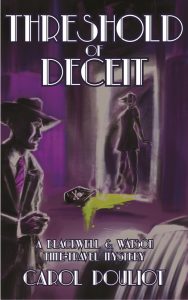
Threshold of Deceit by Carol Pouliot
Threshold of Deceit
Amazon | Barnes & Noble | BookShop.org | Goodreads | BookBub

Death Rang the Bell by Carol Pouliot
Death Rang the Bell
Amazon | Barnes & Noble | BookShop.org | Goodreads | BookBub

RSVP to Murder by Carol Pouliot, Cover
RSVP to Murder
Amazon | Barnes & Noble | BookShop.org | Goodreads | BookBub

Read an excerpt:

Chapter One

December 25, 1934
Knightsbridge, New York

“I need you to come to Paris.”

“You need what?” he asked.

Detective Steven Blackwell stared at the younger version of his mother standing in the room that had been her studio. Jaw dropped, eyes like saucers. He could barely speak.

“I need you—and your friend Olivia, if you like—to come to Paris. There’s been a murder and the police aren’t doing anything,” said Evangéline. “I thought I heard a voice a minute ago. Was that Olivia? Why don't you get her? She’s probably wondering what’s going on.”

In a daze, and feeling like he had no control over his actions, Steven turned away from the vision of his mother and stumbled out into the hallway. He saw Olivia still waiting in the doorway at the end of the hall. Her hand flew to her chest, and she heaved a great sigh. “Oh, my God, you’re okay! What’s going on? I thought I heard voices. Is somebody here?” As he came closer, she noticed the look on his face. “What’s wrong? You look funny.”

“It’s my mother. My mother’s here.”

“What?”

“She looks as real as you do, but she’s young, around our age. She said she needs me to go to Paris. And you should come too.”

“What?” For one terrifying moment, Olivia wondered if a year of grieving had unhinged Steven’s mind. How could his mother be here? Evangéline Neuilly Blackwell died last January.

Steven repeated Evangéline’s instructions. “She said I should come get you.” He held out his hand. Olivia took it and stepped over the threshold into 1934.

They moved slowly down the hall then paused at the doorway to look at each other. Steven squeezed her hand. Olivia nodded. They both took a deep breath then entered Evangéline’s studio.

There in the shadowy room stood a beautiful woman, shoulder-length copper hair shining in the lamplight. She was slender, taller than average, and wore a stunning emerald dress, the kind French women wore to perfection. A wool coat with a fur collar had been thrown over the back of a chair. She held out her hand toward Olivia.

“Hello. I’m Evangéline Neuilly. I’m so happy to meet you.”

Olivia had always wanted to meet Steven’s exotic-sounding mother—a famous French artist—but that possibility had died along with Evangéline. Or so she had thought. Olivia told herself to close her mouth, which had fallen open, and shook the woman’s hand. “Olivia Watson.”

Evangéline looked at Steven. “I can tell you’re surprised to see me. I must not have told you about my ability to time travel. Surely, you wondered why you can? And if your father or I also had that ability?”

“Eh, no. Not really.”

Evangéline rolled her eyes and gave Olivia a look that said, Men, huh?

Olivia couldn’t help grinning.

“Well,” Evangéline opened her arms wide, “here’s the answer to your unasked question. You got it from me.”

Olivia recovered first. “So, Evangéline, you traveled here from...when?”

“1895. And I really need your help. Both of you.” She shook her head and waved her hand back and forth. “I know. I know. You have a lot of questions. Let’s go downstairs and have something to drink. I’ll tell you what has happened.”

They trouped down the stairs and into the living room.

“I know I must have lived in this house for some time and I assume I decorated this room....” Evangéline turned to Steven for confirmation.

“Yes, we lived here about twenty years or so before you....” He swallowed hard.

“Before I died,” she whispered, then patted his hand. “Pauvre chouchou. Poor sweetheart. I’m so sorry. But, don’t tell me. I don’t want to know when. Of course, I have an idea. But not the exact date.” She opened a door in the sideboard. “Bon! A bottle of red.” She handed the wine to Steven.

Still dazed, he opened it and poured a glass for each of them. Evangéline curled up in a leather chair. Steven and Olivia sat facing her on the couch.

His mother took a sip and pursed her lips. “Not bad. So, listen, we must act fast. A young girl has been killed but the police do nothing. They say it was an accident. We know it was not. I want you to find out who killed Madeleine Gervaise.”

His cop’s instincts kicked in, and Steven found himself intrigued. Who was Madeleine Gervaise? How did she die? Why do the police think it was an accident? And what was her connection to Evangéline?

Suddenly, Steven remembered something Sherlock Holmes once said: “When you have eliminated the impossible, whatever remains, however improbable, must be the truth.” And with that assurance, he snapped out of his stupor and accepted his mother’s bewildering appearance. He leaned forward.

“All right, let’s say, for the sake of argument, that I can and will go to Paris. Answer these questions.” He ticked them off his fingers. “Why do the police think it was an accident? How do you know it wasn’t? When did this happen?”

Evangéline placed her feet on the floor and mirrored him, ticking her answers off her fingers. Olivia almost laughed at the two of them. Talk about a chip off the old block, as her grandfather used to say. “She fell on one of the tall staircases in Montmartre. The police say she slipped on the ice. My friend Henri knows the human body and how it works. He says the...how do you say ‘marks of black and blue’?”

“Bruises,” Olivia chimed in. “We also say black-and-blue marks.”

“Ah! Bon. Henri says the bruises prove someone pushed her. It happened late Sunday night, early Monday morning. Today is already Wednesday. That is why we must move fast.”

Steven groaned, thinking of the days lost. “Is Henri a doctor?”

“No, an artist. But, believe me, Steven, he knows the body. If Henri says she was pushed, she was pushed.”

“So, again, if we were to do this, how would it work?”

“We must go with all speed. That means we must travel in Olivia’s time in one of those fast aeroplanes. That’s how I got here so quickly.”

“Wait, how do you know about Olivia?”

Oh, mon Dieu, the questions! It is a long story but if it will help speed this up...last summer, I traveled to 1934, to America, with someone on business that had nothing to do with you or my future. When I was in New York City, I saw a photograph in a newspaper of the painting I’m working on right now. The article said a museum in Chicago had bought it and gave information about me, you, and your father. While my friend was completing his business, I had a couple of days to myself, so I took a train here and came to this house. Naturally, I was curious, so I came in and looked around. You really shouldn’t leave your doors unlocked, you know. Anyway, I saw the photograph of Olivia on your dresser. You have her name and the year 2014 written on the back. I realized you had inherited my ability to time travel and that Olivia also had the gift.” Evangéline blew out her cheeks. “Can we not return to the problem at hand now?”

Steven grinned. “Yeah, okay. You know, I always thought you learned English when you moved here with Dad. You speak really well.”

She rolled her eyes. “As you must know, my father is a professor of English at the Sorbonne. He taught me when I was a child.” She took a drink of her wine. “Now, to our problème...I went through the portal in Paris, from 1895 to Olivia’s time.”

“Why did you go into Olivia’s time?”

“If you keep interrupting me, we will never get anywhere. Just listen.” Evangéline took another drink of wine and went on. “Time is of the essence, as it’s already been almost three days. We must travel into 2014 and go to New York City as quickly as possible. Someone there will help us with what we need. Tomorrow night, we’ll fly to Paris. Once we’re there, we’ll travel back to 1895.”

“You make it sound easy. But I have so many questions,” Steven persisted. “How are we going to pay for all this? How do I get a passport fast enough to fly tomorrow? What about other things we might need?”

His mother tilted her head toward the ceiling and sighed. “You think I have come all this way without a plan? Before I left, Henri gave me a sketch. There’s a man in New York City—you will soon learn we have travel agents in cities all over the world who help us. This man in New York City, a place called Brooklyn, is selling the sketch for me, so we’ll have plenty of money. He’ll make a passport and other documents for you, Steven, just as someone in Paris made mine so I could come here.” Evangéline turned to Olivia. “Do you have a passport? Do you drive an automobile?”

“Yes. And I have a car.”

“Can you take us to New York City tomorrow morning so we can get Steven’s documents and the money to buy our tickets for the aeroplane? We must leave for Paris tomorrow night.”

“Sure. Listen, Evangéline, I’m sorry to hear about your friend Madeleine.”

“Thank you. She was lovely—a dancer and one of Henri’s favorite models. Such a waste.”

“Who is Henri? And why would anybody buy one of his sketches?”

“Henri de Toulouse-Lautrec. I think he is well known in your time, Olivia.”

“Toulouse-Lautrec?” Olivia gasped. “He’s a friend of yours?”

“Yes, and he’s now your employer.”

Olivia’s jaw dropped.

Evangéline reached out toward Steven with her empty wineglass then settled back in the chair after he’d refilled it. “Now, let us talk about tomorrow. You must both pack a small bag. Steven, bring any tools or objects you will need to investigate. I don’t know what they might be, but that is most important. When we travel to my Paris in 1895, you can borrow clothes belonging to my friend Théo. He’s away on business right now. His wardrobe is filled with additional items—suits, shirts, collars, and so forth. There’s a cloak and hat as well. Olivia, we’re about the same size. I’m happy to share my clothes with you. I have plenty of skirts and dresses. I have an extra cloak, too. Just bring your personal things.”

Suddenly, Steven realized he had been given a gift. After a long, difficult year of grieving, he had the chance to spend time with the woman who would become his mother. How could he possibly say no?

“I’m sorry, but I have to interrupt again,” Steven said, grinning at Evangéline. “Before it gets too late, I need to call the chief to tell him a family emergency has come up and I need a few days off.” He stood and headed for the phone, then stopped. He turned around and walked back to Evangéline. “I know this is going to be weird for you. You don’t even know me yet. But I have missed you so much!” And he bent down and kissed his mother’s cheek.

***

Excerpt from Murder at the Moulin Rouge by Carol Pouliot . Copyright 2025 by Carol Pouliot . Reproduced with permission from Carol Pouliot . All rights reserved.


Author Bio:

Carol Pouliot

A former language teacher and business owner, Carol Pouliot writes the acclaimed Blackwell and Watson Time-Travel Mysteries, traditional police procedurals with a seemingly impossible relationship between a Depression-era cop and a 21st-century journalist. With their fast pace and unexpected twists and turns, the books have earned praise from readers and mystery authors. Carol is a founding member of Sleuths and Sidekicks, 4 mystery writers who have banded together to share their love of mysteries, immediate Past President and Program Chair of her Sisters in Crime chapter, and Co-Chair of Murderous March, an online mystery conference. When not writing, Carol can be found packing her suitcase and reaching for her passport for her next travel adventure.

Catch Up With Our Author:

www.carolpouliot.com
Sleuths and Sidekicks
Amazon Author Profile
Goodreads
BookBub - @cpouliot13
Instagram - @carolpouliotmysterywriter
Pinterest - @cpouliot13
Facebook - @WriterCarolPouliot


Tour Participants:

Visit these other great hosts on this tour for more great reviews, interviews, guest posts, and opportunities to WIN in the giveaway!

Click here to view the Tour Schedule


Don't Miss Out! Enter Now for Your Chance to Win!

This giveaway is hosted by Partners in Crime Tours for Carol Pouliot. See the widget for entry terms and conditions. Void where prohibited.
MURDER AT THE MOULIN ROUGE by Carol Pouliot [Gift Cards]

Can't see the giveaway? Click Here!
Get More Great Reads at Partners In Crime Tours

Sunday, November 2, 2025

The Bell Tolls at Traeger Hall - A Review, Excerpt, & Giveaway

Review


THE BELL TOLLS AT TRAEGER HALL 
By Jaime Jo Wright

Traeger Hall is a mansion haunted by the past, perhaps even cursed by its cruel and vindictive owner. In 1890 Leopold Traeger had a stranglehold on Newton Creek, Wisconsin. He owned the sawmill, the bank, as well as several other endeavors. Then he and his wife were brutally murdered inside the home. His will decreed his ward, Waverly Pembrooke leave the house with only the clothing with which she arrived and Traeger Hall be sealed for one hundred years. Over a hundred years have passed and Newton Creek is no longer a vibrant community and the Hall remains sealed. Jennie Phillips has arrived in town, inheriting Traeger Hall, one of her father's acquisitions. But a skeleton on the property and a unique codicil thwart Jennie's plans. Has the evil of two men passed down into the house? Will opening Traeger Hall mean the discovery of treasure or will it open the world to the evil trapped inside?

Subtle unease, unspoken danger that makes the hair on your arms raise, knowing that things just aren't right infuse this atmospheric novel. What is it that haunts Traeger Hall and Newton Creek itself? Ghosts are real, but are they just the impressions left by the evil of men?

Traeger Hall is itself an allegory. What will you find if you dare to enter? Hidden secrets, lost masterpieces, should it be sealed forever, opened up, or razed to the ground? What does that mean for the people involved, including the reader? 

I really enjoyed the period detail, manners, and stifled repression of the historical portion of the book. However, I did feel a bit cheated when I discovered one trope used as its resolution, although it did explain a lot and brought things full circle. The 1950 interviews added a unique perspective. As for the modern aspect, I appreciated how the repression continued and how it slowly released, just as it did in the 1890. I liked the modern day ending, which served also as a beginning.  

THE BELL TOLLS AT TRAEGER HALL is a winding journey of self discovery where emotions and secrets boarded up, just like Traeger Hall itself.

************************************************************************* 

The Bell Tolls at Traeger Hall by Jaime Jo Wright Banner

THE BELL TOLLS AT TRAEGER HALL

by Jaime Jo Wright

October 20 - November 14, 2025 Virtual Book Tour

Synopsis:

The Bell Tolls at Traeger Hall by Jaime Jo Wright

An abandoned estate encased in stagnant darkness . . .
A haunting legacy intent on silencing all within reach . . .

In 1890, the ominous tolling of the bell announces that death has come to Traeger Hall, leaving orphaned Waverly Pembrooke to piece together the puzzle behind her uncle's and aunt's murders. Bound by the terms of her uncle's eccentric will, Waverly finds herself alone in a manor shrouded by death and questioning the reasons for her uncle's paranoia. A madness hovers over Traeger Hall, and Waverly--as well as the people of nearby Newton Creek--are ill-prepared for the woe that has descended.

In present day Newton Creek, whispers of a family curse still cling to the century-old, abandoned property of Traeger Hall. When Jennie Phillips takes possession of the estate after her mother's passing, she is intent on solving the mystery of the Traeger murders. Yet a modern cold case suggests that untimely deaths and mysterious occurrences still plague the property. And as thorny truths surface, Jennie realizes the dark legacy threatens not only the town and the Traeger descendants . . . but also, chillingly, Jennie herself.

Book Details:

Genre: Dual Timeline Gothic Suspense
Published by: Bethany House Publishers
Publication Date: October 21, 2025
Number of Pages: 336
ISBN: 9780764243806, paperback
Book Links: Amazon | Barnes & Noble | BookShop.org | Goodreads | BookBub | Baker Book House

Read an excerpt:


Author Bio:

Jaime Jo Wright

Jaime Jo Wright is the author of thirteen novels, including Christy Award-winner and ECPA bestseller The Vanishing at Castle Moreau, Christy Award and Daphne du Maurier Award-winner The House on Foster Hill, and Carol Award-winner The Reckoning at Gossamer Pond. Jaime has also written two Publishers Weekly bestselling novellas. She lives in Wisconsin with her family and fabulous felines.

Catch Up With Jaime Jo Wright:

JaimeWrightBooks.com
Amazon Author Profile
Goodreads - @JaimeJoWright
BookBub - @JaimeJoWright
Instagram - @JaimeJoWright
Threads - @JaimeJoWright
YouTube - MadLit Musings
Spotify - MadLit Musings


Tour Participants:

Visit these other great hosts on this tour for more great reviews, interviews, guest posts, and opportunities to WIN in the giveaway!

Click here to view the Tour Schedule


Win Big! Enter Now for Your Chance to Win!

This is a giveaway hosted by Partners in Crime Tours for Jaime Jo Wright. See the widget for entry terms and conditions. Void where prohibited.
THE BELL TOLLS AT TRAEGER HALL by Jaime Jo Wright (book + gift card)

Can't see the giveaway? Click Here!


Get More Great Reads at Partners In Crime Tours


Wednesday, October 29, 2025

Currently Reading...

I'm currently reading The Bell Tolls at Traeger Hall by Jaime Jo Wright. This standalone novel was published last week.

Traeger Hall is a mansion haunted by the past, perhaps even cursed by its cruel and vindictive owner. In 1890 Leopold Traeger had a stranglehold on Newton Creek, Wisconsin. He owned the sawmill, the bank, as well as several other endeavors. Then he and his wife were brutally murdered inside the home. His will decreed his ward, Waverly Pembrooke leave the house with only the clothing with which she arrived and Traeger Hall be sealed for one hundred years. Over a hundred years have passed and Newton Creek is no longer a vibrant community and the Hall remains sealed. Jennie Phillips has arrived in town, inheriting Traeger Hall, one of her father's acquisitions. But a skeleton on the property and a unique codicil thwart Jennie's plans. Has the evil of two men passed down into the house? Will opening Traeger Hall mean the discovery of treasure or will it open the world to the evil trapped inside?

Tuesday, July 15, 2025

A Death on Corfu - A Spotlight

Today I'd like to shine a spotlight on a book that's been waiting patiently on my TBR pile. A Death on Corfu by Emily Sullivan is the first book in the Minnie Harper Mystery series and was released at the end of April this year.

Blurb: 

Minnie Harper isn’t used to putting herself first. Not after she moved away from England only to be left raising two children alone on the Greek Island of Corfu following her husband’s unexpected death. But with her daughter begging to be sent to school abroad and her son grasping at his own independence, Minnie realizes she must prepare for the next stage of her life.

When famous mystery author Stephen Dorian settles into a neighboring villa to escape writer’s block and hidden scandals, she is intrigued at first by the handsome Londoner—until he proves to be nothing more than a boorish grump. Determined to avoid the man as much as possible, Minnie is shocked when he offers her a well-paid job as his typist. She isn’t in a position to turn down work, even from a man she has sworn to hate.

But before Minnie can fully regret her decision to take the job, she makes a horrifying discovery that changes everything. A young maid has been murdered, and local authorities aren’t moving fast enough to bring justice to the terrible crime. Unwilling to allow the death to fade into obscurity like the stories of so many other women deemed unworthy by society, Minnie launches an investigation of her own—and reluctantly accepts Stephen’s help. As she embarks on a dangerous search for answers that reveals another side of Corfu, unsettling questions take shape about her employer-turned-confidant and the culprit who just might do whatever it takes to strike again . . .

Friday, September 10, 2021

The Murderess Must Die - A Review, Excerpt, & Giveaway

 Review

 
THE MURDERESS MUST DIE
By Marlie Parker Wasserman
 
Born in 1849 Martha Garretson Savacool Place knew loss and hardship and was no stranger to meanness. Told from her point of view, as well as those of others who played a part in her life, we bear witness to her abusive childhood, her first marriage, including the joyous birth of her son, and her disastrous second marriage which led to her being charged with the murder of her teenaged step-daughter. We learn details about the trial and its aftermath and ponder questions never raised. We also witness her end. In 1899 Martha Garretson Savacool Place became the first woman to be put to death in the electric chair. This is her story. 
 
While leading readers on a fascinating journey through the life and death of Martha Place the author was able to capture the attitudes of people long gone, bringing them to life once more. Readers see a hardscrabble life and a woman pushed too far. Even though you know what happens in the end, you can't help but be caught up in the trial and the appeals process. Perhaps hoping, as Martha may have done, for a different outcome.
 
Rather than basing details on the sensational, and often contradictory, journalism of the time or the dry court records THE MURDERESS MUST DIE gives Martha Place a voice. By allowing her to speak and give her own perception of events, we're given another view of the woman. Other important people in her life are given the opportunity to speak as well, recounting their thoughts, so that, combined with Martha's, we get a more unbiased view of the circumstances surrounding her life and death. Martha is not a very likable person, yet you cannot help but feel for her and admire her determination and grit.
 
Well researched and eminently readable THE MURDERESS MUST DIE is an engrossing tale of a woman determined to make a better life for herself, no matter the cost. Sadly, the cost was her very life.
 
****************************************************************************

The Murderess Must Die by Marlie Wasserman Banner

The Murderess Must Die

by Marlie Parker Wasserman

August 16 - September 10, 2021 Tour

Synopsis:

The Murderess Must Die by Marlie Wasserman

On a winter day in 1898, hundreds of spectators gather at a Brooklyn courthouse, scrambling for a view of the woman they label a murderess. Martha Place has been charged with throwing acid in her stepdaughter’s face, hitting her with an axe, suffocating her with a pillow, then trying to kill her husband with the same axe. The crowd will not know for another year that the alleged murderess becomes the first woman in the world to be executed in the electric chair. None of her eight lawyers can save her from a guilty verdict and the governor of New York, Theodore Roosevelt, refuses to grant her clemency.

Was Martha Place a wicked stepmother, an abused wife, or an insane killer? Was her stepdaughter a tragic victim? Why would a well-dressed woman, living with an upstanding husband, in a respectable neighborhood, turn violent? Since the crime made the headlines, we have heard only from those who abused and condemned Martha Place.

Speaking from the grave she tells her own story, in her own words. Her memory of the crime is incomplete, but one of her lawyers fills in the gaps. At the juncture of true crime and fiction, The Murderess Must Die is based on an actual crime. What was reported, though, was only half the story.

Praise for The Murderess Must Die:

A true crime story. But in this case, the crime resides in the punishment. Martha Place was the first woman to die in the electric chair: Sing Sing, March 20, 1899. In this gorgeously written narrative, told in the first-person by Martha and by those who played a part in her life, Marlie Parker Wasserman shows us the (appalling) facts of fin-de-siècle justice. More, she lets us into the mind of Martha Place, and finally, into the heart. Beautifully observed period detail and astute psychological acuity combine to tell us Martha's story, at once dark and illuminating. The Murderess Must Die accomplishes that rare feat: it entertains, even as it haunts.
Howard A. Rodman, author of The Great Eastern

The first woman to be executed by electric chair in 1899, Martha Place, speaks to us in Wasserman's poignant debut novel. The narrative travels the course of Place's life describing her desperation in a time when there were few opportunities for women to make a living. Tracing events before and after the murder of her step-daughter Ida, in lean, straightforward prose, it delivers a compelling feminist message: could an entirely male justice system possibly realize the frightful trauma of this woman's life? This true-crime novel does more--it transcends the painful retelling of Place's life to expand our conception of the death penalty. Although convicted of a heinous crime, Place's personal tragedies and pitiful end are inextricably intertwined.
Nev March, author of Edgar-nominated Murder in Old Bombay

The Murderess Must Die would be a fascinating read even without its central elements of crime and punishment. Marlie Parker Wasserman gets inside the heads of a wide cast of late nineteenth century Americans and lets them tell their stories in their own words. It’s another world, both alien and similar to ours. You can almost hear the bells of the streetcars.
Edward Zuckerman, author of Small Fortunes and The Day After World War Three, Emmy-winning writer-producer of Law & Order

This is by far the best book I have read in 2021! Based on a true story, I had never heard of Mattie Place prior to reading this book. I loved all of the varying voices telling in the exact same story. It was unique and fresh and so wonderfully deep. I had a very hard time putting the book down until I was finished!
It isn't often that an author makes me feel for the murderess but I did. I connected deeply with all of the people in this book, and I do believe it will stay with me for a very long time.
This is a fictionalized version of the murder of Ida Place but it read as if the author Marlie Parker Wasserman was a bystander to the actual events. I very highly recommend this book.
Jill, InkyReviews

Book Details:

Genre: Historical Crime Fiction
Published by: Level Best Books
Publication Date: July 6, 2021
Number of Pages: 250
ISBN: 978-1953789877
Purchase Links: Amazon | Goodreads

Read an excerpt:

Mattie

Martha Garretson, that’s the name I was born with, but the district attorney called me Martha Place in the murder charge. I was foolish enough to marry Mr. William Place. And before that I was dumb enough to marry another man, Wesley Savacool. So, my name is Martha Garretson Savacool Place. Friends call me Mattie. No, I guess that’s not right. I don’t have many friends, but my family, the ones I have left, they call me Mattie. I’ll tell you more before we go on. The charge was not just murder. That D.A. charged me with murder in the first degree, and he threw in assault, and a third crime, a ridiculous one, attempted suicide. In the end he decided to aim at just murder in the first. That was enough for him.

I had no plans to tell you my story. I wasn’t one of those story tellers. That changed in February 1898, soon after my alleged crimes, when I met Miss Emilie Meury. The guards called her the prison angel. She’s a missionary from the Brooklyn Auxiliary Mission Society. Spends her days at the jail where the police locked me up for five months before Sing Sing. I never thought I’d talk to a missionary lady. I didn’t take kindly to religion. But Miss Meury, she turned into a good friend and a good listener. She never snickered at me. Just nodded or asked a question or two, not like those doctors I talked to later. They asked a hundred questions. No, Miss Meury just let me go wherever I wanted, with my recollections. Because of Miss Meury, now I know how to tell my story. I talked to her for thirteen months, until the day the state of New York set to electrocute me.

We talked about the farm, that damn farm. Don’t fret, I knew enough not to say damn to Emilie Meury. She never saw a farm. She didn’t know much about New Jersey, and nothing about my village, East Millstone. I told her how Pa ruined the farm. Sixty acres, only thirty in crop, one ramshackle house with two rooms down and two rooms up. And a smokehouse, a springhouse, a root cellar, a chicken coop, and a corn crib, all run down, falling down. The barn was the best of the lot, but it leaned over to the west.

They tell me I had three baby brothers who died before I was born, two on the same day. Ma and Pa hardly talked about that, but the neighbors remembered, and they talked. For years that left just my brother Garret, well, that left Garret for a while anyway, and my sister Ellen. Then I was born, then Matilda—family called her Tillie—then Peter, then Eliza, then Garret died in the

war, then Eliza died. By the time I moved to Brooklyn, only my brother Peter and my sister Ellen were alive. Peter is the only one the police talk to these days.

The farmers nearby and some of our kin reckoned that my Ma and Pa, Isaac and Penelope Garretson were their names, they bore the blame for my three little brothers dying in just two years. Isaac and Penelope were so mean, that’s what they deserved. I don’t reckon their meanness caused the little ones to die. I was a middle child with five before me and three after, and I saw meanness all around, every day. I never blamed anything on meanness. Not even what happened to me.

On the farm there was always work to be done, a lot of it by me. Maybe Ma and Pa spread out the work even, but I never thought so. By the time I was nine, that was in 1858, I knew what I had to do. In the spring I hiked up my skirt to plow. In the fall I sharpened the knives for butchering. In the winter I chopped firewood after Pa or Garret, he was the oldest, sawed the heaviest logs. Every morning I milked and hauled water from the well. On Thursdays I churned. On Mondays I scrubbed. Pa, and Ma too, they were busy with work, but they always had time to yell when I messed up. I was two years younger than Ellen, she’s my sister, still alive, I think. I was taller and stronger. Ellen had a bent for sewing and darning, so lots of time she sat in the parlor with handiwork. I didn’t think the parlor looked shabby. Now that I’ve seen fancy houses, I remember the scratched and frayed chairs in the farmhouse and the rough plank floor, no carpets. While Ellen sewed in the parlor, I plowed the fields, sweating behind the horses. I sewed too, but everyone knew Ellen was better. I took care with all my chores. Had to sew a straight seam. Had to plow a straight line. If I messed up, Pa’s wrath came down on me, or sometimes Ma’s. Fists or worse.

When I told that story for the first time to Miss Emilie Meury, she lowered her head, looked at the Bible she always held. And when I told it to others, they looked away too.

On the farm Ma needed me and Ellen to watch over our sisters, Tillie and Eliza, and over our brother Peter. They were born after me. Just another chore, that’s what Ellen thought about watching the young ones. For me, I liked watching them, and not just because I needed a rest from farm work. I loved Peter. He was four years younger. He’s not that sharp but he’s a good-natured, kind. I loved the girls too. Tillie, the level-headed and sweet one, and Eliza, the restless one, maybe wild even. The four of us played house. I was the ma and Peter, he stretched his

back and neck to be pa. I laughed at him, in a kindly way. He and me, we ordered Tillie and Eliza around. We played school and I pranced around as schoolmarm.

But Ma and Pa judged, they judged every move. They left the younger ones alone and paid no heed to Ellen. She looked so sour. We called her sourpuss. Garret and me, we made enough mistakes to keep Ma and Pa busy all year. I remember what I said once to Ma, when she saw the messy kitchen and started in on me.

“Why don’t you whup Ellen? She didn’t wash up either.”

“Don’t need to give a reason.”

“Why don’t you whup Garret. He made the mess.”

“You heard me. Don’t need to give a reason.”

Then she threw a dish. Hit my head. I had a bump, and more to clean.

With Pa the hurt lasted longer. Here’s what I remember. “Over there.” That’s what he said, pointing. He saw the uneven lines my plow made. When I told this story to Miss Meury, I pointed, with a mean finger, to give her the idea.

I spent that night locked in the smelly chicken coop.

When I tell about the coop, I usually tell about the cemetery next, because that’s a different kind of hurt. Every December, from the time I was little to the time I left the farm, us Garretsons took the wagon or the sleigh for our yearly visit to the cemetery, first to visit Stephen, Cornelius, and Abraham. They died long before. They were ghosts to me. I remembered the gloom of the cemetery, and the silence. The whole family stood around those graves, but I never heard a cry. Even Ma stayed quiet. I told the story, just like this, to Miss Meury. But I told it again, later, to those men who came to the prison to check my sanity.

Penelope Wykoff Garretson

I was born a Wyckoff, Penelope Wyckoff, and I felt that in my bones, even when the other farm folks called me Ma Garretson. As a Wyckoff, one of the prettiest of the Wyckoffs I’m not shy to say, I lived better than lots of the villagers in central New Jersey, certainly better than the Garretsons. I had five years of schooling and new dresses for the dances each year. I can’t remember what I saw in Isaac Garretson when we married on February 5, 1841. We slept together that night. I birthed Stephen nine months later. Then comes the sing-song litany. When I was still nursing Stephen, Garret was born. And while I was still nursing Garret, the twins were born. Then the twins died and I had only Stephen and Garret. Then Stephen died and I had no one but Garret until Ellen was born. Then Martha. Some call her Mattie. Then Peter. Then Matilda. Some call her Tillie. Then Eliza. Then Garret died. Then Eliza died. Were there more births than deaths or deaths than births?

During the worst of the birthing and the burying, Isaac got real bad. He always had a temper, I knew that, but it got worse. Maybe because the farm was failing, or almost failing. The banks in New Brunswick—that was the nearby town—wouldn’t lend him money. Those bankers knew him, knew he was a risk. Then the gambling started. Horse racing. It’s a miracle he didn’t lose the farm at the track. I didn’t tell anyone, not even my sisters, about the gambling, and I certainly didn’t tell them that the bed didn’t help any. No time for shagging. Isaac pulled me to him at the end of a day. The bed was always cold because he never cut enough firewood. I rolled away most days, not all. Knew it couldn’t be all. So tired. There were no strapping boys to

help with the farm, no girls either for a while.

As Garret grew tall and Ellen and Mattie grew some, I sent the children to the schoolhouse. It wasn’t much of a school, just a one-room unpainted cottage shared with the post office, with that awful Mr. Washburn in charge. It was what we had. Isaac thought school was no use and kept Garret and the girls back as much as he could, especially in the spring. He needed them for the farm and the truth was I could use them for housework and milking and such too. Garret didn’t mind skipping school. He was fine with farm work, but Ellen and Mattie fussed and attended more days than Garret did. I worried that Garret struggled to read and write, while the girls managed pretty well. Ellen and Mattie read when there was a need and Mattie was good with her numbers. At age nine she was already helping Isaac with his messy ledgers.

I was no fool—I knew what went on in that school. The few times I went to pull out Garret midday for plowing, that teacher, that Mr. Washburn, looked uneasy when I entered the room. He stood straight as a ramrod, looking at me, grimacing. His fingernails were clean and his collar was starched. I reckon he saw that my fingernails were filthy and my muslin dress was soiled. Washburn didn’t remember that my children, the Garretson children, were Wyckoffs just as much as they were Garretsons. He saw their threadbare clothes and treated them like dirt. Had Garret chop wood and the girls haul water, while those stuck-up Neilson girls, always with those silly smiles on their faces, sat around in their pretty dresses, snickering at the others. First, I didn’t think the snickering bothered anyone except me. Then I saw Ellen and Mattie fussing with their clothes before school, pulling the fabric around their frayed elbows to the inside, and I knew they felt bad.

I wanted to raise my children, at least my daughters, like Wyckoffs. With Isaac thinking he was in charge, that wasn’t going to happen. At least the girls knew the difference, knew there was something better than this miserable farm. But me, Ma Garretson they called me, I was stuck.

***

Excerpt from The Murderess Must Die by Marlie Wasserman. Copyright 2021 by Marlie Wasserman. Reproduced with permission from Marlie Wasserman. All rights reserved.


Author Bio:

Marlie Wasserman

Marlie Parker Wasserman writes historical crime fiction, after a career on the other side of the desk in publishing. The Murderess Must Die is her debut novel. She reviews regularly for The Historical Novel Review and is at work on a new novel about a mysterious and deadly 1899 fire in a luxury hotel in Manhattan.

Catch Up With Marlie Wasserman:
www.MarlieWasserman.com
Instagram - @marliepwasserman
Twitter - @MarlieWasserman
Facebook - @marlie.wasserman


Tour Participants:

Visit these other great hosts on this tour for more great reviews, interviews, guest posts, and giveaways!


Join In To Win!

This is a rafflecopter giveaway hosted by Partners in Crime Virtual Book Tours for Marlie Parker Wasserman. There will be 1 winner of one (1) Amazon.com Gift Card (U.S. ONLY). The giveaway runs from August 16th until September 12, 2021. Void where prohibited.

a Rafflecopter giveaway


Get More Great Reads at Partners In Crime Virtual Book Tours


Wednesday, September 8, 2021

Currently Reading...

I just finished reading The Murderess Must Die by Marlie Parker Wasserman. 

Born in 1849 Martha Garretson Savacool Place knew loss and hardship and was no stranger to meanness. Told from her point of view, as well as those of others who played a part in her life, we bear witness to her abusive childhood, her first marriage, including the joyous birth of her son, and her disastrous second marriage which led to her being charged with the murder of her teenaged step-daughter. We learn details about the trial and its aftermath and ponder questions never raised. We also witness her end. In 1899 Martha Garretson Savacool Place became the first woman to be put to death in the electric chair. This is her story.


Friday, April 30, 2021

A Fatal First Night - A Review

 Review


A FATAL FIRST NIGHT by Kathleen Marple Kalb
The Second Ella Shane Mystery 

Ella Shane and her cousin Tommy are riding high as opening night of their opera company's new production goes off without a hitch. With thunderous applause still resonating Ella welcomes the usual stage door Lotharios, as well as her family and friends. The highs of a successful opening quickly die, however, when shouts lead everyone to the dressing room of the basso playing Richard III. Bloody knife in hand and a dead body at his feet his guilt seems obvious. But is it too obvious?  

Although a historical novel, the second Ella Shane Mystery tackles current issues as it confronts racism as well as murder. In fact, A FATAL FIRST NIGHT is all about acceptance. How do you create a circle of friends and family? Do you take people as they are or do you want to change them? What will you do to fit in? What will you do to stop others from joining in?

Ella Shane is nobody's fool. She may be an opera diva, but she was raised on the harsh streets of New York City and is not afraid to speak her mind and stand up for her friends. She's also willing and physically able to muck in and can handle herself in a fight. She's loyal and loving and has made a family of friends and opera company employees. I adore Gil and hope that he and Ella are able to overcome their situational differences and arrive at a mutually satisfying arrangement. In the meantime I enjoy their unusual chaperones as they maintain propriety while their romance blossoms. 

A FATAL FIRST NIGHT is not a fast paced rush to find a killer. This historical mystery takes a meandering route in solving the murder. Ella Shane's first priority is her work and continuing the run of her company's new opera. With details of another sensational murder and the surprising visit of Gil, the murder and subsequent arrest of the show's basso take a backseat. This is a more realistic approach. Ella's quiet investigatory techniques are more believable than charging in where no amateur sleuths belong. Readers are able to become more immersed in historical details and develop better connections with the characters.

With murder and intrigue both onstage and off, A FATAL FIRST NIGHT proves a delightfully rich character driven historical mystery. Engaging characters, simmering romance, and an exhilarating climax make for a satisfying and enjoyable read.

Wednesday, April 21, 2021

Currently Reading...

I'm currently reading A Fatal First Night by Kathleen Marple Kalb. This book is the second in the Ella Shane Mystery series and will be released next week.

Ella Shane and her cousin Tommy are riding high as opening night of their opera company's new production goes off without a hitch. With thunderous applause still resonating Ella welcomes the usual stage door Lotharios, as well as her family and friends. The highs of a successful opening quickly die, however, when shouts lead everyone to the dressing room of the basso playing Richard III. Bloody knife in hand and a dead body at his feet his guilt seems obvious. But is it too obvious? 


Friday, April 16, 2021

A Changing Light - A Review

 Review


A CHANGING LIGHT by Edith Maxwell
The Seventh Quaker Midwife Mystery
 
It's Spring Opening and carriage makers from all over the world are gathering in Amesbury, Massachusetts. Rose Carroll Dodge has more on her mind than carriages, however. The midwife is now expecting a baby herself. But as new life is preparing to enter the world, Rose's mentor and good friend is preparing to leave it. While Orpha has led a good long life, a Canadian visitor's life is cut short. The carriage maker was found shot in the back. Was another carriage maker to blame? What about his wife, who seems to find business more important than the loss of her husband? Is the green eyed Brazilian to blame, or is the murderer closer to home? Rose can't help but sink her teeth into another mystery, but will doing so put her and her unborn child at risk? 
 
I love the smart and capable Rose Carroll Dodge. A CHANGING LIGHT proves both her intelligence and her ability to ferret out the truth. I absolutely love Dr. Chatigny (a spin-off mystery series, perchance?) and the manner in which she and Rose work together to stop the killer is brilliant and oh so satisfying. Although the novel takes place in the 1890s, I find it wonderful how the women are free thinking, and acting, and are able to take care of themselves. 

As much as I love the characters and setting, I also enjoyed the mystery. Plenty of red herrings led me to question the motive for murder as well as the suspects. I appreciate how Rose works with Kevin, now Acting Police Chief, and delight in his acceptance of her and the fact he values her thoughts and opinions.

Joy, grief, and murder combine to make A CHANGING LIGHT an intriguing and heartfelt mystery. I loved my time with Rose and only wish it was longer.

Wednesday, April 7, 2021

Currently Reading...

I'm currently reading A Changing Light by Edith Maxwell. This book is the seventh in the Quaker Midwife Mystery series and will be released next week.

It's Spring Opening and carriage makers from all over the world are gathering in Amesbury, Massachusetts. Rose Carroll-Dodge has more on her mind than carriages, however. The midwife is now expecting a baby herself. But as new life is preparing to enter the world, Rose's mentor and good friend is preparing to leave it. While Orpha has led a good long life, a Canadian visitor's life is cut short. The carriage maker was found shot in the back. Was another carriage maker to blame? What about his wife, who seems to find business more important than the loss of her husband? Is the green eyed Brazilian to blame, or is the murderer closer to home? Rose can't help but sink her teeth into another mystery, but will doing so put her and her unborn child at risk?

Tuesday, February 18, 2020

The Thief's Heart - A Spotlight

I'm pleased to shine a spotlight on a different type of book today. The Thief's Heart by Kathleen Shoop is the fourth book in the historical fiction series inspired by her family's real heirloom letters from the 1880s! 


Blurb:

Des Moines, 1892. After losing their promised inheritance, the Arthur family’s luck finally changes. An extraordinary woman, Violet Pendergrass, provides refuge for them to rebuild their broken lives. Or has she?

Handsome fifteen-year-old Tommy Arthur has one foot in manhood and the other dragging up the rear of his boyhood years. He strives to protect and provide for his family, but turning to booze when scared or worried creates as many problems as solutions. Unsure of who he can trust, fiery redhead Pearl Riverside challenges and excites him at every turn, softening his heart toward the idea that goodness exists in the world. 

Tension builds between Tommy and his mother as her affection for a generous man increases. At the same time, distance grows between Tommy and his twin sister, Katherine, as each chooses secrets over family. Violet Pendergrass demands more from Tommy and he begins to question her motives. 
When disaster strikes for Tommy’s little sister, Yale, the actions of a sinister judge, a crooked minister, and the infamous charlatan, Dreama, are revealed. Facing more jailtime as vigilante mobs form, the clock runs down on Tommy’s chance to take responsibility for his own choices. Is it too late for him to save his family, to open his heart and fully love those who need him as much as he needs them? 

About the Author:

 Bestselling author Kathleen Shoop holds a PhD in reading education and has more than 20 years of experience in the classroom. She writes historical fiction, women’s fiction and romance. Shoop’s novels have garnered various awards in the Independent Publisher Book Awards (IPPY), Eric Hoffer Book Awards, Indie Excellence Awards, Next Generation Indie Book Awards, Readers’ Favorite and the San Francisco Book Festival. Kathleen has been featured in USA Today and the Writer’s Guide. Her work has appeared in The Tribune-Review, four Chicken Soup for the Soul books and Pittsburgh Parent magazine. She lives in Oakmont, Pennsylvania with her husband and two children. For more information, visit her at: www.kshoop.com.