Showing posts with label 1800s. Show all posts

Sunday, May 10, 2026

First Daughter - A Review, Excerpt, & Giveaway

Review


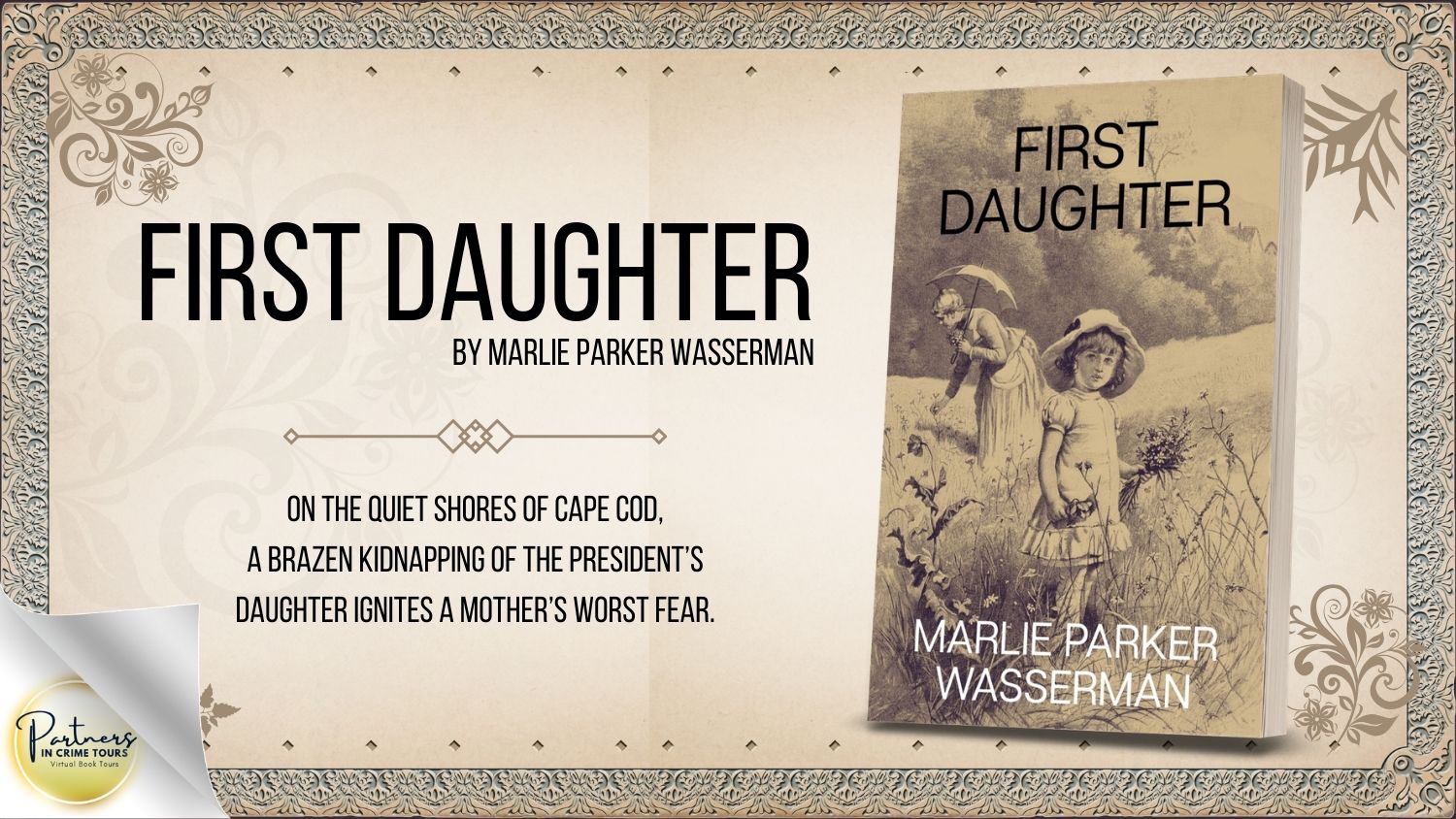
FIRST DAUGHTER
By Marlie Parker Wasserman

It was supposed to be a joyous day. Away from the Washington D.C. crowds President Grover Cleveland and his family are spending time at Gray Gables. His wife, Frances, has just given birth to their third daughter, but cries of joy soon turn to horror. Ruth, the Cleveland's eldest child, has gone missing. Is the three-year-old simply hiding, or has she been taken? Fortunately, Ruth is found, but the woman who took her ran off before she could be caught. While the President wants the matter kept quiet, his wife wants to do everything possible to find the woman before she can try again. Despite a new baby, a husband who's ignoring her concerns, and secret service men who think she's hysterical, Frances Cleveland is determined to find the abductor and keep her family safe!

Can a mother's love overcome a quest for vengeance? FIRST DAUGHTER crafts a story of what if. There are historically documented threats to the Clevelands, but no reported kidnapping. This book borrows the question, what if there was. The book is delineated into sections, referencing two women, Frances Cleveland, the first lady, and Mary Brinksi. While the thrust of the story takes place during the summer and early autumn of 1895, it also goes back in time, giving backstory and thus motive.

While it is a work of fiction, it is imbued with plenty of historical fact. I really enjoyed learning more about Grover Cleveland and his wife Frances. Despite their differences I appreciated their devotion to each other and their daughters. I really loved the bits of history of which I was unaware, like the electricity switch and Cleveland's misdeeds. Being from Buffalo, I also liked the many references to that city-there is a lot of presidential history. Relations between the Clevelands, the secret servicemen, and townsfolk meld into an enjoyable and fascinating read.

A compelling read, FIRST DAUGHTER is ultimately a story of love.

******************************************************************* 
FIRST DAUGHTER by Marlie P Wasserman Banner

FIRST DAUGHTER

by Marlie Parker Wasserman

May 4-29, 2026 Virtual Book Tour

Synopsis:
FIRST DAUGHTER by Marlie P Wasserman

In the summer of 1895, President Grover Cleveland and his pregnant wife, Frances, retreat to their secluded Cape Cod home, eager to avoid Washington’s heat and hassles. The very day that Frances gives birth, their three-year-old daughter vanishes. A ransom note surfaces, demanding a mysterious and peculiar sum.

Is the kidnapper a political enemy or someone closer to home? Secret service agents chase multiple leads but reach dead ends. Desperate, Frances Cleveland searches for answers on her own. As the hunt continues, the kidnapper carefully plots each move and determines to settle a score.

The historical record documents threats against the Clevelands, but no actual kidnapping. Yet, what if the president and his wife, known for keeping secrets, concealed a terrifying chapter of their lives? In this gripping blend of fact and fiction, the line between public duty and private anguish blurs in a mother’s fight to save her child.

Praise for First Daughter:

"Arresting, brilliant, emotional! Marlie Wasserman's First Daughter had me hooked from the very first page. Like her other works, fact and fiction are delightfully blurred by the fantastic level of historical detail, creating an exhilarating ride through the kidnapping of President Grover Cleveland's first child and his obscure misdeeds."
~ Jane L. Rubin, author of the award-winning Gilded City series

"In this masterfully woven historical thriller, the past comes alive with rich detail and taut suspense. In the summer of 1895, President Grover Cleveland and his wife retreat to their Cape Cod estate, seeking respite from political turmoil-until their three-year-old daughter vanishes. A ransom note surfaces, but is the culprit a political enemy or someone in their household? Seamlessly blending fact and fiction, this novel delivers a riveting tale of betrayal, resilience, and a mother's relentless quest for truth."
~ Maryka Biaggio, award-winning author of Gun Girl and the Tall Guy and The Model Spy

"A parent's worst nightmare unfolds for President and Frances Cleveland - their daughter is kidnapped. And no one knows why she was taken. The real motive behind the kidnapping may lie closer to home than anyone dares to imagine. First Daughter is a thrilling tale that clutches your heart and won't let go. This haunting historical mystery steeped in vivid period detail explores the cost of secrets and the burden of public life, wrapped in a mother's relentless instinct to protect her family-no matter the consequences."
~ JF Tanner, author of The King's Collar

"Grabbed from the very first page, Wasserman's tale of the abduction of President Grover Cleveland's young daughter Ruth (Baby Ruth) delivers Gilded Age details, tense characters and no bigger problem than a child in danger. With the deftly structured combination of Frances Cleveland's determination to bring justice to her family and a parallel hard luck tale, readers will forget this is non-fiction."
~ Chris Keefer, author of Find Your Way to My Grave a Carrie Lisbon Mystery

"First Daughter is an intriguing and intricately-plotted historical mystery novel. I loved the depth of research and the evocative setting of President Grover Cleveland's summerhouse Gray Gables at Buzzards Bay. I look forward to reading more from Marlie Parker Wasserman."
~ Margo Laurie, author of The Anarchist's Wife 

Book Details:

Genre: Historical Crime Fiction
Published by: Level Best Books
Publication Date: April 14, 2026
Number of Pages: 324
Book Links: Amazon | Kindle | Barnes & Noble | BookShop.org | Goodreads | BookBub

Read an excerpt:

At the western edge of Cape Cod, in the grandest bedroom in the sprawling residence known as Gray Gables, Frances Cleveland couldn’t stifle the rising sound of her own screams. Between pains, she rested. The late morning breeze drifted across the lawn from Buzzards Bay, fluttering the lace curtain and cooling the sweat on her forehead.

Even at this moment, Frances felt grateful that Grover chose to spend summers away from Washington’s heat, away from the prying public. Here, in this secluded haven, she needn’t fear strangers hovering near the windows of the Executive Mansion for a glimpse of their president—or, more likely, of his wife and daughters. She could concentrate her fears on her pains and pray for the safe birth of her third child, in the same way she had for her first and again for her second. Frances expected from experience that her suffering would soon recede, replaced by the joy of motherhood. She did not know that before the day was over, her bodily misery would end, yielding not to joy but to overwhelming terror.

The previous February, after sensing a flutter beneath her gown while greeting a crowd of visitors at a reception, Frances guessed the baby would be her third girl. Practiced at keeping confidences, she never mentioned her prediction to her preoccupied husband. When she gave birth to another girl, the blathering journalists would have their say. They would try out their jokes about the president’s little harem. Most days, Frances ignored the journalists. Most days, she trusted Grover to love each of his babies.

The image of a trio of girls was far from Frances’s mind now, as she suffered in bed. She cried out, too loudly. Dr. Bryant reminded her that she’d survived labor pains before. “Don’t you dare say that again,” she said, in a shrill tone that surprised her.

At last, Frances heard the newborn’s cry, faint but lovely. Dr. Bryant chuckled while he clamped and cut the cord. “Mrs. Cleveland, should I bring the president upstairs to see his new daughter? He’s pacing on the front porch. Once he sees this one—she’s beautiful—he won’t regret it’s not a son.”

“Yes,” Frances said, with the strongest voice she could muster. A girl, as she’d guessed. For an instant, with the last of her contractions, she’d ignored her prediction and hoped for a boy. Now, she didn’t linger on that momentary weakness of character. She let a surge of pride swell over her, above the exhaustion. She’d done it. Again.

Frances turned to the local midwife hired to assist. “Tell the steward, his name is Sinclair, to get Ruth and Esther. I want my daughters to see their new sister.”

Frances raised herself a few inches, enough to see the midwife slip into the hall. The woman returned and gave Frances a nod. The girls would come shortly. Frances sank back and watched the midwife wipe down the infant and swaddle her. She did look beautiful. “Here,” Frances said, crooking her arm to make room for Marion, the name Grover chose that would serve for a girl or a boy. The same name as a town across Buzzards Bay, where many of their friends lived. Frances appreciated Grover’s decision to buy an estate on the outskirts of a different but nearby town, Bourne. The family could escape Washington’s heat and busybodies.

And escape the threats.

Hours earlier, Frances gave thanks for the breeze blowing through the open window, reminding her that Gray Gables was perfectly located on a point overlooking the Bay’s east side. But now she blocked the sound of wind and waves. straining to make sense of other sounds, to hear what Grover would say about a third daughter. The doctor scurried downstairs. The midwife remained stationed over the bed, tending to Frances and crooning softly to the baby. Frances ignored the woman, mindful only of the voices wafting in through the window. First, low tones as the doctor talked to Grover. They were friends. Dr. Bryant saved Grover’s life two summers ago, removing the cancer eating away at his palate. Now, Frances imagined the doctor patting her thickset husband on his shoulder and shaking his hand. She hoped Grover would offer the doctor a contented smile. Seconds later, Grover clomped upstairs. The doctor followed behind, with lighter steps.

“So happy, Frankie.” Her husband used one of her nicknames. After their wedding, she asked Grover to call her by her more dignified name, Frances. He still used Frankie or Frank in private moments. She let him—the nicknames added tenderness to his gruff voice. “The doctor tells me you’re fine. You managed without chloroform this time, too. And the baby’s healthy. Marion, right? Three girls. They will enjoy each other’s company.”

He said the right thing. She didn’t need to feel anxious about another girl. He was a good man, kind to her, whatever others thought. He wouldn’t hold the baby, rarely did. But he wiped his chubby hand on a cloth, then touched Marion’s forehead. He stood there for a few minutes, cherishing their third child. For him, it was a fourth, but no matter. His eyes shifted to gaze at her. He wouldn’t see the tall, slender belle he married nine years ago, the one the reporters called lovely. He’d see a tired, sweat-drenched woman who looked every day of her thirty years.

“Ruth and Esther?” Frances asked again, eyeing the midwife. “Did you send Sinclair for them?”

“Yes, ma’am. The steward went a minute ago.” The midwife spoke quietly, carefully. She’d feel nervous in the presence of the president.

Still almost flat in bed, Frances clutched Marion, admiring the infant. Perfect features. Ten fingers and ten toes. Another blessing from God.

A familiar sound at the door. Sinclair knocked softly. His usual pattern—soft, loud, soft—keeping to the household code. Another sound, when the midwife opened the door. Next, Frances would hear four little feet rushing toward the newest baby.

No feet. Only hushed words.

“Sinclair found Annie,” the midwife said. “She’s your older daughter’s nursemaid, right? He tells me she needs another minute to bring Ruth and to tell your younger daughter’s nursemaid to bring Esther.” The midwife stood far from Frances’s bed, speaking almost in a whisper.

Grover didn’t look concerned. His rough mustache skimmed Frances’s cheek as he kissed her lightly on her damp forehead. She was too tired to return the kiss. She heard him drop into the nearby rocking chair.

“Joseph,” he said, addressing the doctor, “you’re certain Frankie is fine? No complications?”

“Just fine, Grover. Ready for the next one before long.”

Four years earlier, when Ruth was born, Dr. Joseph Bryant told Frances how to manage her family. “Breastfeed for six months.” He looked straight at her, with no awkwardness. “You’ll not get in the family way, and the baby will stay healthy. After six months, well, you and Grover can proceed to another.” And so they had. Esther after Ruth. Marion after Esther. A daughter every two years.

Frances closed her eyes, relying on her ears. Dr. Bryant thanked the midwife for her assistance. The woman tidied up, gathering soiled sheets and opening a chest, hunting for fresh linens. The room went silent, except for the soft, repetitious squeak of the rocking chair. Grover leaned up, then back, up then back. Frances sensed herself drifting off.

Another soft knock, barely a sound, followed by a pause, and two more soft knocks. Not Sinclair. One of the nursemaids. Annie? The midwife opened the door. “Ma’am.” Annie’s voice came out as a croak. “I can’t find Ruth.”

***

Excerpt from FIRST DAUGHTER by Marlie Parker Wasserman. Copyright 2026 by Marlie Parker Wasserman. Reproduced with permission from Marlie Parker Wasserman. All rights reserved.


Author Bio:

Marlie Parker Wasserman

Marlie Parker Wasserman loves writing historical crime fiction. She has published three novels--First Daughter will be her fourth. After a career in publishing in New Jersey, she moved to Chapel Hill, NC with her husband. When she is not writing, she travels, reads, and sketches. One of her goals is to visit every national park in the U.S., and she is close to her goal.

Catch Up With Marlie Parker Wasserman:

www.marliewasserman.com
Amazon Author Profile
Goodreads
BookBub - @marliewasserman
Instagram - @marliepwasserman
Bluesky - @marliewasserman.bsky.social
Facebook


Tour Participants:

Click through the other tour stops for can’t-miss reviews, insider interviews, exclusive guest posts, and more chances to win!

Click here to view the Tour Schedule


A Novel Way to Celebrate FIRST DAUGHTER… Start Here

This giveaway is hosted by Partners in Crime Tours for Marlie Parker Wasserman. See the widget for entry terms and conditions. Void where prohibited.
FIRST DAUGHTER by Marlie Parker Wasserman | Gift Card

Can't see the giveaway? Click Here!

Get More Great Reads at Partners In Crime Tours

Wednesday, May 6, 2026

Currently Reading...

I'm currently reading First Daughter by Marlie Parker Wasserman. This standalone work of historical fiction was released last month.

It was supposed to be a joyous day. Away from the Washington D.C. crowds President Grover Cleveland and his family are spending time at Gray Gables. His wife, Frances, has just given birth to their third daughter, but cries of joy soon turn to horror. Ruth, the Cleveland's eldest child, has gone missing. Is the three-year-old simply hiding, or has she been taken? Fortunately, Ruth is found, but the woman who took her ran off before she could be caught. While the President wants the matter kept quiet, his wife wants to do everything possible to find the woman before she can try again. Despite a new baby, a husband who's ignoring her concerns, and secret service men who think she's hysterical, Frances Cleveland is determined to find the abductor and keep her family safe!

Sunday, October 19, 2025

The Long Shadow of Murder - A Review, Excerpt, & Giveaway

 Review


THE LONG SHADOW OF MURDER by Eleanor Kuhns
The Twelfth Will Rees Mystery 

Though he'd prefer to return home to his pregnant wife curiosity propels Will Rees to help his friend Constable Rouge search for a missing man. The search for a missing man soon turns into a search for a killer as they find the man, bludgeoned to death near the Shaker Community. While Rouge is quick to believe a Shaker has done the deed, Rees is not so sure. Who would have wanted Hans Bergin dead? He was a visitor who had only recently arrived. Certainly the killer must be someone from his party. As Rees and Rouge search for clues they soon discover Bergin antagonized everyone he met in the short time he was there. Could his killer be further afield?

I enjoyed returning to Maine in the very early 1800s. Even more than working with Rouge I like how Rees engages his wife in solving the murder, and the fact that she helps while both heavily pregnant and then with  a newborn! In fact it is her insight that actually solved the crimes. The mystery was complex and I wasn't sure "who done it", especially after the third event. Like Rees, I sure hoped it wasn't Ephraim, but, also like Rees, I didn't count him out!

I appreciate that THE LONG SHADOW OF MURDER deals with complex subjects including post traumatic stress disorder, albeit not by that, or any name. Ephraim and Rees both fought in the Revolutionary War and Esther is grappling with a different, but still traumatic event. Each suffers in a different way and it's heartening to see if they can help each other.

While life is challenging in the twelfth Will Rees Mystery there's also humor. I admit getting a kick out of Mrs. Bergin, Rouge's attempts at flirting, and Ephraim's running away at the wedding! There's also the love of the Rees family that is heartwarming.

With a distinct historical setting THE LONG SHADOW OF MURDER provides a complex mystery that engages and entertains.

************************************************************************* 

The Long Shadow of Murder by Eleanor Kuhns Banner

THE LONG SHADOW OF MURDER

by Eleanor Kuhns

September 29 - October 24, 2025 Virtual Book Tour

Synopsis:

The Long Shadow of Murder by Eleanor Kuhns

A Will Rees Mystery


When the body of a visitor is found in the woods by the local Shaker community, suspicion immediately falls on them. Rees is reluctant to believe anyone in this peaceful community committed murder. And Hans Bergin arrived with his wife, his brother-in-law and sister-in-law. They had their own reasons to want Bergin dead. But as Rees investigates, he discovers everyone, including a recent Shaker convert, have secrets of their own, some stretching all the way back to the Revolutionary War. Who, among the many suspects, decided to take matters in their own hands? Bergin's wife and other family? The new Shaker? Or someone else entirely?

Book Details:

Genre: Historical Murder Mystery
Published by: Indie
Publication Date: May 15, 2025
Number of Pages: 292
ISBN: 979-8312662825
Series: Will Rees/Shaker Series, #12
Book Links: Amazon | Kindle Unlimited | Goodreads | BookBub

Read an excerpt:

Chapter 1

Constable Rouge and Will Rees rode south on Surry Road, past the Shaker community, until they reached the entrance at the southern end. They pulled into the small clearing and Rees parked his wagon. When he had first gone to town for supplies, Lydia needed both flour and sugar, he had not intended to join the constable in his search for a missing man. But, hearing of the disappearance, Rees’s curiosity had driven him into joining Rouge in the search.

“I still think we should have questioned the Shakers first,” Rouge said critically as he dismounted and tied his bay to a nearby tree. “On Sunday, Mr. Bergin told his wife he was going to Zion. He might still be there.”

“Was he planning to join the Shakers?”

“No,” Rouge said with a grin. “Hardly. He came to Durham because he heard that the Shakers danced naked, and he wanted to see the ‘fair white forms’ of the women.” Rees could hear the quotation.

“Huh,” Rees said. Although aware of the scurrilous slander concerning the Shakers, he could not understand why anyone would be foolish enough to believe it. The Shakers were a modest, quiet and industrious people. “The gullibility of men constantly amazes me.”

“You should hear what I hear at the tavern,” Rouge muttered.

“Besides,” Rees continued, ignoring the constable’s aside, “if there had been a problem at the Shaker community, wouldn’t someone inform you?” Rouge shook his head. After a moment, Rees reluctantly nodded in agreement. Maybe not. The community was notoriously insular and tried to handle any issues themselves. During the smallpox epidemic last year, the one that had sickened Rouge and left him severely scarred, they had refused all offers of assistance.

“We may have to speak to them,” Rees agreed. He was not enthusiastic. Elder Jonathan was beginning to display some irritability towards Rees and his frequent requests for help. “Since you were told by Mr. Bergin’s friend that he rode this way, I suggest we begin our search here, in these woods. Maybe his horse threw him. Or,” he added, looking at the muddy track across the road, “he might have taken the lane across the street back into town?”

Rouge shook his head. “Mr. Bergin did not return to town. I’m certain of that. We looked.”

“It’s unlikely he disappeared on that path,” Rees said. It was just past midday, and the sun felt warm on his shoulders and face. They were at the end of April. Although snow from the last storm still lingered on the shadowed down – slopes of the hills and under the trees, he could see bright spring green beginning to fringe the trees. “Farms line both sides of that little road and all the farmers will be out in the fields now, beginning the spring planting. If something happened to Mr. Bergin, and his body was dumped there, most likely someone would have seen it. He disappeared during the day, yes?” At Rouge’s nod, Rees paused a moment, thinking. “Did his horse return?”

“No. That’s gone too. Of course,” Rouge added cynically, “Mr. Bergin might have

continued riding south, hoping to find a new life. His disappearance does not mean he was murdered.”

“Someone was here,” Rees said, pointing to a relatively fresh pile of horse dung. “And recently too.”

“So, Mr. Bergin stopped here,” Rouge said. “Close to Zion.”

“It wasn’t necessarily Mr. Bergin. It could be another visitor.” Rees hoped that was so but feared the constable was correct. It was still too early in the spring for many visitors.

Rees squatted to examine the soft slick mud underfoot. Although his wagon wheels had cut across the older tracks, he could see the horseshoe shaped indentations left by a shod horse. “Whoever rode in here,” he said, pointing out the marks to Rouge, “he tied up over there. See?” He pointed to a tree. “There are boot prints where the rider dismounted.” Rouge crossed the dirt and stared down at the impressions.

“Look at the toes,” he said. “Riding boots.”

“Yes. And here are the nicks left by the spurs,” Rees agreed, pointing. “Did Mr. Bergin wear riding boots? Could they be his prints?”

Grimacing, Rouge nodded.

“You were right.” Rees looked at Rouge. “Mr. Bergin went into Zion.” Rees followed the tracks to the bridge that went to Zion’s main street. When he crossed the bridge, he saw the same footprints on the other side. But, a few yards in, the riding boots were met by farmer’s boots. The riding boots turned around and returned to the other side of the bridge. “One of the Shaker Brothers prevented him from entering the village,” he said.

“He walked back out to the road.” Rouge said. “Here are the marks of those boots

here.”

Taking care to avoid the boot impressions, Rees jumped across the soft earth. He misjudged his landing, and his right foot went into a deep puddle. Cold muddy water began seeping into his shoe. Rouge laughed.

“It’s not funny,” Rees said, lifting his foot to shake it. Water flew in all directions.

“Hey,” Rouge complained, jumping back.

“Serves you right,” Rees muttered but without malice. He was too focused now on following the tracks.

The riding boots went to the road where they were joined by another pair of shoes. The soil on the edge of the road was drier, more solid, so the imprint was shallow and harder to see. “I think these are ordinary shoes,” he muttered to himself. “Do you see any signs of another horse?” he called out to Rouge.

“No,” the constable replied, adding sourly, “But I am not the great tracker you are.”

“He met someone who walked here,” Rees said.

“One of the Shaker Brothers, then,” Rouge said with the air of a man who has solved the problem.

“Perhaps not,” Rees said. He was well used to Rouge’s propensity for jumping to the easiest and most obvious solution. “The second fellow could have tied up in the lane and then walked across the street to meet him here. Or,” he added quickly to forestall Rouge’s objection, “he could have even walked down the lane.” Rouge eyed Rees for a few seconds and then nodded.

“Yes, all right. He could have seen Mr. Bergin from the lane,” he agreed. “It would have

taken no time at all to cross Surry Road from town. But then where did they go?”

Rees did not reply. Instead, he began following the tracks made by the riding boots south along the Surry Road and away from Zion. From the impressions, it seemed the man was walking slowly. Not running, not afraid, just ambling along. Every now and then, Rees spotted a footprint or two produced by the other boots. It seemed the two men were talking as they followed the road.

He found the spot where the two people paused. But when he walked further down the road, he discovered he had lost the trail. There were no discernible footprints. He turned and walked back to the last spot he had seen them. This time, when he looked around, he saw scuff marks through the leaves descending the slope into the forest.

“Here,” said Rouge, pointing to a downed tree several yards in. Muttering under his breath, Rees followed the constable further into the woods. Rouge’s path had obscured the marks left by the two men. But when Rees fought his way through the brambles and the stand of small fir trees, he saw why Rouge had summoned him. Right in front of the downed tree was a mess of overturned leaves, where the feet of the two men had disturbed them.

“They sat down to talk,” Rees said, staring at the disordered leaves on the ground. He was beginning to believe these two men had nothing to do with Mr. Bergin’s disappearance and that this entire search had been a waste of time. The absence of the horse also made him wonder if Rouge was correct and Mr. Bergin had simply chosen to disappear. Rees was disappointed. Without really articulating his desire to himself, he had been hoping for something more serious. After several months spent inside at home, he was ready for some excitement. With a sigh, he examined the disturbance in the leaves. It looked as though one of

the men had risen to his feet and begun pacing.

But, as he neared the thicket, he smelled the barest whiff of the coppery rotten smell of old blood. The odor was so faint he wondered if he’d imagined it. Pausing, he lifted his face and took a deep inhalation into his nose.

“What are you doing?” Rouge asked, staring at Rees in fascination.

Rees threw him a glance but did not reply. Instead, he plunged forward, following the disturbances in the pad of last year’s leaves. Although the oaks and maples were just beginning to show the first bright green new leaves and the sun shone through the bare branches, the tall pines kept the ground below in shadow. Rees tracked the trail around tree trunks and through slick muddy patches. But he was halted by a large expanse of flat granite. He could not tell which way the trail went: straight down the slope or to one side or another.

As he stared at the rock in consternation, Rouge toiled up behind him, puffing. “Why have you stopped?” he asked, panting for breath.

“Not sure which way to go,” Rees admitted. Nodding, Rouge joined Rees on the rock slab and for a moment they were silent.

“Wait,” Rouge said, holding up a hand. “Listen. Do you hear it? A horse.”

For a moment Rees listened. Yes, he heard the faint whickering of a horse. The sound came from below them, but he couldn’t tell exactly in what direction. Rouge started forward, moving so quickly on the muddy and leaf strewn slope that he fell. “Damn,” he grumbled, staggering to his feet and continuing down the hill.

Rees glanced at the steep gully, the bottom slick with trickling snow melt, and turned to the bare rock. He started across the granite, angling down the slope toward the distant creek. The rock was not uniformly flat. As Rees clambered over a ledge, stepping down to the slab below, he saw streaks across the gray. Dark brown streaks. Rees knelt beside them and lightly touched the stain. Blood.

***

Excerpt from The Long Shadow of Murder by Eleanor Kuhns. Copyright 2025 by Eleanor Kuhns. Reproduced with permission from Eleanor Kuhns. All rights reserved.


Author Bio:

Eleanor Kuhns

Eleanor Kuhns is the 2011 winner of the Minotaur/Mystery Writers of America first novel prize for A Simple Murder. The Long Shadow of Murder is the twelfth in that series. She also has written a Bronze Age Crete series.

A lifelong librarian, she transitioned to full time writing at the start of the pandemic. She lives in upstate New York with her husband and her dog.

Catch Up With Eleanor Kuhns:

www.Eleanor-Kuhns.com
Amazon Author Profile
Goodreads
BookBub - @eleanorkuhns
Instagram - @edl0829
Facebook - @writerkuhns


Tour Participants:

Visit these other great hosts on this tour for more great reviews, interviews, guest posts, and opportunities to WIN in the giveaway!

Click here to view the Tour Schedule


Don't Miss Out! Enter Now for Your Chance to Win!

This is a giveaway hosted by Partners in Crime Tours for Eleanor Kuhns. See the widget for entry terms and conditions. Void where prohibited.
The Long Shadow of Murder by Eleanor Kuhns [Print Book + Gift Card]

Can't see the giveaway? Click Here!


Get More Great Reads at Partners In Crime Tours


Friday, July 18, 2025

Death and the Runaways - A Review

 Review

DEATH AND THE RUNAWAYS by Heather Redmond
The Third Mary Shelley Mystery 

On a hot June day in 1814 most of London is celebrating the peace treaty with France with parades and an influx of dignitaries. Mary Godwin and her step-sister, Jane, are surprised to see their brother Charles with Winnet Davies who works in the cheese shop. They also overhear her trying to get him to buy her a dress! Charles who is as poor as the entire family! By the next day Miss Davies is dead and Charles is missing. Mary and Jane, encouraged by Mrs. Godwin and with help of Percy Shelley start the search for Charles and an investigation into the life of Miss Davies. Trouble looms as Mary and Percy grow closer. A Bow Street Runner has designs on Mary and a killer has only begun. 

Drama ramps up even higher in this, the third Mary Shelley Mystery. We not only have a murder and a missing brother, but the increased intimacy between Mary and Shelley and the subsequent familial fallout. I'm still astonished at the family dynamics with the Godwins. I find it intriguing and makes me want to delve deeper to learn more. The manner in which Mary was treated by her step mother as well as the way Mary idolized her own mother makes it easy to see why Mary was so drawn to Shelley and makes their subsequent actions reasonable. It's also fascinating to see his desire and need to be a hero, "rescuing" both of his wives. It was also curious adding a fictional suitor into the mix for Mary and everyone's reactions.

There were many intriguing layers to the mystery in DEATH AND THE RUNAWAYS. I enjoyed seeing how Mary, Jane, and Shelley investigated and seethed at Mrs. Godwin's behavior. With the story again alternating between Mary and Jane's points of view I find myself pondering the differences between these two young women. Jane has several issues and I must say I'm not overly fond of her. I'm curious as to how true this fictional Jane is to her real life counterpoint. I've always been fascinated by Shelley and once again I'm inclined to do even more research on Mary.

A lecherous cheesemonger, a villainous street hustler, and a devious enterprise bring Mary and Shelley closer in DEATH AND THE RUNAWAYS a riveting historical mystery that will have you at the edge of your seat while providing a unique reason for the trio to leave London. I can't recommend this series enough, especially if you'd like to take a deep dive in the real lives of Mary and Percy Bysshe Shelley. 

Wednesday, July 16, 2025

Currently Reading...

I just finished reading Death and the Runaways by Heather Redmond. This book is the third in the Mary Shelley Mystery series and will be released next week.

On a hot June day in 1814 most of London is celebrating the peace treaty with France with parades and an influx of dignitaries. Mary Godwin and her step-sister, Jane, are surprised to see their brother Charles with Winnet Davies who works in the cheese shop. They also overhear her trying to get him to buy her a dress! Charles who is as poor as the entire family! By the next day Miss Davies is dead and Charles is missing. Mary and Jane, encouraged by Mrs. Godwin and with help of Percy Shelley start the search for Charles and an investigation into the life of Miss Davies. Trouble looms as Mary and Percy grow closer. A Bow Street Runner has designs on Mary and a killer has only begun.

Sunday, May 21, 2023

The Murder of Mr. Wickham - A Spotlight

Today I'd like to shine a spotlight on a book I just discovered. The Murder of Mr. Wickham by Claudia Gray is the first book in the Mr. Darcy and Miss Tilney Mystery series. I didn't know it existed, but it's going on my TBR pile, along with the second in the series that was released last week.

Blurb:

The happily married Mr. Knightley and Emma are throwing a party at their country estate, bringing together distant relatives and new acquaintances—characters beloved by Jane Austen fans. Definitely not invited is Mr. Wickham, whose latest financial scheme has netted him an even broader array of enemies. As tempers flare and secrets are revealed, it’s clear that everyone would be happier if Mr. Wickham got his comeuppance. Yet they’re all shocked when Wickham turns up murdered—except, of course, for the killer hidden in their midst.

Nearly everyone at the house party is a suspect, so it falls to the party’s two youngest guests to solve the mystery: Juliet Tilney, the smart and resourceful daughter of Catherine and Henry, eager for adventure beyond Northanger Abbey; and Jonathan Darcy, the Darcys’ eldest son, whose adherence to propriety makes his father seem almost relaxed. In this tantalizing fusion of Austen and Christie, from New York Times bestselling author Claudia Gray, the unlikely pair must put aside their own poor first impressions and uncover the guilty party—before an innocent person is sentenced to hang.


Friday, April 7, 2023

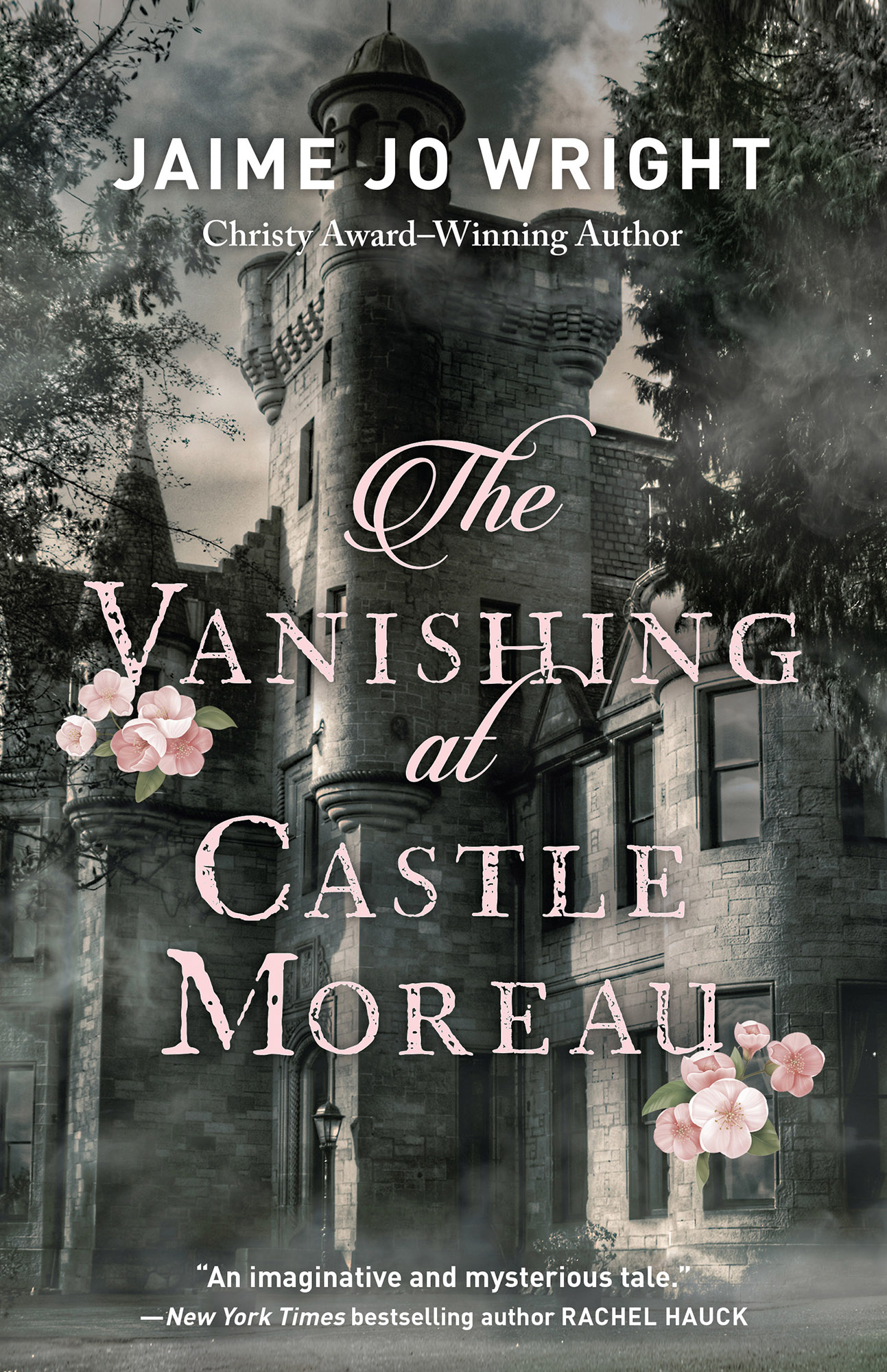
The Vanishing at Castle Moreau - A Review, Excerpt, & Giveaway

 Review


THE VANISHING AT CASTLE MOREAU
By Jaime Jo Wright

In 1801 a young girl living in Castle Moreau is visited by a female phantom, a terrifying creature with a misshapen hand. A vision her father says is a dream, but she knows to be real. In 1870 Daisy François begins work as a housekeeper at Castle Moreau, despite tales that women disappear from the area and the fact that the mistress of the castle writes frightening Gothic stories. In the present day Cleo Clemmons is running away from her life. Living off grid she takes a job at Castle Moreau, hired by the grandson of the elderly owner to help organize it. Cleo soon realizes the job may be more than she can handle. Will Castle Moreau keep its secrets or will a woman who wants to disappear reveal them once and for all?

Vulnerable women, hauntings, fear, possible madness, and, dare I say a hint of forbidden romance make THE VANISHING AT CASTLE MOREAU a chilling Gothic novel. The three stories from three time periods propel each other, as each one layers on an aspect of haunting, drawing the reader in just as Castle Moreau draws in women. Compelling and enthralling, the facts are hidden until the end.

Playing on the fears many of us have, I was entranced, wondering what exactly to believe in the first two time periods. In the present day portion I was beyond curious what exactly happened to make Cleo run. Indeed, it was the many thoughts the book provoked that had me as entranced as the actual words written. All of the characters are intriguing, my favorites being Daisy and Deacon, with the most fascinating being Castle Moreau itself.

Full of atmospheric suspense THE VANISHING AT CASTLE MOREAU is a delightfully spooky novel incorporating themes of loss, faith, and redemption.


The Vanishing at Castle Moreau by Jaime Jo Wright Banner

The Vanishing at Castle Moreau

by Jaime Jo Wright

April 3-28, 2023 Virtual Book Tour

Synopsis:

The Vanishing at Castle Moreau by Jaime Jo Wright

A haunting legend. An ominous curse. A search for a secret buried deep within the castle walls.

In 1870, orphaned Daisy François takes a position as housemaid at a Wisconsin castle to escape the horrors of her past life. There she finds a reclusive and eccentric Gothic authoress, who hides tales more harrowing than the ones in her novels. With women disappearing from the area and a legend that seems to parallel these eerie circumstances, Daisy is thrust into a web that threatens to steal her sanity, if not her life.

In the present day, Cleo Clemmons is hired by the grandson of an American aristocratic family to help his grandmother face her hoarding in the dilapidated Castle Moreau. But when Cleo uncovers more than just the woman's stash of collectibles, a century-old mystery of disappearance, insanity, and the dust of the old castle's curse threaten to rise again. This time to leave no one alive to tell the sordid tale.

Award-winning author Jaime Jo Wright seamlessly weaves a dual-time tale of two women who must do all they can to seek the light amidst the darkness shrouding Castle Moreau.

Praise for The Vanishing at Castle Moreau:

"An imaginative and mysterious tale."

New York Times bestselling author RACHEL HAUCK

"With real, flawed characters, who grapple with real-life struggles, readers will be drawn into this gripping suspense from the very first page. Good luck putting it down. I couldn't."

LYNETTE EASON, bestselling, award-winning author of the Extreme Measures series

"Wright pens another delightfully creepy tale where nothing is quite as it seems and characters seek freedom from nightmares both real and imagined."

Library Journal

"Wright captivates. A thrilling tale. . . . Readers won’t want to put this down."

Publishers Weekly

The Vanishing at Castle Moreau Trailer:

Book Details:

Genre: Dual time Suspense/Thriller
Published by: Bethany House Publishers
Publication Date: April 2023
Number of Pages: 384
ISBN: 9780764238345
Book Links: Amazon | Barnes & Noble | BookShop.org | Goodreads | Baker Book House

Read an excerpt:

The one who rescues,
who loves,
and who stands in the gap.
God knew I needed you.

The Girl

MAY 8, 1801

When I was a little girl, my father would often come to my bedside after my screams wakened him in the night. He would smooth back my damp ringlets, the mere feel of his callused and strong hand inspiring an instantaneous calm.

“What is it, little one?” he would ask me.

Every night, the same question. Every night, I would give the same answer.

“It is her again, Papa.”

“Her?” He would tilt his head, giving credence to my words and refraining from scolding or mockery.

“Yes.” I would nod, my head brushing the clean cotton of my pillowcase. “The woman with the crooked hand.”

“Crooked hand, hmm?” His query only increased my adamant insistence.

“Yes. She has a nub with two fingers.” A tear would often trail down my six-­year-­old cheek.

My father would smile with a soothing calm. “You are dreaming again, mon chéri.”

“No. She was here.” He must believe me!

“Shhh.” Another gentle stroke of his hand across my forehead. “She is the voice of the mistress of your dreams. We all have one, you know. Only yours needs extra-special care because she isn’t beautiful like the rest. She is the one who brings the nightmares, but she doesn’t mean to harm you. She is only doing her best with what she has been given, and what she has been given are her own horrors.”

“Her hand?” I would reply, even though we repeated this explanation many nights in a row.

“Yes,” my father would nod. “Her hand is a reflection of the ugliness in her stories. Stories she tells to you at night when all is quiet and your eyes are closed.”

“But they were open,” I would insist.

“No. You only think they were open.”

“I am afraid of the ghost, Papa,” I urge.

His eyes smile. “Oui. And yet there are no spirits to haunt you. Only the dream mistress. Shoo her away and she will flee. She is a mist. She is not real. See?” And he would wave his hand in the air. “Shoo, mistress. Away and be gone!”

We would survey the dark bedroom then, and, seeing nothing, my father would lean over and press his lips to my cheek. “Now sleep. I will send your mother’s dream mistress to you. Her imaginings are pleasant ones.”

“Thank you,” I would whisper.

Another kiss. The bed would rise a bit as he lifted his weight from the mattress. His nightshirt would hang around his shins, and he would pause at the doorway of my room where I slept. An only child, in a home filled with the fineries of a Frenchman’s success of trade. “Sleep, mon chéri.”

“Yes, Papa.”

The door would close.

My eyes would stay open.

I would stare at the woman with the crooked hand, who hovered in the shadows where the door had just closed. I would stare at her and know what my father never would.

She existed.

She was not a dream.

one

Daisy François
APRIL 1870

The castle cast its hypnotic pull over any passerby who happened along to find it, tucked deep in the woods in a place where no one would build a castle, let alone live in one. It served no purpose there. No strategy of war, no boast of wealth, no respite for a tired soul. Instead, it simply existed. Tugging. Coercing. Entrapping. Its two turrets mimicked bookends, and if removed, one would fear the entire castle would collapse like a row of standing volumes. Windows covered the façade above a stone archway, which drew her eyes to the heavy wooden door with its iron hinges, the bushes along the foundation, and the stone steps leading to the mouth of the edifice. Beyond it was a small orchard of apple trees, their tiny pink blossoms serving as a delicate backdrop for the magnificent property.

Castle Moreau.

Home to an orphan. Or it would be.

Daisy clutched the handles of her carpetbag until her knuckles were sure to be white beneath her threadbare gloves. She stood in the castle’s shadow, staring at its immense size. Who had built such an imposing thing? Here, in the northern territory, where America boasted its own mansions but still rejected any mimicking of the old country. Castles were supposed to stare over their fiefdoms, house lords and ladies, gentry, noblemen, and summon the days of yore when knights rescued fair maidens. Castles were not supposed to center themselves inside a forest, on the shore of a lake, a mile from the nearest town.

This made Castle Moreau a mystery. No one knew why Tobias Moreau had built it decades before. Today the castle held but one occupant: Tobias’s daughter, Ora Moreau, who was eighty-­six years old. She was rarely ever seen, and even more rarely, ever heard from. Still, Ora’s words had graced most households in the region, printed between the covers of books with embossed golden titles. Her horror stories had thrilled many readers, and over the years, the books helped in making an enigma of the reclusive old woman.

When the newspaper had advertised a need for a housemaid—­preferably one without a home or ties to distract her from her duties—­it was sheer coincidence that Daisy had seen it, even more of a coincidence that she fit the requirements. And so it was a surprise she was hired after only a brief letter inquiring after the position.

Now she stood before the castle, her pulse thrumming with the question why? Why had she accepted the position? Why would she allow herself to be swallowed up by this castle? The stories were bold, active. Women disappeared here. It was said that Castle Moreau was a place that consumed the vulnerable. Welcoming them in but never giving them back.

Daisy stiffened her shoulders. Swallowed. Tilted her chin upward in determination. She had marched into hell before—­many times, in fact. Castle Moreau couldn’t possibly be much worse than that.

Cleo Clemmons
TWO YEARS BEFORE PRESENT DAY

They had buried most souvenirs of the dead with the traditions of old, and yet what a person didn’t understand before death, they would certainly comprehend after. The need for that ribbon-­tied lock of hair, the memento mori photograph of the deceased, a bone fragment, a capsule of the loved one’s ashes—­morbid to those who had not lost, but understandable to those who had.

Needing to touch the tangible was a fatal flaw in humanity. Faith comforted only so far until the gasping panic overcame the grieving like a tsunami, stealing oxygen, with the only cure being something tangible. Something to touch. To hold. To be held. It was in these times the symbolism attached to an item became pivotal to the grieving. A lifeline of sorts.

For Cleo, it was a thumbprint. Her grandfather’s thumbprint. Inked after death, digitized into a .png file, uploaded to a jewelry maker, and etched into sterling silver. It hung around her neck, settling between her breasts, just left of her heart. No one would know it was there, and if they did, they wouldn’t ask. A person didn’t ask about what was held closest to another’s heart. That was information that must be offered, and Cleo had no intention of doing so. To anyone. Her grandfather was her memory alone—­the good and the bad. What he’d left behind in the form of Cleo’s broken insides were Cleo’s to disguise. Faith held her hand, or rather, she clenched hands with faith, but in the darkness, when no one was watching, Cleo fit her thumb to her grandfather’s print and attempted to feel the actual warmth of his hand, to infuse all the cracks and offer momentary refuge from the ache.

Funny how this was what she thought of. Now. With what was left of her world crashing down around her like shrapnel pieces, blazing lava-­orange and deadly.

“Pick up, pick up, pick up,” Cleo muttered into her phone, pressing it harder against her ear than she needed to. She huddled in the driver’s seat of her small car, all of her worldly possessions packed into the trunk and the back seat. She could hear the ringing on the other end. She owed it to Riley. One call. One last goodbye.

“Hey.”

“Riley!” Cleo stiffened in anticipation.

“. . . you’ve reached Riley . . .” the voice message continued, and Cleo laid her head back against the seat. The recording finished, and Cleo squeezed her eyes shut against the world outside of her car, against the darkness, the fear, the grief. This was goodbye. It had to be.

The voicemail beep was Cleo’s cue. She swallowed, then spoke, her words shivering with compressed emotion. What did a person say in a last farewell?

“Riley, it’s me. Cleo. I—” she bit her lip, tasting blood—“I-­I won’t be calling again. This is it. You know. It’s what I hoped would never happen. I am so, so sorry this happened to you! Just know I tried to protect you. But now—” her breath caught as tears clogged her throat—“this is the only way I can. Whatever happens now, just know I love you. I will always love you.” Desperation warred with practicality.

Shut off the phone.

There was no explaining this.

There never would be.

“Goodbye, Ladybug.” Cleo thumbed the end button, then threw the phone against the car’s dashboard. A guttural scream curled up her throat and split her ears as the inside of the vehicle absorbed the sound.

Then it was silent.

That dreadful, agonizing silence that came with the burgeoning, unknown abyss of a new start. Cleo stared at her phone lying on the passenger-­side floor. She lunged for it, fumbling with a tiny tool until she popped open the slot on its side. Pulling out the SIM card, Cleo bent it back and forth until it snapped. Determined, she pushed open the car door and stepped out.

The road was heavily wooded on both sides. Nature was her only observer.

She flung the broken SIM card into the ditch, marched to the front of the car, and wedged the phone under the front tire. She’d roll over it when she left, crush it, and leave nothing to be traced.

Cleo took a moment to look around her. Oak forest, heavy undergrowth of brush, wild rosebushes whose thorns would take your skin off, and a heap of dead trees and branches from the tornado that had ravaged these woods decades prior. The rotting wood was all that remained to tell the tale now, but it was so like her life. Rotting pieces that never went away. Ever.

She climbed back into the car and twisted the key, revving the engine to life. Cleo felt her grandfather’s thumbprint until it turned her skin hot with the memories. Memories of what had set into motion a series of frightful events. Events that were her responsibility to protect her sister from.

Goodbye, Ladybug.

There was no explaining in a voicemail to a twelve-­year-­old girl that her older sister was abandoning her in order to save her. Cleo knew from this moment on, Riley would play that message, and slowly resentment would seep in as she grew older. Resentment that Cleo had left and would never come back.

But she couldn’t go back. Not if she loved Riley. Sometimes love required the ultimate sacrifice. Sometimes love required death. Death to all they knew, all they had known. If Cleo disappeared, then Riley would be left alone. Riley would be safe. She could grow up as innocent as possible.

So long as Cleo Clemmons no longer existed.

***

Excerpt from The Vanishing at Castle Moreau by JAIME JO WRIGHT. Copyright 2023 by Jaime Sundsmo. Reproduced with permission from Bethany House Publishers. All rights reserved. No part of this publication may be reproduced, stored in a retrieval system, or transmitted in any form or by any means—­for example, electronic, photocopy, recording—­without the prior written permission of the publisher. The only exception is brief quotations in printed reviews.


Author Bio:

Jaime Jo Wright

Jaime Jo Wright is the author of six novels, including Christy Award winner The House on Foster Hill and Carol Award winner The Reckoning at Gossamer Pond. She's also the Publishers Weekly and ECPA bestselling author of two novellas. Jaime lives in Wisconsin with her cat named Foo; her husband, Cap'n Hook; and their littles, Peter Pan and CoCo.

To learn more, visit Jamie at:
www.jaimewrightbooks.com (& check out her Podcast - MadLit Musings!)
Goodreads
BookBub - @JaimeJoWright
Instagram - @JaimeJoWright
Twitter - @JaimeJoWright
Facebook - @JaimeJoWright


Tour Participants:

Visit these other great hosts on this tour for more great reviews, interviews, guest posts, and giveaway entries!


JOIN IN ON THE GIVEAWAY:

This is a giveaway hosted by Partners in Crime Tours for Jaime Jo Wright and Bethany House Publishers. See the widget for entry terms and conditions. Void where prohibited.


Get More Great Reads at Partners In Crime Tours


Friday, July 29, 2022

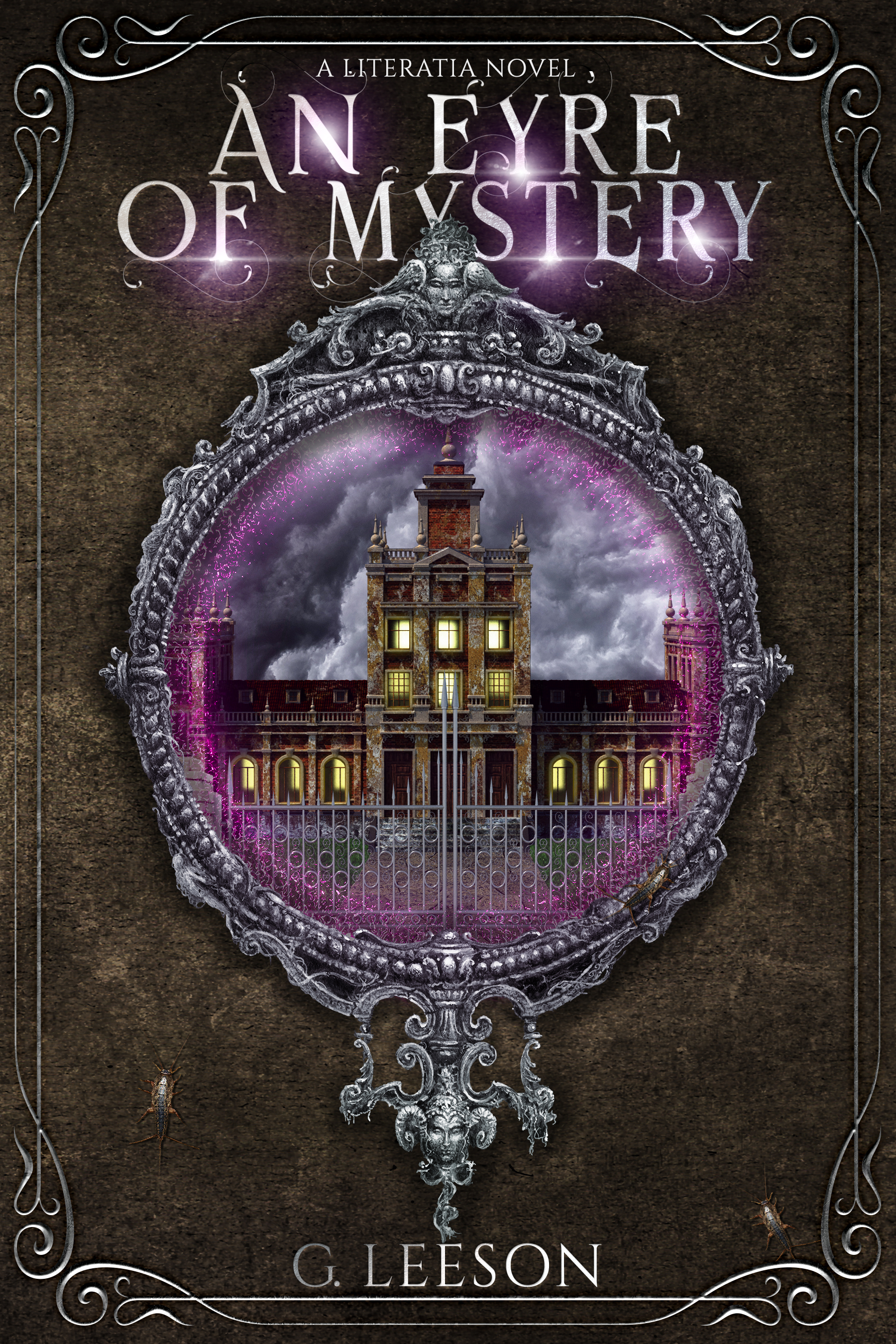
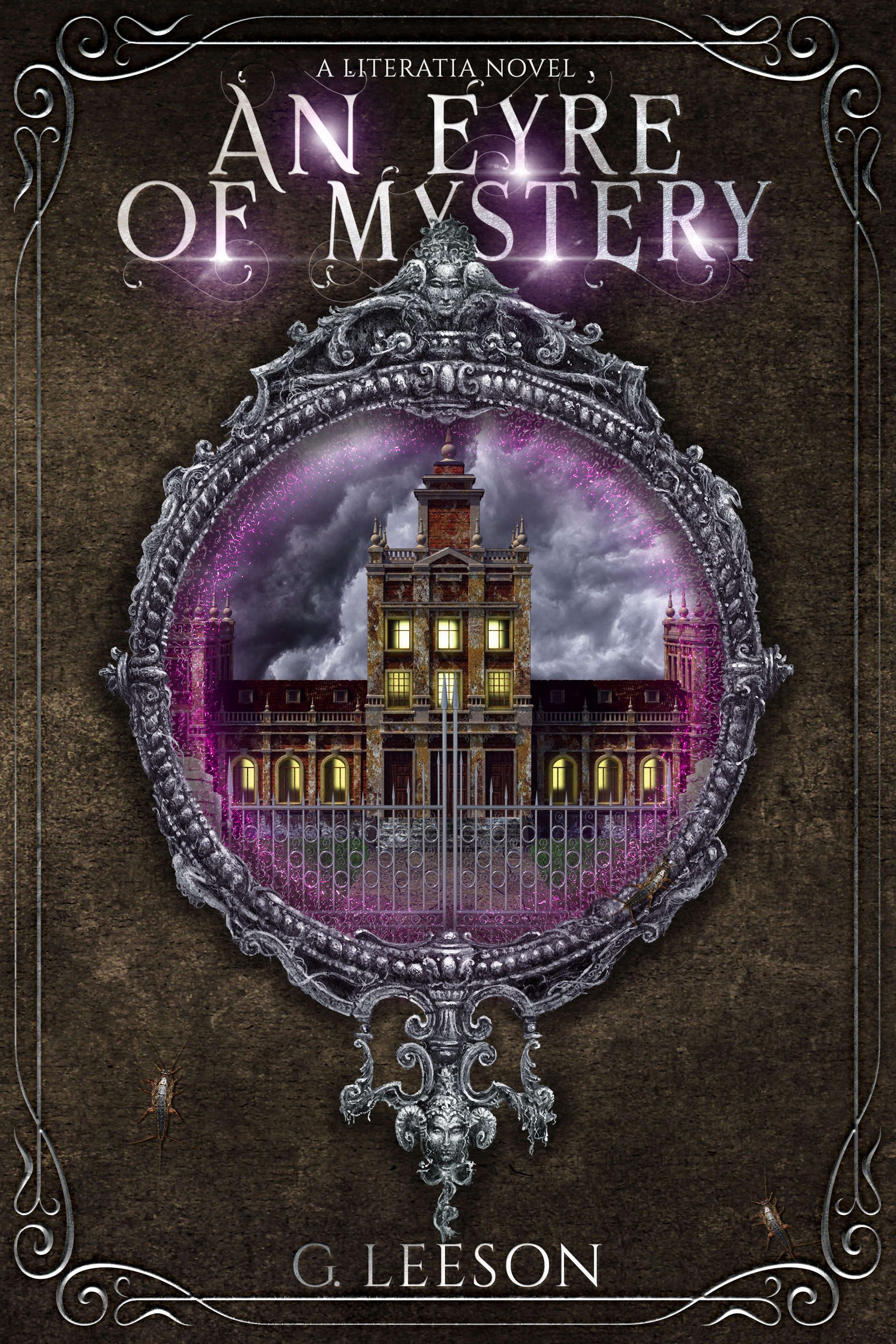
An Eyre of Mystery - A Review

 Review


AN EYRE OF MYSTERY by G. Leeson
The First Literati Novel

When Gia accepted a position as a library archivist in North Carolina, she never realized just how involved the work would be. Without warning she finds herself thrust into the novel Jane Eyre. In fact, she has taken over the role of Jane. Not everything is as it should be, however. Characters are behaving differently and Mr. Rochester is in jail for the murder of his wife! With a brief message from her supervisor, Gia learns that she must solve Bertha's murder in order to put the book to rights, otherwise Jane Eyre will be lost forever-and so will Gia. 

Have you ever dreamed of inhabiting the books you read? I have and in the Literati series Gia gets her chance, however unexpected. The author takes concept of going into classics of literature one step further. Dark forces want to rid the world of these classics, the books themselves are changing, and it's up to a select few to save them. What a wonderful and exciting idea and it's realized beautifully.

Although a tad confusing at first, like Gia, readers are thrust into a new world with no explanation, things soon get sorted and the mission is revealed. I enjoyed the mystery, seeing the changes to the original, and seeing how modern day Gia as Jane tries to fix things. 

One of the things I liked best was witnessing the unpleasant commonplace realities of the past. The past isn't idyllic, even in the pages of a novel. Bad smells permeate the air, be it the waste from horses on the street or a person's breath! While we often read to escape reality, the best books encapsulate reality even in fantasy.

Mystery, a dash of romance, and an otherworldly threat make AN EYRE OF MYSTERY a great start to a unique new series.

*******************************************************************

 An Eyre of Mystery by G. Leeson

About An Eyre of Mystery

An Eyre of Mystery
Fantasy Portal/Mystery
Grace Abraham Publishing (July 12, 2022)
Print length: ‎ 177 pages

Classic literature is at risk of disappearing from the world…

When Gia accepts a job as a library archivist at a manor house in North Carolina, she has no idea what she’s in for. On day one, she finds herself outside her comfort zone when she accidentally travels through a magical portal to the world of Jane Eyre. She finds Edward Rochester imprisoned as he awaits his death sentence for killing his wife. But Gia has read the book, and she knows Edward is innocent of murder.

Soon, she realizes that there are sinister mystical forces working to rewrite the narrative, hoping to destroy the manuscript altogether. To restore order and reset the book to its original state, Gia must discover who actually killed Bertha Rochester and framed her husband for the crime.

But few of the people she meets are who they claim to be and they all have secrets...including Edward.

About G. Leeson


Gayle [G. Leeson, for this book] has taken a real leap of faith with An Eyre of Mystery and the world of Literatia. She decided to explore what would happen if a reader--or in this case, an archivist--actually got lost in a great book. But when she travels through the portal into the world Jane Eyre, she finds it to be a topsy-turvy mess. Edward Rochester is facing a death sentence, and Gia has been tasked with finding out who really killed his wife so that Edward can go free, the book will reset to its original form, and Gia may return home. If you'd like to get a sample of the book, please check out this extended sneak peek (first five chapters) at https://BookHip.com/SFPWRLD.  

Author Links: 

Gayle Leeson: https://www.gayleleeson.com/ 

Facebook: https://www.facebook.com/GayleLeeson/ 

FB Reader Group: https://www.facebook.com/groups/2295294234027608  

Twitter: https://twitter.com/GayleTrent  

Instagram: https://www.instagram.com/gayletrentleeson/?hl=en

Wednesday, July 27, 2022

Currently Reading..

I just finished reading An Eyre of Mystery by G. Leeson.  This book is the first in the Literatia series and was released two weeks ago.

When Gia accepted a position as a library archivist in North Carolina, she never realized just how involved the work would be. Without warning she finds herself thrust into the novel Jane Eyre. In fact, she has taken over the role of Jane. Not everything is as it should be, however. Characters are behaving differently and Mr. Rochester is in jail for the murder of his wife. With a brief message from her supervisor, Gia learns that she must solve Bertha's murder in order to put the book to rights, otherwise Jane Eyre will be lost forever-and so will Gia.

Friday, November 12, 2021

Murder on Principle - An Interview & Review

I'm pleased to welcome Eleanor Kuhns to Cozy Up With Kathy today. Eleanor writes the Will Rees Mystery series. MURDER ON PRINCIPLE is the tenth book in the series.


Kathy: Will Rees is a weaver. How did you decide on this profession for your protagonist?

EK: Handweaving is one of my hobbies I own several looms, so I have actually woven cloth so I can describe it accurately. Weaving at that time was one of the few professions done by both men and women and I wanted Rees to have the opportunity to interact with women, which would be lees likely if he was a bricklayer of some other male job.


Kathy: In MURDER ON PRINCIPLE Will becomes involved in the investigation of the murder of a Southern man, sent north to reclaim an escaped slave. Was writing about this aspect of our history a particular choice given matters in society today? Or was it such a big part of the time period of your book, it would be remiss not to center a mystery around it? 

EK: Slavery, abolition, and all the politics around it were huge at that time. In my earlier books, I avoided these issues as much as possible. It is a fraught subject even now and there are so many nuances to the discussion. But a visit to the Great Dismal Swamp (I set a mystery here in the previous book) persuaded me I had to tackle it. I wrote MURDER ON PRINCIPLE during the heart of the COVID shutdown, and, before vaccines and antibiotics, regular epidemics afflicted the population. Smallpox was particularly feared. It is true, by the way, that George Washington had the Continental Army fully inoculated against smallpox.


Kathy: Will has lots of dealings with the Shakers. I've always been interested in the United Society of Believers in Christ's Second Coming. What made you make them a vital part of your series? Did you know a lot about them before writing your series? 

EK: Before I wrote my first book (A SIMPLE MURDER), I visited the Sabbathday Lake community in Maine, the only one with living Shakers. The tour, and the stories from the guide whose mother had been raised by this community, inspired me. I bought a copy of almost every one of the books in the shop and went on from there. Quite a few of my mysteries are set within or nearby that community. When I did my original research, there were eleven living Shakers. Now there are only three left.


Kathy: Historical mysteries require a special kind of research. What's your favorite research method?

EK: I do almost constant research because I never know what I will need to focus on in the future. That means I have a list of interests that are not fully fleshed out into ideas. When I decide what I am going to look at next, my research becomes more concentrated. The politics, the history, the fashions - all of that for a particular year/time. Also, sometimes the current book leads directly into the next. In DEATH IN SALEM, for example, I visited Salem numerous times. The witch trials are all around and although I write about a period one hundred years later, I began thinking about the effect on the people. It must have been so traumatizing for everyone. That led into THE DEVIL'S COLD DISH. And MURDER ON PRINCIPLE was a direct outgrowth from the events in DEATH IN THE GREAT DISMAL.


Kathy: What first drew you to historical mysteries?

EK: I love them. I read pretty widely but the clear winner is historical mysteries from all periods. Even as a child, I read historical fiction and science fiction. (Mysteries too, of course.) Something about the different worlds.


Kathy: Do you write in any other genres?  

EK: I used to write science fiction but far too busy with mysteries now.


Kathy: Tell us about your series. 

EK: Will Rees is a traveling weaver, a former soldier, and now, in the later books, a family man. In the first book, which is set with the Shaker community, he meets a former Shaker, Lydia, In one of those happy accidents, she takes over the book and becomes Rees’s wife. Together, they investigate the mysteries; sometimes within Zion, sometimes elsewhere as in Albany, New York (CRADLE TO  GRAVE), Salem, Mass (DEATH IN SALEM), or the Great Dismal Swamp as mentioned. Along the way, they adopt several children and have a few of their own.


Kathy: Do you have a favorite character? If so, who and why?

EK: Definitely Lydia. In this patriarchal time, she could not investigate on her own, but she is both smarter and warmer emotionally than Rees. She also gives me the opportunity to express the female perspective.


Kathy: Did you have a specific inspiration for your series?

EK: Will Rees is a lot like my father, red hair and all. I also wanted to write about this country and this period, between wars, but full of change as the United States found its way from a colony to a country in its own right.


Kathy: What made you decide to publish your work?

EK: I think most of us in the arts want to be acknowledged and have some respect for the effort we’ve out into our craft. It is also a form of self-expression. And since quite a few of my fellow authors have referred to their books as their babies, there is that in it too.


Kathy: If you could have a dinner party and invite 4 authors, living or dead, in any genre, who would you invite?

EK: Agatha Christie, Barbara Hambly, Andre Norton, and William Faulkner.


Kathy: What are you currently reading?

EK: BAD BLOOD by Marilyn Todd. I just finished SHERLOCK HOLMES VS CTHULHU by Lois Gresh..


Kathy: Will you share any of your hobbies or interests with us?

EK: I love gardening, so when I describe Lydia’s garden I am really describing my own. I do everything with textiles: I quilt, do needlework, sew, knit, and of course weave.


Kathy: Name 4 items you always have in your fridge or pantry.

EK: Coffee, tea, bread and cheese.


Kathy: Do you have plans for future books either in your current series or a new series?

EK: The next Will Rees, THE LONG SHADOW, is with the publisher now and I am working on the one after that. I also have written the first in a Bronze Age Crete murder mystery. My agent has that now.


Kathy: What's your favorite thing about being an author?

EK: I want to make a reader feel the way I felt when reading a good book as a child. It is harder to experience the thrill of discovery as an adult but I try and hope I succeed sometimes.

********************************************************************

To learn more, check out these links:

 
******************************************************************
 
Review
 

 MURDER ON PRINCIPLE by Eleanor Kuhns
The Tenth Will Rees Mystery

A body found on Will Rees's property brings more trouble than expected. The well dressed man was a Southerner intent on recapturing Sandy and her son, slaves Rees recently helped bring to Maine. Even dead the man brings problems in the forms of smallpox and his sister. Mrs. Sechrest has traveled from Virginia with several slave takers intent on not only recovering her "property" but arresting Rees for theft. Rees will have to keep his wits about him as he tries to solve the murder, hide the enslaved pair, and protect his free born friends while remaining free himself.
 
Generally, I'm a stickler for reading a series in order, but sometimes an opportunity arises and I am compelled to jump in. While MURDER ON PRINCIPLE is the tenth book in the Will Rees Mystery series it is the first one I've read and it certainly won't be the last! The book works perfectly fine as a standalone. I was not lost at all, although I know I would have appreciated it even more if I had read previous books, especially the one released just prior. 
 
The well developed characters are interesting with complex inner dynamics and fascinating relationships. I love the relationship between Rees and his wife. Lydia is thoughtful, smart, and capable; a true partner. Rees and Rouge have a very interesting partnership as well and I enjoyed watching the changes it took as the book progressed. I found Granny Rose and Dr. Ned delightful and hope to see more of them in future books.

Although MURDER ON PRINCIPLE is a historical novel, so much is relevant today. While there may not be slave takers, racial equality remains an issue and one cannot help but relate smallpox to the COVID-19 of today. The mystery here was complex with victims most people would be happy to find dead. I wouldn't have minded one more! Making things more difficult is the fact that most of the suspects are friends of the protagonist. Rees, and the reader, will be faced with several ethical dilemmas.
 
MURDER ON PRINCIPLE is a complex historical mystery that captures your interest while making you consider your own morality.

Wednesday, November 10, 2021

Currently Reading...

I'm currently reading Murder on Principle by Eleanor Kuhns. This book is the tenth in the Will Rees Mystery series and was released earlier this year.

A body found on Will Rees's property brings more trouble than expected. The well dressed man was a Southerner intent on recapturing Sandy and her son, slaves Rees helped bring to Maine. Even dead the man brings problems in the forms of smallpox and his sister. Mrs. Sechrest has traveled from Virginia with several slave takers intent on not only recovering her "property" but arresting Rees for theft. Rees will have to keep his wits about him as he tries to solve the murder, hide the enslaved pair and protect his free born friends while staying free himself.

Friday, September 10, 2021

The Murderess Must Die - A Review, Excerpt, & Giveaway

 Review

 
THE MURDERESS MUST DIE
By Marlie Parker Wasserman
 
Born in 1849 Martha Garretson Savacool Place knew loss and hardship and was no stranger to meanness. Told from her point of view, as well as those of others who played a part in her life, we bear witness to her abusive childhood, her first marriage, including the joyous birth of her son, and her disastrous second marriage which led to her being charged with the murder of her teenaged step-daughter. We learn details about the trial and its aftermath and ponder questions never raised. We also witness her end. In 1899 Martha Garretson Savacool Place became the first woman to be put to death in the electric chair. This is her story. 
 
While leading readers on a fascinating journey through the life and death of Martha Place the author was able to capture the attitudes of people long gone, bringing them to life once more. Readers see a hardscrabble life and a woman pushed too far. Even though you know what happens in the end, you can't help but be caught up in the trial and the appeals process. Perhaps hoping, as Martha may have done, for a different outcome.
 
Rather than basing details on the sensational, and often contradictory, journalism of the time or the dry court records THE MURDERESS MUST DIE gives Martha Place a voice. By allowing her to speak and give her own perception of events, we're given another view of the woman. Other important people in her life are given the opportunity to speak as well, recounting their thoughts, so that, combined with Martha's, we get a more unbiased view of the circumstances surrounding her life and death. Martha is not a very likable person, yet you cannot help but feel for her and admire her determination and grit.
 
Well researched and eminently readable THE MURDERESS MUST DIE is an engrossing tale of a woman determined to make a better life for herself, no matter the cost. Sadly, the cost was her very life.
 
****************************************************************************

The Murderess Must Die by Marlie Wasserman Banner

The Murderess Must Die

by Marlie Parker Wasserman

August 16 - September 10, 2021 Tour

Synopsis:

The Murderess Must Die by Marlie Wasserman

On a winter day in 1898, hundreds of spectators gather at a Brooklyn courthouse, scrambling for a view of the woman they label a murderess. Martha Place has been charged with throwing acid in her stepdaughter’s face, hitting her with an axe, suffocating her with a pillow, then trying to kill her husband with the same axe. The crowd will not know for another year that the alleged murderess becomes the first woman in the world to be executed in the electric chair. None of her eight lawyers can save her from a guilty verdict and the governor of New York, Theodore Roosevelt, refuses to grant her clemency.

Was Martha Place a wicked stepmother, an abused wife, or an insane killer? Was her stepdaughter a tragic victim? Why would a well-dressed woman, living with an upstanding husband, in a respectable neighborhood, turn violent? Since the crime made the headlines, we have heard only from those who abused and condemned Martha Place.

Speaking from the grave she tells her own story, in her own words. Her memory of the crime is incomplete, but one of her lawyers fills in the gaps. At the juncture of true crime and fiction, The Murderess Must Die is based on an actual crime. What was reported, though, was only half the story.

Praise for The Murderess Must Die:

A true crime story. But in this case, the crime resides in the punishment. Martha Place was the first woman to die in the electric chair: Sing Sing, March 20, 1899. In this gorgeously written narrative, told in the first-person by Martha and by those who played a part in her life, Marlie Parker Wasserman shows us the (appalling) facts of fin-de-siècle justice. More, she lets us into the mind of Martha Place, and finally, into the heart. Beautifully observed period detail and astute psychological acuity combine to tell us Martha's story, at once dark and illuminating. The Murderess Must Die accomplishes that rare feat: it entertains, even as it haunts.
Howard A. Rodman, author of The Great Eastern

The first woman to be executed by electric chair in 1899, Martha Place, speaks to us in Wasserman's poignant debut novel. The narrative travels the course of Place's life describing her desperation in a time when there were few opportunities for women to make a living. Tracing events before and after the murder of her step-daughter Ida, in lean, straightforward prose, it delivers a compelling feminist message: could an entirely male justice system possibly realize the frightful trauma of this woman's life? This true-crime novel does more--it transcends the painful retelling of Place's life to expand our conception of the death penalty. Although convicted of a heinous crime, Place's personal tragedies and pitiful end are inextricably intertwined.
Nev March, author of Edgar-nominated Murder in Old Bombay

The Murderess Must Die would be a fascinating read even without its central elements of crime and punishment. Marlie Parker Wasserman gets inside the heads of a wide cast of late nineteenth century Americans and lets them tell their stories in their own words. It’s another world, both alien and similar to ours. You can almost hear the bells of the streetcars.
Edward Zuckerman, author of Small Fortunes and The Day After World War Three, Emmy-winning writer-producer of Law & Order

This is by far the best book I have read in 2021! Based on a true story, I had never heard of Mattie Place prior to reading this book. I loved all of the varying voices telling in the exact same story. It was unique and fresh and so wonderfully deep. I had a very hard time putting the book down until I was finished!
It isn't often that an author makes me feel for the murderess but I did. I connected deeply with all of the people in this book, and I do believe it will stay with me for a very long time.
This is a fictionalized version of the murder of Ida Place but it read as if the author Marlie Parker Wasserman was a bystander to the actual events. I very highly recommend this book.
Jill, InkyReviews

Book Details:

Genre: Historical Crime Fiction
Published by: Level Best Books
Publication Date: July 6, 2021
Number of Pages: 250
ISBN: 978-1953789877
Purchase Links: Amazon | Goodreads

Read an excerpt:

Mattie

Martha Garretson, that’s the name I was born with, but the district attorney called me Martha Place in the murder charge. I was foolish enough to marry Mr. William Place. And before that I was dumb enough to marry another man, Wesley Savacool. So, my name is Martha Garretson Savacool Place. Friends call me Mattie. No, I guess that’s not right. I don’t have many friends, but my family, the ones I have left, they call me Mattie. I’ll tell you more before we go on. The charge was not just murder. That D.A. charged me with murder in the first degree, and he threw in assault, and a third crime, a ridiculous one, attempted suicide. In the end he decided to aim at just murder in the first. That was enough for him.

I had no plans to tell you my story. I wasn’t one of those story tellers. That changed in February 1898, soon after my alleged crimes, when I met Miss Emilie Meury. The guards called her the prison angel. She’s a missionary from the Brooklyn Auxiliary Mission Society. Spends her days at the jail where the police locked me up for five months before Sing Sing. I never thought I’d talk to a missionary lady. I didn’t take kindly to religion. But Miss Meury, she turned into a good friend and a good listener. She never snickered at me. Just nodded or asked a question or two, not like those doctors I talked to later. They asked a hundred questions. No, Miss Meury just let me go wherever I wanted, with my recollections. Because of Miss Meury, now I know how to tell my story. I talked to her for thirteen months, until the day the state of New York set to electrocute me.

We talked about the farm, that damn farm. Don’t fret, I knew enough not to say damn to Emilie Meury. She never saw a farm. She didn’t know much about New Jersey, and nothing about my village, East Millstone. I told her how Pa ruined the farm. Sixty acres, only thirty in crop, one ramshackle house with two rooms down and two rooms up. And a smokehouse, a springhouse, a root cellar, a chicken coop, and a corn crib, all run down, falling down. The barn was the best of the lot, but it leaned over to the west.

They tell me I had three baby brothers who died before I was born, two on the same day. Ma and Pa hardly talked about that, but the neighbors remembered, and they talked. For years that left just my brother Garret, well, that left Garret for a while anyway, and my sister Ellen. Then I was born, then Matilda—family called her Tillie—then Peter, then Eliza, then Garret died in the

war, then Eliza died. By the time I moved to Brooklyn, only my brother Peter and my sister Ellen were alive. Peter is the only one the police talk to these days.

The farmers nearby and some of our kin reckoned that my Ma and Pa, Isaac and Penelope Garretson were their names, they bore the blame for my three little brothers dying in just two years. Isaac and Penelope were so mean, that’s what they deserved. I don’t reckon their meanness caused the little ones to die. I was a middle child with five before me and three after, and I saw meanness all around, every day. I never blamed anything on meanness. Not even what happened to me.

On the farm there was always work to be done, a lot of it by me. Maybe Ma and Pa spread out the work even, but I never thought so. By the time I was nine, that was in 1858, I knew what I had to do. In the spring I hiked up my skirt to plow. In the fall I sharpened the knives for butchering. In the winter I chopped firewood after Pa or Garret, he was the oldest, sawed the heaviest logs. Every morning I milked and hauled water from the well. On Thursdays I churned. On Mondays I scrubbed. Pa, and Ma too, they were busy with work, but they always had time to yell when I messed up. I was two years younger than Ellen, she’s my sister, still alive, I think. I was taller and stronger. Ellen had a bent for sewing and darning, so lots of time she sat in the parlor with handiwork. I didn’t think the parlor looked shabby. Now that I’ve seen fancy houses, I remember the scratched and frayed chairs in the farmhouse and the rough plank floor, no carpets. While Ellen sewed in the parlor, I plowed the fields, sweating behind the horses. I sewed too, but everyone knew Ellen was better. I took care with all my chores. Had to sew a straight seam. Had to plow a straight line. If I messed up, Pa’s wrath came down on me, or sometimes Ma’s. Fists or worse.

When I told that story for the first time to Miss Emilie Meury, she lowered her head, looked at the Bible she always held. And when I told it to others, they looked away too.

On the farm Ma needed me and Ellen to watch over our sisters, Tillie and Eliza, and over our brother Peter. They were born after me. Just another chore, that’s what Ellen thought about watching the young ones. For me, I liked watching them, and not just because I needed a rest from farm work. I loved Peter. He was four years younger. He’s not that sharp but he’s a good-natured, kind. I loved the girls too. Tillie, the level-headed and sweet one, and Eliza, the restless one, maybe wild even. The four of us played house. I was the ma and Peter, he stretched his

back and neck to be pa. I laughed at him, in a kindly way. He and me, we ordered Tillie and Eliza around. We played school and I pranced around as schoolmarm.

But Ma and Pa judged, they judged every move. They left the younger ones alone and paid no heed to Ellen. She looked so sour. We called her sourpuss. Garret and me, we made enough mistakes to keep Ma and Pa busy all year. I remember what I said once to Ma, when she saw the messy kitchen and started in on me.

“Why don’t you whup Ellen? She didn’t wash up either.”

“Don’t need to give a reason.”

“Why don’t you whup Garret. He made the mess.”

“You heard me. Don’t need to give a reason.”

Then she threw a dish. Hit my head. I had a bump, and more to clean.

With Pa the hurt lasted longer. Here’s what I remember. “Over there.” That’s what he said, pointing. He saw the uneven lines my plow made. When I told this story to Miss Meury, I pointed, with a mean finger, to give her the idea.

I spent that night locked in the smelly chicken coop.

When I tell about the coop, I usually tell about the cemetery next, because that’s a different kind of hurt. Every December, from the time I was little to the time I left the farm, us Garretsons took the wagon or the sleigh for our yearly visit to the cemetery, first to visit Stephen, Cornelius, and Abraham. They died long before. They were ghosts to me. I remembered the gloom of the cemetery, and the silence. The whole family stood around those graves, but I never heard a cry. Even Ma stayed quiet. I told the story, just like this, to Miss Meury. But I told it again, later, to those men who came to the prison to check my sanity.

Penelope Wykoff Garretson

I was born a Wyckoff, Penelope Wyckoff, and I felt that in my bones, even when the other farm folks called me Ma Garretson. As a Wyckoff, one of the prettiest of the Wyckoffs I’m not shy to say, I lived better than lots of the villagers in central New Jersey, certainly better than the Garretsons. I had five years of schooling and new dresses for the dances each year. I can’t remember what I saw in Isaac Garretson when we married on February 5, 1841. We slept together that night. I birthed Stephen nine months later. Then comes the sing-song litany. When I was still nursing Stephen, Garret was born. And while I was still nursing Garret, the twins were born. Then the twins died and I had only Stephen and Garret. Then Stephen died and I had no one but Garret until Ellen was born. Then Martha. Some call her Mattie. Then Peter. Then Matilda. Some call her Tillie. Then Eliza. Then Garret died. Then Eliza died. Were there more births than deaths or deaths than births?

During the worst of the birthing and the burying, Isaac got real bad. He always had a temper, I knew that, but it got worse. Maybe because the farm was failing, or almost failing. The banks in New Brunswick—that was the nearby town—wouldn’t lend him money. Those bankers knew him, knew he was a risk. Then the gambling started. Horse racing. It’s a miracle he didn’t lose the farm at the track. I didn’t tell anyone, not even my sisters, about the gambling, and I certainly didn’t tell them that the bed didn’t help any. No time for shagging. Isaac pulled me to him at the end of a day. The bed was always cold because he never cut enough firewood. I rolled away most days, not all. Knew it couldn’t be all. So tired. There were no strapping boys to

help with the farm, no girls either for a while.

As Garret grew tall and Ellen and Mattie grew some, I sent the children to the schoolhouse. It wasn’t much of a school, just a one-room unpainted cottage shared with the post office, with that awful Mr. Washburn in charge. It was what we had. Isaac thought school was no use and kept Garret and the girls back as much as he could, especially in the spring. He needed them for the farm and the truth was I could use them for housework and milking and such too. Garret didn’t mind skipping school. He was fine with farm work, but Ellen and Mattie fussed and attended more days than Garret did. I worried that Garret struggled to read and write, while the girls managed pretty well. Ellen and Mattie read when there was a need and Mattie was good with her numbers. At age nine she was already helping Isaac with his messy ledgers.

I was no fool—I knew what went on in that school. The few times I went to pull out Garret midday for plowing, that teacher, that Mr. Washburn, looked uneasy when I entered the room. He stood straight as a ramrod, looking at me, grimacing. His fingernails were clean and his collar was starched. I reckon he saw that my fingernails were filthy and my muslin dress was soiled. Washburn didn’t remember that my children, the Garretson children, were Wyckoffs just as much as they were Garretsons. He saw their threadbare clothes and treated them like dirt. Had Garret chop wood and the girls haul water, while those stuck-up Neilson girls, always with those silly smiles on their faces, sat around in their pretty dresses, snickering at the others. First, I didn’t think the snickering bothered anyone except me. Then I saw Ellen and Mattie fussing with their clothes before school, pulling the fabric around their frayed elbows to the inside, and I knew they felt bad.

I wanted to raise my children, at least my daughters, like Wyckoffs. With Isaac thinking he was in charge, that wasn’t going to happen. At least the girls knew the difference, knew there was something better than this miserable farm. But me, Ma Garretson they called me, I was stuck.

***

Excerpt from The Murderess Must Die by Marlie Wasserman. Copyright 2021 by Marlie Wasserman. Reproduced with permission from Marlie Wasserman. All rights reserved.


Author Bio:

Marlie Wasserman

Marlie Parker Wasserman writes historical crime fiction, after a career on the other side of the desk in publishing. The Murderess Must Die is her debut novel. She reviews regularly for The Historical Novel Review and is at work on a new novel about a mysterious and deadly 1899 fire in a luxury hotel in Manhattan.

Catch Up With Marlie Wasserman:
www.MarlieWasserman.com
Instagram - @marliepwasserman
Twitter - @MarlieWasserman
Facebook - @marlie.wasserman


Tour Participants:

Visit these other great hosts on this tour for more great reviews, interviews, guest posts, and giveaways!


Join In To Win!

This is a rafflecopter giveaway hosted by Partners in Crime Virtual Book Tours for Marlie Parker Wasserman. There will be 1 winner of one (1) Amazon.com Gift Card (U.S. ONLY). The giveaway runs from August 16th until September 12, 2021. Void where prohibited.

a Rafflecopter giveaway


Get More Great Reads at Partners In Crime Virtual Book Tours