Showing posts with label Panama. Show all posts

Friday, March 10, 2023

Path of Peril - A Review, Excerpt, & Giveaway

 Review

PATH OF PERIL
By Marlie Parker Wasserman

In 1906 President Teddy Roosevelt traveled to Panama to check on construction of the Panama Canal. This was the first time a US President traveled outside of the states while in office. Accompanied by his wife Edith, White House secretary Maurice Latta, and several others, the trip was risky in many ways. While yellow fever had been eradicated, other dangers persisted, primarily from a number of anarchists. Giving voice to many of those involved, we learn the stories that brought these people together and what happened on that fateful trip.

Teddy Roosevelt is an intriguing and dynamic character. He was a force of nature and, while I support much of what he stood for, there are some beliefs I dislike amid a lot of questionable actions. I have a feeling a lot of people were conflicted about him along with many who out and out despised the man. PATH OF PERIL makes good use of these feelings providing ample conflict. Although he is the raison d'etre of this book, his role is primarily on the sidelines. We get glimpses, but rarely hear from him directly, which is a smart move; better to have a fictional account from fictional characters and less well known people.

An abundance of characters and storylines could have made the book cumbersome, but the author managed everything deftly. Short chapters helped while hastening the reading of this fascinating tale. I enjoyed discovering the backstories of the different characters and what led them to their 1906 dealing with the president. I found myself frequently referring to the cast of characters listed at the front of the book to see if a person in question actually existed or was purely fictional. 

Wasserman conveys the humid uncomfortable atmosphere of Panama as she describes, not only the weather and environs, but also class systems, prejudices, and political beliefs. Combining historical facts with fictional details PATH OF PERIL provides readers a fascinating look at a little mentioned, but important, piece of history.

*****************************************************************
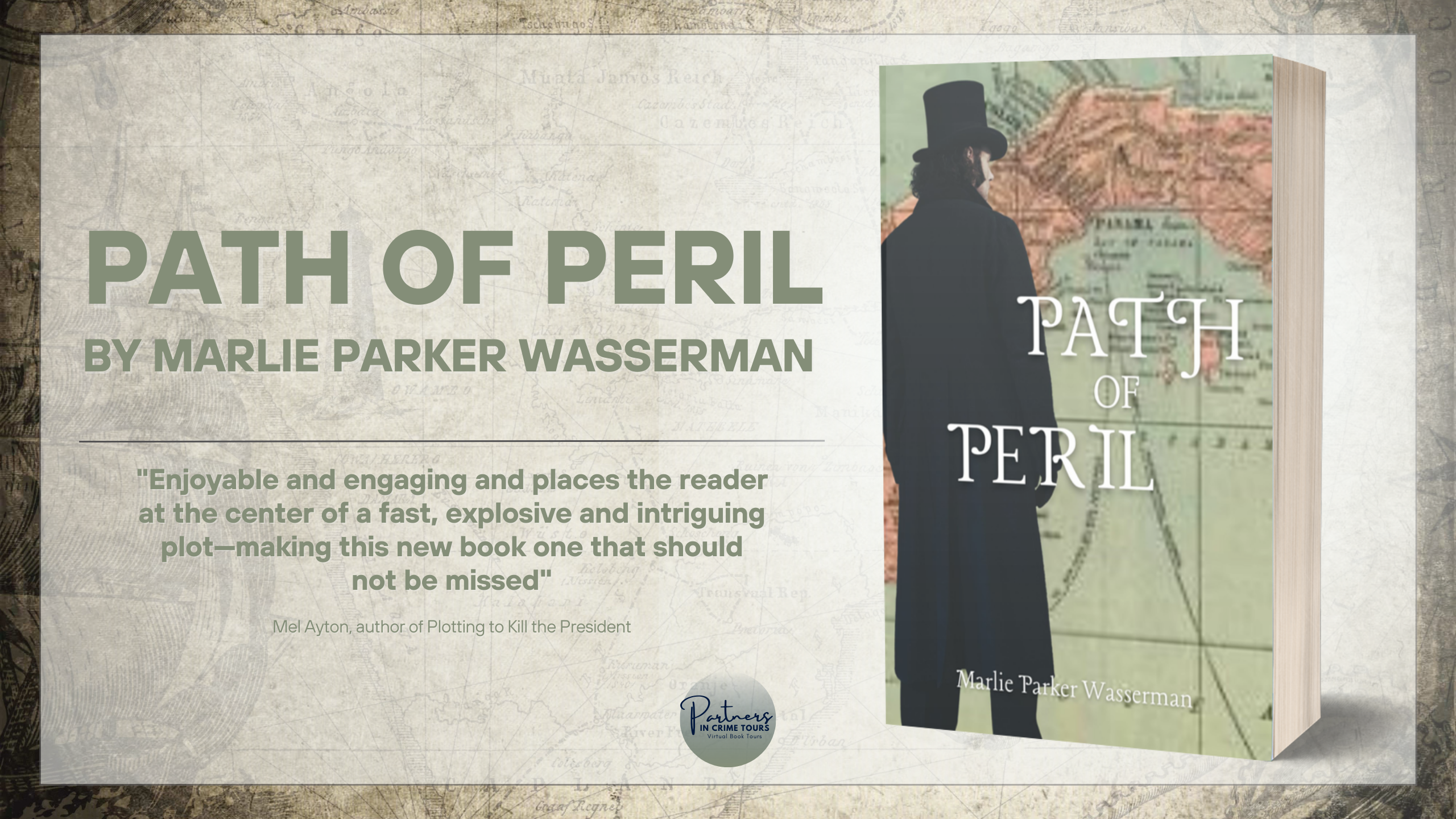
Path of Peril by Marlie Parker Wasserman Banner

Path of Peril

by Marlie Parker Wasserman

February 27 - March 24, 2023 Virtual Book Tour

Synopsis:

Path of Peril by Marlie Parker Wasserman

Would the assassins plotting to kill Theodore Roosevelt on his visit to the Panama Canal succeed?

Until this trip, no president while in office had ever traveled abroad. White House secretary Maurice Latta, thrilled to accompany the President, could not anticipate the adventures and dangers ahead. Latta befriends watchful secret service agents, ambitious journalists, and anxious First Lady Edith Roosevelt on their hot and humid trip, where he observes a country teeming with inequalities and abounding in opportunities. Along the way he learns about his own strengths—what he never imagined he could do, and what he discovers he can’t do.

Theodore Roosevelt did visit Panama in 1906, accompanied by White House staffer Maurice Latta. Interweaving the stories of real-life characters with fictional ones, Path of Peril imagines what the newspapers feared to report and what historians never discovered about Roosevelt’s risky trip.

Praise for Path of Peril:

"Nothing better than settling down with a good, crisp, detail-rich assassination thriller. Someone is after Theodore Roosevelt, and author Marlie Wasserman tightens the screws, ratchets the tension, and twists the plot again and again. Read it."

William Martin, New York Times Bestselling Author of The Lincoln Letter and December '41

"A feast of characters, scenery and history, Wasserman sets the table for a tremendous read. Path of Peril is a privileged walk with TR, his wife, his staff and dozens of characters struggling to create one of the “greatest engineering feats of the century."

Chris Keefer, author of No Comfort for the Undertaker, a Carrie Lisbon Mystery

"Path of Peril is enjoyable and engaging and places the reader at the center of a fast, explosive and intriguing plot—making this new book one that should not be missed."

Mel Ayton, author of Plotting to Kill the President

"Wasserman’s Path of Peril gives readers an exciting leap back in time... Buy this book—you’ll love it!"

Michael Conniff, historian of Panama

Book Details:

Genre: Historical Crime Fiction
Published by: Level Best Books
Publication Date: January 2023
Number of Pages: 320
Series: This is a Stand Alone Novel
Book Links: Amazon

Read an excerpt:

Maurice Latta

Sunday, January 19, 1947

For forty-one years I honored my oath to President Theodore Roosevelt and his bodyguard to conceal the events of November 15th and November 17th, 1906. On each of those days I agreed to a conspiracy of silence. Last year, that bodyguard died, and TR is long dead. Before I follow them to the grave, I will disclose the perils we faced during the President’s historic trip to Panama, to clarify the record and to unburden myself.

My tale begins in the White House clerk’s office, where I served as a stenographer during the McKinley administration and where I serve now, with a higher title, fifty years later. At first, I felt no connection with the other fifteen fellows in the clerk’s office. I suppose I looked the part, with my regular features and unremarkable bearing. If my appearance fit in, my background did not. Most men working for the President, even at the turn of the century, were college boys. Some had taken the grand tour of Europe. A few had gone to universities in New England. Three, fancying themselves adventurers, had traveled to the West with President Roosevelt, that is, President Theodore Roosevelt. Two of the older gentlemen had been heroes in battles in the South during the Civil War. Most of the White House office workers had nothing to prove, to the President or to themselves.

I followed a different path to Washington. After an unmemorable youth on a Pennsylvania farm, I moved to Oklahoma, where I took my first job as a junior clerk. I filled in paperwork for the more memorable 1893 land rush. Over time my responsibilities and the commands of the head clerk grew distasteful. A friend back in Pennsylvania recommended me for a position as a clerk for a state senator in Harrisburg. I worked for that state senator for one year and two months. Forgive the precision—I like to be accurate with details. Then the legislator was elected to Congress and took me to Washington. Three years later, almost to the day, word spread across town that President William McKinley’s office needed a stenographer. By that time I had married Clara Hays Bullen and had two sons. I aimed to improve my lowly position and my meager salary.

I moved down Pennsylvania Avenue from the Capitol to the White House. My official duties, those that were known, started on August 8, 1898. Three years and one month after I started, all hell broke loose in the office. Of course I wouldn’t have used such language then. Leon Czolgosz, an anarchist, assassinated President McKinley. Like other Americans, I felt sorrowful. I had seen McKinley pass down the hall daily, but I had never been introduced to him and he never spoke to me.

My clerk’s job continued. Theodore Roosevelt became President. Little changed in the routines of our office, except now the President knew me by my first and last name. Maurice Latta. To be precise, Maurice Cooper Latta.

When the President’s Secretary, William Loeb, promoted me from Stenographic Clerk to Assistant Secretary on June 4, 1906, I hoped I might have the opportunity to travel, at least up and down the East Coast. Two months later, I heard rumors that TR wanted to assess progress on his canal. Oh, let me interrupt myself for a moment. While conducting my official capacities, I called the President President Roosevelt. Informally I called him TR. By the way, he was the first president to be known by his initials. And some called him Teddy, though I never did so. I am told his relatives called him Teedie. You will hear all these names in my tale.

This trip would be the first time a president, while in office, had ever left the United States. Many Americans thought a president should not travel to foreign soil. That seems odd to us now, after Versailles and Yalta. But in 1906 most Americans didn’t give much thought to the rest of the world, not until TR changed that.

I assumed Secretary Loeb, always interested in the press, would accompany the President to the canal. Mr. Loeb would want to shape the stories in the dailies and weeklies. Reporters called him Stonewall Loeb because of the way he controlled their access to the President. To my shock, Mr. Loeb asked me to go in his place.

Today, even after working in the executive offices of nine administrations, now for President Truman (no, I never call him Give 'Em Hell Harry), and managing a staff of 204 clerks, my title, a rather misleading title, is only Executive Clerk. I am proud, though, that the New York Times has acknowledged my worth. Four years ago, in a Christmas day article my family framed, the reporter wrote, “The actual ‘assistant president’. . . is an official who has been in the White House since 1898 and knows more about its procedure than anyone else. He is Maurice C. Latta, now seventy-four and known as ‘Judge’ Latta to the White House staff.” In truth I know more about what is happening, and what did happen, than most of the presidents I served. That statement is for this memoir only.

I won’t dwell on my years in the White House after Panama, but rather on four days in 1906, in and around the Canal Zone. For the public, I want to add to the historical record, which is silent on certain momentous events. For me and my family, I want to remember the turning point, when I came to realize both my limitations and my strengths. I am writing the tale of what I know, what I saw myself. If you wish, you can fill in gaps with stories you gather from the others present that November, the stories I couldn’t see.

William Loeb

Monday, October 15, 1906

“I’m tired, Maurice. I followed that wild man to Yellowstone and Yosemite three years ago. Still haven’t recovered. None of us could keep up with him.” Mr. Loeb, Secretary to the President, was talking to me about Theodore Roosevelt’s two-month long trip to the West. “Now he’s sailing to Panama. He’ll itch for another frenzied schedule. I can’t do it this time. Here’s the question. Are ready for that kind of a trip? Interested in going in my place? I’m forty, you’re thirty-six. Those four extra years make a difference, right?

William Loeb sat three feet away from my face, at his desk in the White House. When he questioned me he leaned forward, putting his square jaw one foot from my weaker jaw. What answer did he expect? Modesty? Confidence?

“You surprise me, sir. I have never traveled beyond Oklahoma. I have never sailed, and I’ve never been responsible for a presidential trip. But I have watched you. I assisted you from afar when you traveled with the President. I will be honest, it would be a big step for me. I wouldn’t want to disappoint.”

Mr. Loeb sat back, slouched. I had disappointed him already.

“Sir, if you will walk me through the responsibilities, I would be honored to accompany the President.”

I will never know if Mr. Loeb truly believed I could handle the job, or if he had no one else in reserve. He shook my hand, sealing the arrangement. A day later he called me back to his office for instructions.

“Above all, Maurice, keep to the schedule. I’ll help you prepare it. We start with essential meetings. Officials of Panama and representatives from other countries. Then we fill in as needed.” Mr. Loeb was in his element, flaunting his expertise. “Second, control the access of journalists. Give priority to Frederick Palmer, he’s a favorite of Teddy’s. And I’ve been asked to add in a local journalist named Herbert de Lisser. Limit access to those two. Manage the press like I do. Third, names. Keep on you, in your pocket, the identities of the people Teddy is to meet. Whisper him reminders. He’s smart, but that makes him seem even smarter. Fourth, keep notes. You’ll need them later for Teddy’s reports. Last, prioritize telegrams. The pundits are worried that the President, abroad for the first time, won’t be in charge of the business of the country. I’ve reminded them that telegrams will reach his ship and will reach Panama. Sort through dispatches when they arrive and make sure he deals with them.”

I feared Mr. Loeb would notice my twitching right leg. Instead, he looked down and hesitated. For more than a second.

“I need to be frank with you about another matter. There could be danger. Jimmy Sloan, the Secret Service agent who heads Teddy’s protection detail, he tells me he hears rumors of anarchist plots against the President. He has people checking ships arriving in Panama, looking for suspicious travelers. May not matter. Hunting for an assassin is like finding a needle in a haystack. And there’s more. Mrs. R. is frantic. Jimmy—fine to call him Jimmy—won’t talk to her. Teddy tells him not to. She tries to get information from me and I won’t talk to her either. She’ll see you as easy prey and try you too. A word to the wise—be wary of that elegant lady. She’s lived through three assassinations and she’s no fool.”

I could think of nothing to say. I was so anxious about my coming secretarial duties that I had forgotten about the President’s safety.

“Enough of the serious stuff,” Mr. Loeb said. Get yourself new clothing for the trip. Two suits and evening wear. Can’t have you looking like a farmer.” He must have seen me widen my eyes in a question.

“No extra allowance for that. Hope your Assistant Secretary’s salary will stretch.

Edith Roosevelt

November 1906

Edith Kermit Carow Roosevelt married late, at age twenty-five, pleased to be Theodore’s second wife. His first, empty-headed Alice Lee, had been prettier, but only her memory was competition. Society column reporters called Edith an elegant, good-looking woman. Even the carpers acknowledged that her sharp nose and chin didn’t mar the impression. Those reporters never called her intelligent, but she knew she was that, and Theodore knew too. At age forty-five, after five children and two miscarriages, the last just three years earlier, she remained slender and attractive.

In the White House Edith stayed busy, watching over sons Ted, Kermit, Archibald, and Quentin, her daughter Ethel, and her rambunctious stepdaughter Alice. Thank goodness Alice had just married, even if it was to Nicholas Longworth III, a bald politician, much older than Alice, with a reputation as a playboy. The wedding nine months earlier had been the social event of the season in Washington. With that extravaganza over, Edith’s burdens did not disappear, but she could begin to reorder them. The stepdaughter now moved from second place to third. Worries about Quentin, her youngest, and his mischievous antics rose to second.

Fear for Theodore remained first in Edith’s list of worries. The year before, she convinced her husband to buy a rustic house, known as Pine Knot, in the Blue Ridge Mountains of Virginia. A private retreat. Almost private. Always watchful, she arranged for two Secret Service agents to protect the house every evening, without the President’s knowledge.

Sounds. They drove her crazy. The pulsating wind and the rattle of cedar shingles at Pine Knot. The scraping sounds of old window frames and squeaky plumbing at the White House. With each sound Edith heard an alarm. She had trusted Theodore’s first bodyguard, “Big Bill” Craig. In a carriage accident four years earlier Bill died and Theodore was injured. Now Jimmy Sloan oversaw protection. Jimmy was a good agent. Could even a good agent handle the task ahead? The trip to Panama would attract an international cast of cranks. Edith hoped they were cranks, not trained assassins. After each attempt on Theodore’s life, a reporter invariably mentioned the statistics. Three of the last ten presidents had been assassinated, three in about forty years, all in her lifetime. She imagined these numbers branded on her forehead.

Edith needed to identify a member of the trip’s entourage who might keep her informed about threats. Jimmy Sloan and his agents had pledged secrecy. Or they dismissed a woman’s worries. Thought her hysterical. They would be no help. And Theodore refused to acknowledge her fears, refused to listen. Thought she didn’t notice he carried a pistol in his pocket when he mingled with crowds. She would think creatively. She would curry favor with someone else on the trip, someone with knowledge. Maybe that Assistant Secretary who was taking the place of Secretary Loeb. Maurice Latta. He might know and he might share. She would keep an eye out for him aboard ship.

***

Excerpt from Path of Peril by Marlie Parker Wasserman. Copyright 2023 by Marlie Parker Wasserman. Reproduced with permission from Marlie Parker Wasserman. All rights reserved.


Author Bio:
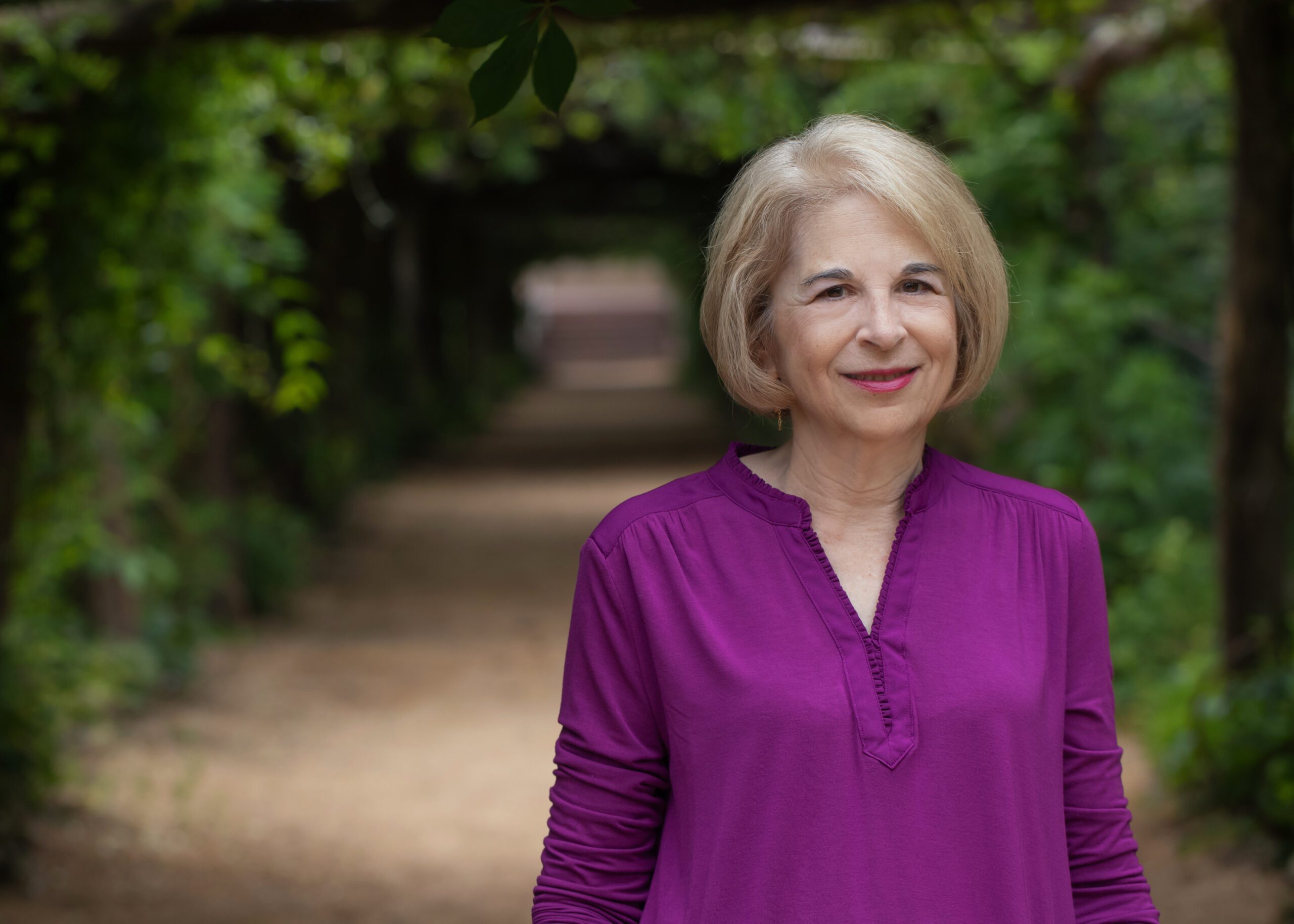
Marlie Parker Wasserman

Marlie Parker Wasserman continues to write historical crime fiction. Her first book, The Murderess Must Die, was published in 2021. After spending many years in New Jersey, she now lives in Chapel Hill, North Carolina. She is a member of Sisters in Crime and the Historical Novel Society.

Catch Up With Marlie Parker Wasserman:
www.MarlieWasserman.com
Goodreads
Instagram - @marliepwasserman
Twitter - @MarlieWasserman
Facebook


Tour Participants:

Visit these other great hosts on this tour for more great reviews, interviews, guest posts, and giveaway entries!


Join In:

This is a giveaway hosted by Partners in Crime Tours for Marlie Parker Wasserman. See the widget for entry terms and conditions. Void where prohibited.


Get More Great Reads at Partners In Crime Tours


Tuesday, March 7, 2023

Path of Peril - An Interview, Excerpt, & Giveaway

I'm pleased to welcome Marlie Parker Wasserman back to Cozy Up With Kathy today. Make sure you return on Friday to read my review of her latest novel, PATH OF PERIL.

Kathy: PATH OF PERIL deals with an assassination plot on Theodore Roosevelt during a trip to Panama. Why choose this moment in history for you book?

When I learned that Teddy Roosevelt’s trip to Panama in 1906 was the first time a president, while in office, had ever left the United States, I couldn’t get that fact out of my mind. Today, every time we hear the news, a president is flying to review the troops overseas, or to attend a summit meeting, or to commemorate an anniversary of an event. When I began to research presidential trips, I discovered that one of the deterrents, obviously, was how long it would take a president to reach a destination in an era before air travel. Another deterrent was limited communication in the era before international telegraph service.

In addition to researching Teddy Roosevelt, I also read about Panama’s amazing history. Many of us know that the gold rush in California and Alaska attracted people from a variety of places, and the land rush in Oklahoma did the same. But I didn’t know that Panama, in the early years of the twentieth century, also served as a magnet for people seeking adventure or a better life. Engineers from the States traveled to Panama for professional advancement, teachers and nurses came for jobs, workers sailed from Barbados and Jamaica for a chance to earn a living, salesmen came from all over the world to sell equipment and supplies, and many people fled disgrace or bankruptcy in their native land for a new life along the Canal. Once in Panama, these folks, speaking different languages and with different backgrounds, needed to co-exist. They did so against a backdrop of Jim Crow racism, where access to almost everything in Panama was determined by skin color. The prospect of writing about an adventurous trip while telling a bit about a country little known to many readers appealed to me.


Kathy: Was there a specific inspiration for this story?

One particular book inspired my plot. Decades ago, I read Frederick Forsyth’s Edgar Award-winning thriller, THE DAY OF THE JACKAL. The 1971 book is a fictional account of a plot to kill France’s president, Charles de Gaulle. Readers at the time knew that the assassin failed at his task. Yet that knowledge didn’t matter. Relating the scheming and planning in detail, Forsyth created and sustained tension. I knew I could never write like Forsyth, but I began to imagine a similar plot for Panama.


Kathy: What makes White House secretary Maurice Latta the best protagonist for this story?

Maurice Latta is a historic character who is little known. That is a shame, because he worked in the White House for presidents from McKinley to Truman—a long period of time. I researched his background and found that he never attended college and grew up on a farm, so I began to imagine what it must have been like for him to find himself surrounded by supposedly sophisticated people of wealth and education, and then to land in the middle of an historic event. How would I feel in those circumstances? I loved imagining Latta with what we might now call social anxieties and imagining that he sometimes overcame them and sometimes did not. I’ve considered writing a whole series about this remarkable character, each centered around his relationship with a different president.


Kathy: Prior to researching this story, were you a fan of Teddy Roosevelt?

To fulfill my bucket list, I want to visit every one of the sixty-three national parks in the United States. As of today, I’m at forty-two. I enjoy those parks. Teddy Roosevelt, who loved the outdoors, contributed significantly to the national park system and I’ve always appreciated that legacy. On the other hand, TR’s imperialist tendencies—in the novel, represented by his determination to build the canal and conquer the seas--disturb me. As far as his attitudes toward race, well, I would need three hundred pages to deal with that topic adequately. He was a man of his times, in some ways better and in some ways worse. I do try to convey his attitudes fairly in the novel. So, in short, TR was a mixed bag.


Kathy: Although things may be slightly different in regard to historical fiction, but when it comes to writing I understand there are 2 general camps-plotters, who diligently plot their stories, and pansters, who fly by the seat of their pants. Are you a plotter, a panster, or do you fall somewhere in between?

I am an extreme panster. I had no outline for this novel, just hundreds of pages of research notes. I like my characters to talk to me, to give me ideas. What I did have for this novel was a framework based on the chronology of TR’s visit to Panama. I knew what day he left Washington and what day he returned, and what he did each day along the Canal, and with whom. I wanted to stay close to the historical facts. The chronology presented both opportunities and limitations for the plot.


Kathy: Authors are required to do a lot of their own marketing, especially for a new release. What's your favorite part of marketing your work? What do you dislike about marketing?

Marketing takes almost as much time as writing, and most novelists, including me, prefer the latter. I do enjoy interviews such as this one, and I enjoy talking to book clubs. I don’t enjoy social media. In short, I like those marketing activities where technology is minimal.


Kathy: Will you share any other upcoming books?

I am almost finished with my third novel, entitled INFERNO ON FIFTH. In1899, in the middle of Manhattan, the luxurious Windsor Hotel burned to the ground. The number of fatalities could have been as high as 90—we can’t be certain. The coroner ruled the fire accidental. I imagine how six women—three educated and wealthy, three less educated and struggling—made life-changing decisions amid the fire and its aftermath. I also question whether the fire truly was accidental. 

***********************************************************************

Path of Peril by Marlie Parker Wasserman Banner

Path of Peril

by Marlie Parker Wasserman

February 27 - March 24, 2023 Virtual Book Tour

Synopsis:

Path of Peril by Marlie Parker Wasserman

Would the assassins plotting to kill Theodore Roosevelt on his visit to the Panama Canal succeed?

Until this trip, no president while in office had ever traveled abroad. White House secretary Maurice Latta, thrilled to accompany the President, could not anticipate the adventures and dangers ahead. Latta befriends watchful secret service agents, ambitious journalists, and anxious First Lady Edith Roosevelt on their hot and humid trip, where he observes a country teeming with inequalities and abounding in opportunities. Along the way he learns about his own strengths—what he never imagined he could do, and what he discovers he can’t do.

Theodore Roosevelt did visit Panama in 1906, accompanied by White House staffer Maurice Latta. Interweaving the stories of real-life characters with fictional ones, Path of Peril imagines what the newspapers feared to report and what historians never discovered about Roosevelt’s risky trip.

Praise for Path of Peril:

"Nothing better than settling down with a good, crisp, detail-rich assassination thriller. Someone is after Theodore Roosevelt, and author Marlie Wasserman tightens the screws, ratchets the tension, and twists the plot again and again. Read it."

William Martin, New York Times Bestselling Author of The Lincoln Letter and December '41

"A feast of characters, scenery and history, Wasserman sets the table for a tremendous read. Path of Peril is a privileged walk with TR, his wife, his staff and dozens of characters struggling to create one of the “greatest engineering feats of the century."

Chris Keefer, author of No Comfort for the Undertaker, a Carrie Lisbon Mystery

"Path of Peril is enjoyable and engaging and places the reader at the center of a fast, explosive and intriguing plot—making this new book one that should not be missed."

Mel Ayton, author of Plotting to Kill the President

"Wasserman’s Path of Peril gives readers an exciting leap back in time... Buy this book—you’ll love it!"

Michael Conniff, historian of Panama

Book Details:

Genre: Historical Crime Fiction
Published by: Level Best Books
Publication Date: January 2023
Number of Pages: 320
Series: This is a Stand Alone Novel
Book Links: Amazon

Read an excerpt:

Maurice Latta

Sunday, January 19, 1947

For forty-one years I honored my oath to President Theodore Roosevelt and his bodyguard to conceal the events of November 15th and November 17th, 1906. On each of those days I agreed to a conspiracy of silence. Last year, that bodyguard died, and TR is long dead. Before I follow them to the grave, I will disclose the perils we faced during the President’s historic trip to Panama, to clarify the record and to unburden myself.

My tale begins in the White House clerk’s office, where I served as a stenographer during the McKinley administration and where I serve now, with a higher title, fifty years later. At first, I felt no connection with the other fifteen fellows in the clerk’s office. I suppose I looked the part, with my regular features and unremarkable bearing. If my appearance fit in, my background did not. Most men working for the President, even at the turn of the century, were college boys. Some had taken the grand tour of Europe. A few had gone to universities in New England. Three, fancying themselves adventurers, had traveled to the West with President Roosevelt, that is, President Theodore Roosevelt. Two of the older gentlemen had been heroes in battles in the South during the Civil War. Most of the White House office workers had nothing to prove, to the President or to themselves.

I followed a different path to Washington. After an unmemorable youth on a Pennsylvania farm, I moved to Oklahoma, where I took my first job as a junior clerk. I filled in paperwork for the more memorable 1893 land rush. Over time my responsibilities and the commands of the head clerk grew distasteful. A friend back in Pennsylvania recommended me for a position as a clerk for a state senator in Harrisburg. I worked for that state senator for one year and two months. Forgive the precision—I like to be accurate with details. Then the legislator was elected to Congress and took me to Washington. Three years later, almost to the day, word spread across town that President William McKinley’s office needed a stenographer. By that time I had married Clara Hays Bullen and had two sons. I aimed to improve my lowly position and my meager salary.

I moved down Pennsylvania Avenue from the Capitol to the White House. My official duties, those that were known, started on August 8, 1898. Three years and one month after I started, all hell broke loose in the office. Of course I wouldn’t have used such language then. Leon Czolgosz, an anarchist, assassinated President McKinley. Like other Americans, I felt sorrowful. I had seen McKinley pass down the hall daily, but I had never been introduced to him and he never spoke to me.

My clerk’s job continued. Theodore Roosevelt became President. Little changed in the routines of our office, except now the President knew me by my first and last name. Maurice Latta. To be precise, Maurice Cooper Latta.

When the President’s Secretary, William Loeb, promoted me from Stenographic Clerk to Assistant Secretary on June 4, 1906, I hoped I might have the opportunity to travel, at least up and down the East Coast. Two months later, I heard rumors that TR wanted to assess progress on his canal. Oh, let me interrupt myself for a moment. While conducting my official capacities, I called the President President Roosevelt. Informally I called him TR. By the way, he was the first president to be known by his initials. And some called him Teddy, though I never did so. I am told his relatives called him Teedie. You will hear all these names in my tale.

This trip would be the first time a president, while in office, had ever left the United States. Many Americans thought a president should not travel to foreign soil. That seems odd to us now, after Versailles and Yalta. But in 1906 most Americans didn’t give much thought to the rest of the world, not until TR changed that.

I assumed Secretary Loeb, always interested in the press, would accompany the President to the canal. Mr. Loeb would want to shape the stories in the dailies and weeklies. Reporters called him Stonewall Loeb because of the way he controlled their access to the President. To my shock, Mr. Loeb asked me to go in his place.

Today, even after working in the executive offices of nine administrations, now for President Truman (no, I never call him Give 'Em Hell Harry), and managing a staff of 204 clerks, my title, a rather misleading title, is only Executive Clerk. I am proud, though, that the New York Times has acknowledged my worth. Four years ago, in a Christmas day article my family framed, the reporter wrote, “The actual ‘assistant president’. . . is an official who has been in the White House since 1898 and knows more about its procedure than anyone else. He is Maurice C. Latta, now seventy-four and known as ‘Judge’ Latta to the White House staff.” In truth I know more about what is happening, and what did happen, than most of the presidents I served. That statement is for this memoir only.

I won’t dwell on my years in the White House after Panama, but rather on four days in 1906, in and around the Canal Zone. For the public, I want to add to the historical record, which is silent on certain momentous events. For me and my family, I want to remember the turning point, when I came to realize both my limitations and my strengths. I am writing the tale of what I know, what I saw myself. If you wish, you can fill in gaps with stories you gather from the others present that November, the stories I couldn’t see.

William Loeb

Monday, October 15, 1906

“I’m tired, Maurice. I followed that wild man to Yellowstone and Yosemite three years ago. Still haven’t recovered. None of us could keep up with him.” Mr. Loeb, Secretary to the President, was talking to me about Theodore Roosevelt’s two-month long trip to the West. “Now he’s sailing to Panama. He’ll itch for another frenzied schedule. I can’t do it this time. Here’s the question. Are ready for that kind of a trip? Interested in going in my place? I’m forty, you’re thirty-six. Those four extra years make a difference, right?

William Loeb sat three feet away from my face, at his desk in the White House. When he questioned me he leaned forward, putting his square jaw one foot from my weaker jaw. What answer did he expect? Modesty? Confidence?

“You surprise me, sir. I have never traveled beyond Oklahoma. I have never sailed, and I’ve never been responsible for a presidential trip. But I have watched you. I assisted you from afar when you traveled with the President. I will be honest, it would be a big step for me. I wouldn’t want to disappoint.”

Mr. Loeb sat back, slouched. I had disappointed him already.

“Sir, if you will walk me through the responsibilities, I would be honored to accompany the President.”

I will never know if Mr. Loeb truly believed I could handle the job, or if he had no one else in reserve. He shook my hand, sealing the arrangement. A day later he called me back to his office for instructions.

“Above all, Maurice, keep to the schedule. I’ll help you prepare it. We start with essential meetings. Officials of Panama and representatives from other countries. Then we fill in as needed.” Mr. Loeb was in his element, flaunting his expertise. “Second, control the access of journalists. Give priority to Frederick Palmer, he’s a favorite of Teddy’s. And I’ve been asked to add in a local journalist named Herbert de Lisser. Limit access to those two. Manage the press like I do. Third, names. Keep on you, in your pocket, the identities of the people Teddy is to meet. Whisper him reminders. He’s smart, but that makes him seem even smarter. Fourth, keep notes. You’ll need them later for Teddy’s reports. Last, prioritize telegrams. The pundits are worried that the President, abroad for the first time, won’t be in charge of the business of the country. I’ve reminded them that telegrams will reach his ship and will reach Panama. Sort through dispatches when they arrive and make sure he deals with them.”

I feared Mr. Loeb would notice my twitching right leg. Instead, he looked down and hesitated. For more than a second.

“I need to be frank with you about another matter. There could be danger. Jimmy Sloan, the Secret Service agent who heads Teddy’s protection detail, he tells me he hears rumors of anarchist plots against the President. He has people checking ships arriving in Panama, looking for suspicious travelers. May not matter. Hunting for an assassin is like finding a needle in a haystack. And there’s more. Mrs. R. is frantic. Jimmy—fine to call him Jimmy—won’t talk to her. Teddy tells him not to. She tries to get information from me and I won’t talk to her either. She’ll see you as easy prey and try you too. A word to the wise—be wary of that elegant lady. She’s lived through three assassinations and she’s no fool.”

I could think of nothing to say. I was so anxious about my coming secretarial duties that I had forgotten about the President’s safety.

“Enough of the serious stuff,” Mr. Loeb said. Get yourself new clothing for the trip. Two suits and evening wear. Can’t have you looking like a farmer.” He must have seen me widen my eyes in a question.

“No extra allowance for that. Hope your Assistant Secretary’s salary will stretch.

Edith Roosevelt

November 1906

Edith Kermit Carow Roosevelt married late, at age twenty-five, pleased to be Theodore’s second wife. His first, empty-headed Alice Lee, had been prettier, but only her memory was competition. Society column reporters called Edith an elegant, good-looking woman. Even the carpers acknowledged that her sharp nose and chin didn’t mar the impression. Those reporters never called her intelligent, but she knew she was that, and Theodore knew too. At age forty-five, after five children and two miscarriages, the last just three years earlier, she remained slender and attractive.

In the White House Edith stayed busy, watching over sons Ted, Kermit, Archibald, and Quentin, her daughter Ethel, and her rambunctious stepdaughter Alice. Thank goodness Alice had just married, even if it was to Nicholas Longworth III, a bald politician, much older than Alice, with a reputation as a playboy. The wedding nine months earlier had been the social event of the season in Washington. With that extravaganza over, Edith’s burdens did not disappear, but she could begin to reorder them. The stepdaughter now moved from second place to third. Worries about Quentin, her youngest, and his mischievous antics rose to second.

Fear for Theodore remained first in Edith’s list of worries. The year before, she convinced her husband to buy a rustic house, known as Pine Knot, in the Blue Ridge Mountains of Virginia. A private retreat. Almost private. Always watchful, she arranged for two Secret Service agents to protect the house every evening, without the President’s knowledge.

Sounds. They drove her crazy. The pulsating wind and the rattle of cedar shingles at Pine Knot. The scraping sounds of old window frames and squeaky plumbing at the White House. With each sound Edith heard an alarm. She had trusted Theodore’s first bodyguard, “Big Bill” Craig. In a carriage accident four years earlier Bill died and Theodore was injured. Now Jimmy Sloan oversaw protection. Jimmy was a good agent. Could even a good agent handle the task ahead? The trip to Panama would attract an international cast of cranks. Edith hoped they were cranks, not trained assassins. After each attempt on Theodore’s life, a reporter invariably mentioned the statistics. Three of the last ten presidents had been assassinated, three in about forty years, all in her lifetime. She imagined these numbers branded on her forehead.

Edith needed to identify a member of the trip’s entourage who might keep her informed about threats. Jimmy Sloan and his agents had pledged secrecy. Or they dismissed a woman’s worries. Thought her hysterical. They would be no help. And Theodore refused to acknowledge her fears, refused to listen. Thought she didn’t notice he carried a pistol in his pocket when he mingled with crowds. She would think creatively. She would curry favor with someone else on the trip, someone with knowledge. Maybe that Assistant Secretary who was taking the place of Secretary Loeb. Maurice Latta. He might know and he might share. She would keep an eye out for him aboard ship.

***

Excerpt from Path of Peril by Marlie Parker Wasserman. Copyright 2023 by Marlie Parker Wasserman. Reproduced with permission from Marlie Parker Wasserman. All rights reserved.


Author Bio:

Marlie Parker Wasserman

Marlie Parker Wasserman continues to write historical crime fiction. Her first book, The Murderess Must Die, was published in 2021. After spending many years in New Jersey, she now lives in Chapel Hill, North Carolina. She is a member of Sisters in Crime and the Historical Novel Society.

Catch Up With Marlie Parker Wasserman:
www.MarlieWasserman.com
Goodreads
Instagram - @marliepwasserman
Twitter - @MarlieWasserman
Facebook


Tour Participants:

Visit these other great hosts on this tour for more great reviews, interviews, guest posts, and giveaway entries!


Join In:

This is a giveaway hosted by Partners in Crime Tours for Marlie Parker Wasserman. See the widget for entry terms and conditions. Void where prohibited.


Get More Great Reads at Partners In Crime Tours


Wednesday, March 1, 2023

Currently Reading...

I just finished reading Path of Peril by Marie Wasserman.This is a work of historical fiction.

In 1906 President Teddy Roosevelt traveled to Panama to check on construction of the Panama Canal. This was the first time a US President traveled outside of the states while in office. Accompanied by his wife Edith, White House secretary Maurice Latta, and several others, the trip was risky in many ways. While yellow fever had been eradicated, other dangers persisted, primarily from a number of anarchists. Giving voice to many of those involved, we learn the stories that brought these people together and what happened on that fateful trip.

Monday, May 27, 2019

Drowning Lessons - An Interview & Giveaway

I'm happy to welcome Rachel Neuburger Reynolds to Cozy Up With Kathy today. Rachel writes the Red Frog Beach Mystery series. Drowning Lessons is the first book in the series and was released earlier this month.


Kathy: Drowning Lessons features a destination wedding. Have you ever participated in one?

RN: I’ve never taken part of one of the grandeur or crazy scheduling of Drowning Lessons, but I have been to a few which have both been lovely. I went to an autumn wedding about 45-minutes outside of Charlottesville, VA quite a few years back. More recently, we went to a summer wedding on a beach in Portugal. It was very laid back and beautiful.

Now thinking about it, I guess that technically my wedding was a destination wedding. My husband and I live in England, but we got married in Boston, where I grew up. All of his friends came from Europe, and my friends are all scattered around the country. It wasn’t an exotic destination wedding for me, but a three-day holiday for everyone else!


Kathy: The first Red Frog Beach Mystery takes place in Bocas del Toro, a remote chain of islands off the Caribbean coast of Panama. What made you decide to set your story here?

RN: I went to Panama on vacation in 2002 and we had randomly scheduled three days in Bocas del Toro. I completely fell in love with the place. We were in a water taxi and passed a snorkeling boat tour. There must have been something amazing to see, because everyone was just frozen; face down in identical life vests, maybe watching a sea turtle. So, seventeen years ago I looked at that image, thinking that could be the scene of the perfect crime, and have had it in my head since then.


Kathy: Lexie Marino is maid of honor to Olivia, a bridezilla. Have you known a bridezilla?

RN: I am lucky to say that every wedding that I have been a part of has been devoid of any bridezillas. None of my bride friends were out of control in the least. When I first thought about Drowning Lessons, the main character was the bride. When I switched the protagonist to the maid of honor, I started asking friends if they had any crazy experiences with brides. Some of the stories shocked me!


Kathy: What first drew you to cozy mysteries?

RN: My mother was definitely the reason that I became interested in cozy mysteries. We had a very small library on the second floor of our house when I grew up, and my mom had a huge collection of Agatha Christie books. I was too young to read the mysteries, but I loved opening the books and seeing her casts of characters on the first few pages. Truth be told, I secretly wanted to do that in Drowning Lessons. My mom was a librarian, and mysteries and poetry were her things, so it all came from her!


Kathy: Do you write in any other genres?

RN: In the world of novels, mysteries are the only thing I write. I am also a playwright, and I’ve had my plays produced in London, Edinburgh, and New York.


Kathy: Tell us about your series.

RN: Drowning Lessons is Book One of the Red Frog Beach Mystery series, all of which takes place in Bocas del Toro. The first book is maid of honor Lexie’s introduction to the island, where she relocates to in Book 2, The Wipeout Affair. Some of the favorite members of the wedding party have also relocated, joining the fun locals we met in book one.

I am also working on The Evelyn Bay Murder Mystery series, which I’ll get back to when I finish the five books in the Red Frog Beach series. The series takes place on a fictional town on the North Fork of Long Island, NY, led by a recent divorcee and ex-Broadway dancer, who moves to Evelyn Bay for a second shot at happiness. It’s a very fun series that is very close to my heart.


Kathy: Do you have a favorite character? If so, who and why?

RN: The villains all have the best lines, don’t they?

I love my protagonist, Lexie. She’s nursing a broken heart but determined to make sure her best friend’s wedding stays on track, murder or not.

There were a few characters who I really enjoyed writing. One of them is Becky, the groom’s assistant. She’s very smart, but has a very stream of consciousness mile-a-minute way of talking. I could really go out on a limb with her in terms of fun.


Kathy: Did you have a specific inspiration for your series?

RN: Sometimes an image just gets stuck in your head. That snorkeling trip in 2002 inspired me and never let go.

The Evelyn Bay series is written in honor of my mother, Evelyn, who died of ALS in 2017.


Kathy: What made you decide to publish your work?

RN: I had a traditional publisher for Drowning Lessons, and just before Thanksgiving I learned they were “closing their traditional publishing arm.” I was broken hearted for a brief bit of time, and then decided to go indie. Sometime you have to make your own luck!


Kathy: If you could have a dinner party and invite 4 authors, living or dead, in any genre, who would you invite?

RN: This is going to be fun! My guest of honor would always be F Scott Fitzgerald! I’d also invite Raymond Chandler, as he was the first mystery author I discovered on my own. Then I’d round it out with True Blood’s Charlaine Harris and J K Rowling. I think it would be quite a party!


Kathy: What are you currently reading?

RN: I just finished The Death of Mrs. Westaway by Ruth Hare. I loved it.


Kathy: Will you share any of your hobbies or interests with us?

RN: I’ll share my most recent hobby. I’ve wanted to play the guitar since I was 12, but never tried. My husband gave me a guitar for Christmas, so I’ve been taking lessons once a week and practicing every day. It’s hard work, but I love it.


Kathy: Name 4 items you always have in your fridge or pantry.

RN: Salted pistachios are my weakness. I’ve had to start hiding them in my desk because my husband will eat them all. Besides that, I’d say red pepper hummus, avocado, and cooked shrimp.


Kathy: Do you have plans for future books either in your current series or a new series?

RN: I’ve tied myself up for years with ideas! There will be five in the Red Frog Beach Series, the second of which will be released late-August. I’ve written book one of the Evelyn Bay series and have a total of seven in mind. Finally, I’ve got a non-mystery tentatively called Pinch Me Quick that has been percolating for one day in the future.


Kathy: What's your favorite thing about being an author?

RN: I think that the ability to hold on to your imagination brings me a lot of joy. I’ve got my head in the clouds, always thinking about what’s going to come next with my characters. I wouldn’t have it any other way.

******************************************************************************


The author has graciously offered a digital copy of Drowning Lessons to one reader. In order to qualify, simply comment on this post no later than 11:59pm EDT Thursday, May 30, 2019. Tell us if you've ever been to a destination wedding or known a bridezilla. Also be sure to leave an e-mail address so that I can contact you, should your comment be chosen. Good luck!